

Fencing Contractor Insurance That Helps Protect Your Business.
From residential privacy fences to commercial installations, every project has its risks. Our agents compare options from 20+ top-rated carriers to help build insurance solutions tailored to your fencing business.
THE FIRSTMARK CHALLENGE
A better way to review coverage.
Four simple steps. Zero obligation.

Have A Conversation.

We shop the markets.

Review the results.

You decide.
- Licensed in 39 states
- 20+ Insurance Carriers
- Headquartered in Edmonds, WA
- Independent & Unbiased
A better way to review coverage.
The Firstmark Challenge
Our simple, guided process makes reviewing your insurance easy. We take the time to understand your needs, compare options across top carriers, and present clear results—so you can make a confident decision.
01
Have A Conversation
02
We Shop The Markets
03
Review The Results
04
You Decide!
Build Your Business Behind the Right Protection
With FirstMark Insurance’s dedicated commercial insurance team, you get experienced agents comparing coverage from over 20 insurance carriers to help protect your fencing business, employees, vehicles, tools, equipment, and operations—with strong coverage and competitive pricing.
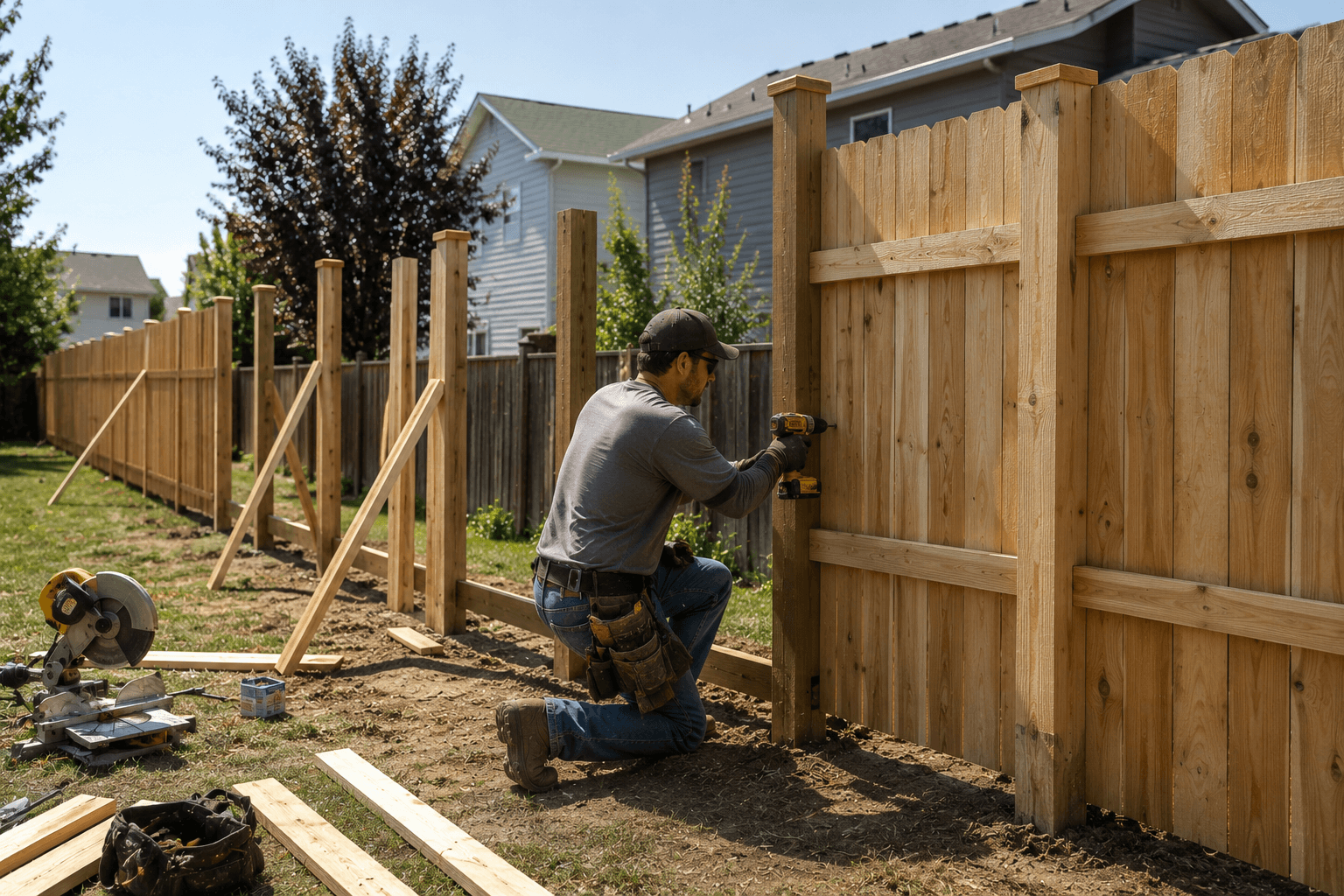
Fencing contractors work on residential, commercial, agricultural, and construction properties where digging, power equipment, vehicles, materials, and customer property can create a variety of risks. From replacing a backyard privacy fence to installing security fencing around a commercial property, an unexpected accident could result in property damage, injuries, or other costly losses.
Fencing contractor insurance can help protect your business against certain risks involving bodily injury, property damage, employees, vehicles, tools, equipment, and completed work. Whether you're an independent fence installer or operate a fencing company with employees and multiple crews, an insurance program can be tailored around your operations.
The appropriate coverage may depend on the types of fencing installed, annual revenue, payroll, employees, subcontractor usage, vehicles, equipment, project size, and whether you primarily perform residential or commercial work.
What Insurance Does a Fencing Contractor Need?
Fencing contractor insurance generally isn't a single policy. Instead, several types of commercial insurance may be combined to address the different risks associated with fence installation, replacement, and repair.
General Liability Insurance
Fencing contractor general liability insurance may help protect your business against certain claims involving bodily injury or property damage arising from your operations.
For example, installation equipment could accidentally damage landscaping, a vehicle, or another portion of a customer's property. Materials or tools could create a trip hazard, or digging operations could potentially damage underground property.
Depending on the circumstances and policy terms, general liability insurance may provide coverage for qualifying claims. Homeowners, general contractors, property managers, municipalities, and commercial customers may also require proof of liability insurance before work begins.
Workers' Compensation Insurance
Fence installation can be physically demanding. Employees may lift heavy fence panels and posts, operate augers and power tools, work around excavation equipment, and handle sharp or heavy materials.
Workers' compensation insurance may provide benefits for qualifying employees who experience work-related injuries or illnesses. Requirements can vary depending on the structure of the business and where the contractor operates.
Commercial Auto Insurance
Fencing contractors frequently use pickup trucks, work trucks, vans, and trailers to transport employees, fence panels, posts, gates, tools, and equipment between jobsites.
Commercial auto insurance may provide liability and physical damage coverage for qualifying business-owned vehicles. Additional coverage options might be appropriate depending on how vehicles and trailers are owned and used.
Tools, equipment, and fencing materials being transported may require separate coverage, so these exposures should be discussed when developing an insurance program.
Fencing Tools and Equipment Insurance
Professional fencing contractors may have a substantial investment in tools and specialized equipment. Tools and equipment coverage, often provided through inland marine or contractors equipment insurance, may help protect qualifying property while it is being transported, stored, or used at a jobsite.
Coverage may be available for items such as:
- Post hole augers
- Power tools
- Compressors and nail guns
- Generators
- Welding equipment
- Skid steers and attachments
- Portable installation equipment
- Other fencing tools and machinery
Larger machinery may require separate contractors equipment coverage. Available limits, deductibles, and covered causes of loss can vary by policy.
Commercial Property Insurance
Fencing companies that own or lease an office, warehouse, shop, storage yard, or other business location may want to consider commercial property insurance.
Depending on the policy, coverage may help protect buildings, office equipment, fencing inventory, supplies, machinery, and other qualifying business property against certain covered losses.
Commercial Umbrella or Excess Liability Insurance
Some fencing businesses may need liability limits beyond those available through their primary insurance policies.
Commercial umbrella or excess liability insurance may provide additional limits above certain underlying policies. Higher limits might also be required when working for general contractors, developers, municipalities, commercial property owners, or other larger organizations.
Insurance for Different Types of Fencing Contractors
Fencing businesses can install many different products and serve a wide range of customers. The specific work performed may influence insurance eligibility, coverage options, and pricing.
Insurance options may be available for contractors specializing in:
- Residential fencing
- Commercial fencing
- Wood privacy fences
- Chain-link fencing
- Vinyl fencing
- Ornamental and metal fencing
- Farm and agricultural fencing
- Security fencing
- Fence and gate repair
- Automatic and manual gate installation
Contractors should accurately describe the services they perform when applying for insurance. Welding, excavation, automatic gate systems, security fencing, large commercial projects, or other specialized operations may require additional coverage or different insurance classifications.
Fence Installation and Underground Property
Digging post holes is a routine part of fence installation, but underground property can create a significant exposure for fencing contractors.
Water lines, sewer lines, electrical systems, natural gas lines, irrigation systems, communication cables, and other utilities may be located near a proposed fence line. Accidental damage could potentially result in repair expenses, property damage, service interruptions, or liability claims.
Coverage for underground property damage may depend on the insurance policy and circumstances surrounding a loss. Contractors should make sure digging and excavation operations are accurately disclosed when obtaining insurance.
Completed Operations Coverage for Fencing Contractors
A fencing contractor's potential liability may continue after installation is finished. A problem involving a fence, post, gate, or other completed work could potentially contribute to an injury or property damage after the contractor leaves the jobsite.
General liability policies may include products-completed operations coverage for certain qualifying claims arising from completed work. However, coverage can vary based on policy terms, conditions, exclusions, and applicable limits.
Contractors installing gates, security fencing, or other specialized systems may have additional completed operations exposures that should be discussed with an insurance professional.
Fencing Contractors and Subcontractors
Some fencing companies use subcontractors for installation, excavation, welding, gate systems, or portions of larger projects. Insurance companies may have specific requirements regarding subcontracted work.
Contractors may need to obtain certificates of insurance from subcontractors and verify that appropriate coverage is maintained. Written subcontractor agreements and additional insured requirements might also be appropriate depending on the project.
The amount and type of subcontracted work should be accurately disclosed when obtaining fencing contractor insurance.
Protect Your Fencing Business
A fencing business can represent a significant investment in employees, trucks, trailers, tools, equipment, inventory, and professional reputation. Appropriate insurance coverage can help provide financial protection when certain unexpected accidents or losses occur.
The insurance needs of an independent residential fence installer may differ significantly from those of a larger contractor performing commercial, agricultural, or security fencing projects. Annual revenue, payroll, project size, excavation work, vehicles, equipment values, subcontractor usage, and claims history can all influence coverage needs and pricing.
Working with an independent insurance agent can provide access to multiple insurance companies and coverage options, helping you find an insurance program appropriate for your fencing business.
FAQs
What insurance does a fencing contractor need?
A fencing contractor's insurance program may include general liability, workers' compensation, commercial auto, tools and equipment, commercial property, and umbrella or excess liability insurance. Other specialized coverage may also be appropriate depending on the types of fencing and installation services performed.
Does fencing contractor insurance cover damage to underground utilities?
Coverage may be available for certain qualifying property damage claims involving underground utilities, depending on the policy and circumstances of the loss. Because fence installation frequently involves digging, contractors should review underground property and excavation exposures with an insurance professional.
Can fencing contractor insurance cover tools and equipment?
Coverage for qualifying fencing tools and equipment may be available through inland marine or contractors equipment insurance. Depending on the policy, equipment might be protected while being transported, used at a jobsite, or temporarily stored away from the contractor's primary business location.
How much does fencing contractor insurance cost?
Fencing contractor insurance costs can vary based on annual revenue, payroll, services performed, residential versus commercial work, excavation operations, vehicles, equipment values, subcontractor usage, claims history, and selected coverage limits. Comparing options from multiple insurance companies can help identify an insurance program appropriate for the business.