

Restoration Contractor Insurance That Helps Protect Your Business.
Restoration contractors step in when property owners need them most. Our agents compare options from 20+ top-rated carriers to help build insurance solutions tailored to your restoration business and operations.
THE FIRSTMARK CHALLENGE
A better way to review coverage.
Four simple steps. Zero obligation.

Have A Conversation.

We shop the markets.

Review the results.

You decide.
- Licensed in 39 states
- 20+ Insurance Carriers
- Headquartered in Edmonds, WA
- Independent & Unbiased
A better way to review coverage.
The Firstmark Challenge
Our simple, guided process makes reviewing your insurance easy. We take the time to understand your needs, compare options across top carriers, and present clear results—so you can make a confident decision.
01
Have A Conversation
02
We Shop The Markets
03
Review The Results
04
You Decide!
Protection for the Business That Helps Others Recover
With FirstMark Insurance’s dedicated commercial insurance team, you get experienced agents comparing coverage from over 20 insurance carriers to help protect your restoration business, employees, vehicles, equipment, and operations—with strong coverage and competitive pricing.
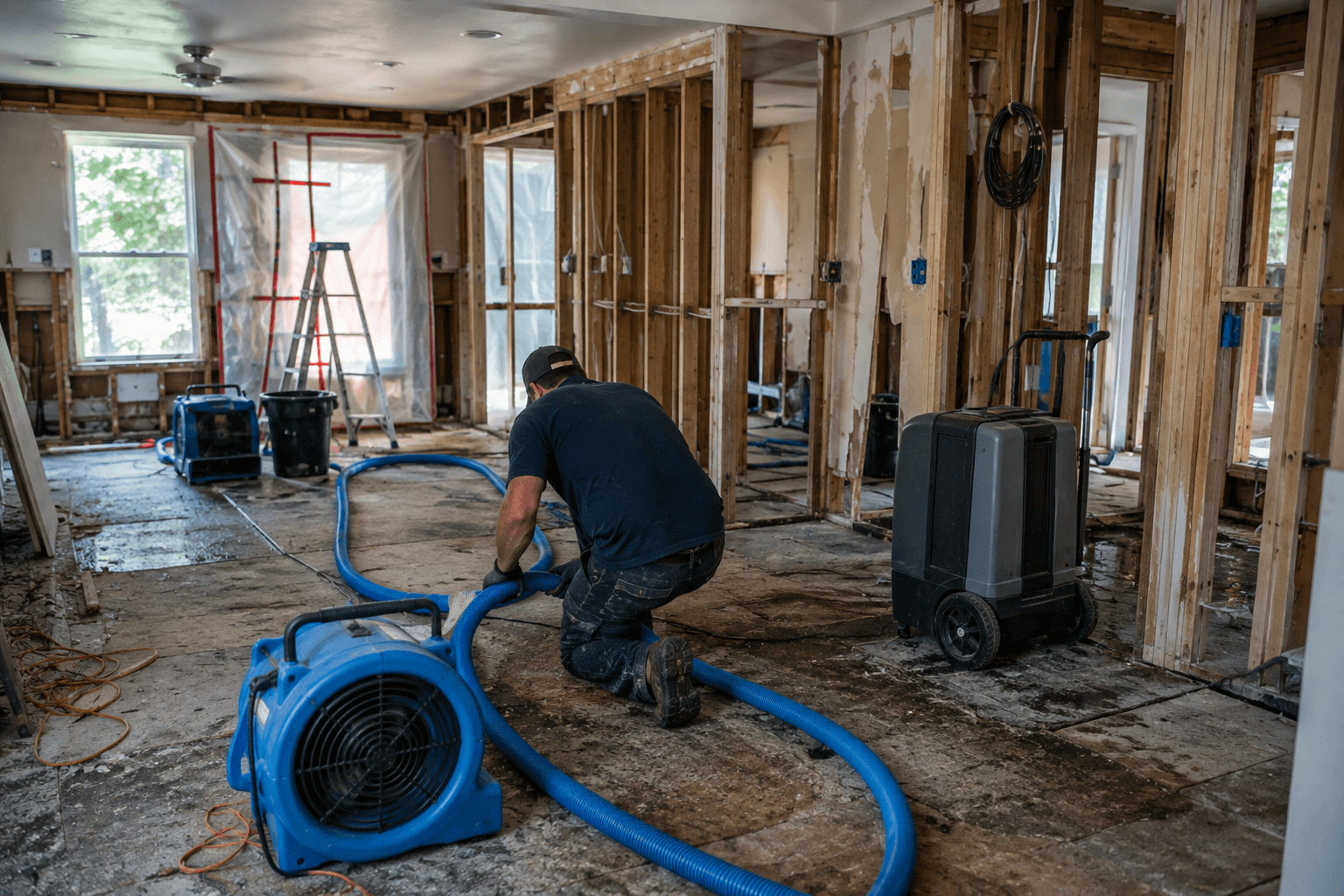
Restoration contractors often respond when a property owner is dealing with a serious loss. Flooding, fires, smoke damage, mold growth, sewage backups, and other disasters can require immediate action, specialized equipment, demolition work, and careful cleanup. These operations can also create a unique combination of liability, environmental, employee, equipment, and property exposures.
Flood, fire and mold restoration company insurance can help protect businesses that perform water extraction, fire and smoke cleanup, mold remediation, structural drying, demolition, and related restoration services. Coverage can be tailored around the specific services a restoration company provides and the risks associated with those operations.
The appropriate insurance program may depend on annual revenue, payroll, number of employees, vehicles, equipment values, subcontractor usage, emergency response services, environmental exposures, and the types of restoration projects performed.
What Insurance Does a Restoration Contractor Need?
Restoration contractor insurance generally isn't a single policy. Instead, several types of commercial insurance may be combined to address the different risks associated with disaster cleanup and property restoration.
General Liability Insurance
Restoration contractor general liability insurance may help protect a business against certain claims involving bodily injury or property damage arising from its operations.
For example, equipment could accidentally damage portions of a customer's property, a third party could be injured around an active work area, or restoration activities could potentially result in additional damage to areas of a building.
Depending on the circumstances and policy terms, general liability insurance may provide coverage for qualifying claims. Property owners, general contractors, property managers, and commercial customers may also require proof of liability insurance before restoration work begins.
Contractors Pollution Liability Insurance
Contractors pollution liability insurance can be an important consideration for restoration businesses because many projects involve mold, contaminated water, sewage, smoke residue, chemicals, or other environmental exposures.
Depending on the policy, pollution liability coverage may be available for certain qualifying claims involving cleanup costs, bodily injury, property damage, or environmental contamination arising from covered pollution conditions.
Standard general liability insurance may exclude or restrict certain pollution-related losses. Restoration contractors should discuss their specific remediation and cleanup operations with an insurance professional to determine what environmental coverage might be appropriate.
Workers' Compensation Insurance
Restoration employees can work in challenging environments involving wet surfaces, damaged structures, contaminated materials, demolition debris, ladders, power tools, and heavy equipment.
Workers' compensation insurance may provide benefits for qualifying employees who experience work-related injuries or illnesses. Requirements can vary depending on the structure of the company and where the business operates.
Commercial Auto Insurance
Restoration businesses often rely on vans, pickup trucks, box trucks, trailers, and other vehicles to respond quickly to damaged properties and transport employees, tools, and equipment.
Commercial auto insurance may provide liability and physical damage coverage for qualifying business-owned vehicles. Additional coverage options may be appropriate depending on the vehicles operated and how they are used.
Tools and restoration equipment transported inside a vehicle may require separate coverage and should be discussed when developing an insurance program.
Restoration Tools and Equipment Insurance
Restoration companies can have a substantial investment in specialized equipment. Inland marine or contractors equipment insurance may help protect qualifying equipment while it is being transported, used at a customer's property, or temporarily stored away from the company's primary location.
Coverage may be available for equipment such as:
- Commercial dehumidifiers
- Air movers and drying equipment
- Water extraction equipment
- Air scrubbers
- Moisture meters and thermal imaging equipment
- HEPA filtration equipment
- Generators
- Portable demolition and restoration tools
Coverage limits, deductibles, eligible equipment, and covered causes of loss can vary by policy.
Commercial Property Insurance
Restoration companies that own or lease an office, warehouse, shop, or equipment storage facility may want to consider commercial property insurance.
Depending on the policy, coverage may help protect buildings, office equipment, inventory, supplies, and other qualifying business property against certain covered losses.
Commercial Umbrella or Excess Liability Insurance
Restoration contractors working on larger residential or commercial losses may face significant liability exposures.
Commercial umbrella or excess liability insurance may provide additional limits above certain underlying policies. Higher liability limits might also be required when performing work for general contractors, property management companies, commercial property owners, or other organizations.
Insurance for Different Types of Restoration Companies
Restoration companies may perform several different services, and the specific operations performed can affect insurance eligibility, coverage options, and pricing.
Insurance options may be available for businesses providing:
- Water damage restoration
- Flood cleanup and water extraction
- Fire damage restoration
- Smoke and soot cleanup
- Mold remediation
- Sewage cleanup
- Structural drying
- Emergency property restoration
- Demolition and debris removal
- Contents cleaning and restoration
- Storm damage restoration
- Residential and commercial restoration
Contractors should accurately describe all services they provide when applying for insurance. Mold remediation, sewage cleanup, demolition, environmental remediation, hazardous materials, and other specialized operations may require additional coverage or different insurance classifications.
Mold Remediation and Pollution Exposures
Mold remediation can create insurance considerations beyond those of a typical construction contractor. Removing or disturbing mold may release spores or contaminants, while inadequate containment or remediation could potentially contribute to additional property damage or bodily injury claims.
Pollution liability or other environmental coverage may be available for certain mold-related exposures. However, coverage can vary considerably between policies, particularly regarding mold, fungi, bacteria, sewage, and other contaminants.
Restoration companies performing mold remediation should make sure those operations are specifically disclosed and review applicable coverage, exclusions, and limitations with an insurance professional.
Water, Fire and Smoke Restoration Risks
Restoration contractors frequently work on properties that have already suffered significant damage. This can make determining responsibility for additional damage particularly important.
Water extraction and structural drying may involve removing flooring, drywall, cabinetry, or other materials. Fire restoration can involve smoke, soot, water damage, structural instability, and damaged electrical systems.
General liability, pollution liability, professional liability, or other specialized coverage may respond differently depending on what caused a loss and the services being performed. Available coverage should be reviewed based on the company's actual operations.
Professional Liability for Restoration Companies
Some restoration companies provide inspections, moisture assessments, remediation plans, consulting, or other professional services in addition to physical restoration work.
Professional liability insurance may be available to help address certain qualifying claims involving errors, omissions, or professional services. Whether this coverage is appropriate may depend on the services provided and the responsibilities the restoration company assumes.
Protect Your Restoration Business
A restoration company can represent a significant investment in employees, specialized equipment, vehicles, training, and professional expertise. Appropriate business insurance can help provide financial protection when certain unexpected accidents, claims, or losses occur.
The insurance needs of a water extraction company may differ from those of a full-service contractor performing fire restoration, mold remediation, sewage cleanup, and reconstruction. Annual revenue, payroll, services performed, equipment values, vehicles, environmental exposures, subcontractor usage, and claims history can all influence coverage needs and pricing.
Working with an independent insurance agent can provide access to multiple insurance companies and coverage options, helping you find an insurance program appropriate for your restoration business.
FAQs
What insurance does a restoration company need?
A restoration company's insurance program may include general liability, workers' compensation, commercial auto, tools and equipment, commercial property, and umbrella or excess liability insurance. Pollution liability, professional liability, and other specialized coverage may also be appropriate depending on the services performed.
Do mold remediation contractors need pollution liability insurance?
Pollution liability coverage may be particularly important for companies performing mold remediation because standard general liability policies may exclude or limit certain mold, fungi, bacteria, or pollution-related claims. Available coverage and exclusions can vary significantly by policy.
Can insurance cover restoration equipment such as dehumidifiers and air movers?
Coverage for qualifying restoration equipment may be available through inland marine or contractors equipment insurance. Depending on the policy, equipment might be protected while being transported, used at a customer's property, or temporarily stored away from the company's primary business location.
How much does restoration contractor insurance cost?
Restoration contractor insurance costs can vary based on annual revenue, payroll, services performed, mold and pollution exposures, demolition work, vehicles, equipment values, subcontractor usage, claims history, and selected coverage limits. Comparing options from multiple insurance companies can help identify an insurance program appropriate for the business.