

Wildfire Insurance That Helps Protect Your Home.
Homes in wildfire-prone areas can present unique insurance challenges. Our agents compare options from 20+ top-rated carriers to help find insurance solutions tailored to your property, location, and risk profile.
THE FIRSTMARK CHALLENGE
A better way to review coverage.
Four simple steps. Zero obligation.

Have A Conversation.

We shop the markets.

Review the results.

You decide.
- Licensed in 39 states
- 20+ Insurance Carriers
- Headquartered in Edmonds, WA
- Independent & Unbiased
A better way to review coverage.
The Firstmark Challenge
Our simple, guided process makes reviewing your insurance easy. We take the time to understand your needs, compare options across top carriers, and present clear results—so you can make a confident decision.
01
Have A Conversation
02
We Shop The Markets
03
Review The Results
04
You Decide!
Protection for Homes Facing Wildfire Risk
With FirstMark Insurance’s dedicated personal insurance team, you get local experts comparing coverage from over 20 insurance carriers to help find insurance options appropriate for your home and wildfire exposure—with strong coverage and competitive pricing.
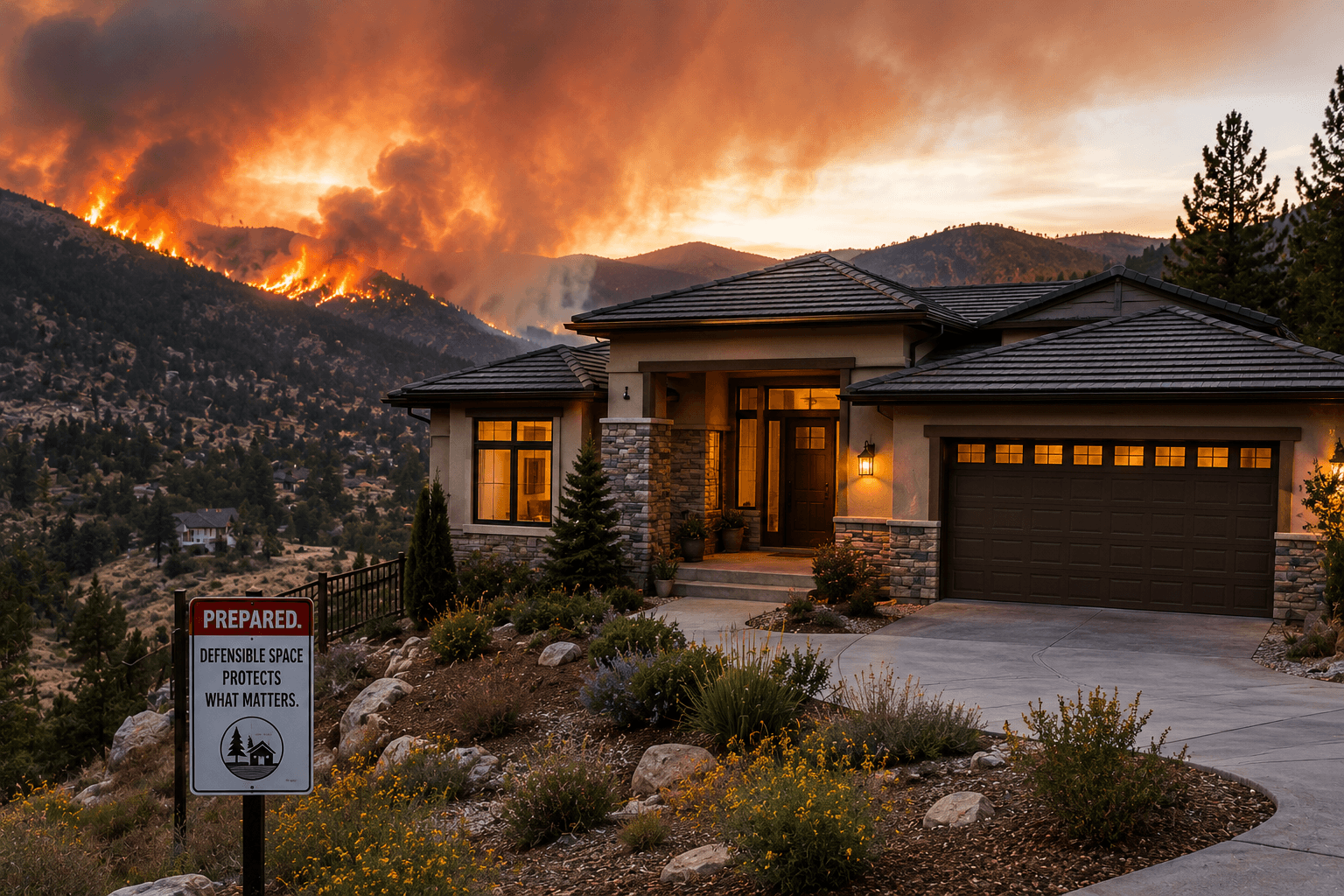
Wildfires can threaten homes in rural communities, mountain areas, forests, grasslands, and increasingly, neighborhoods located near wildland areas. For homeowners in areas with elevated fire exposure, understanding how wildfire insurance works can be an important part of protecting their home and finances.
Wildfire insurance isn't necessarily a separate type of insurance policy. Coverage for qualifying wildfire damage may be included within homeowners, dwelling fire, or other property insurance policies. However, homes in areas with significant wildfire exposure can sometimes be more difficult or expensive to insure, and certain properties may require specialty insurance options.
Insurance availability can vary significantly by location and insurance company, making it worthwhile to compare multiple options.
Does Homeowners Insurance Cover Wildfires?
Homeowners insurance may provide coverage for qualifying fire and smoke losses, including damage caused by a wildfire, subject to the terms, conditions, limits, deductibles, and exclusions of the policy.
Depending on the policy, wildfire-related protection could include:
- Dwelling Coverage – May help repair or rebuild a home damaged or destroyed by a qualifying covered wildfire.
- Other Structures – May provide coverage for qualifying damage to detached garages, sheds, fences, and other structures.
- Personal Property – May help replace or repair certain belongings damaged by a covered fire.
- Additional Living Expenses – May help with qualifying additional expenses if a covered loss makes the home temporarily uninhabitable.
- Personal Liability – May provide protection against certain qualifying liability claims.
Homeowners should review their particular policy rather than assuming every insurer provides identical wildfire protection.
Homes in High Wildfire-Risk Areas
Obtaining insurance can become more challenging when a home is located in an area insurance companies consider to have significant wildfire exposure.
Insurers may evaluate characteristics such as:
- Wildfire history in the surrounding area
- Distance from forests, brush, and other vegetation
- Slope and surrounding terrain
- Distance from a responding fire department
- Distance from fire hydrants or other water sources
- Road and driveway accessibility
- Roofing and exterior construction materials
- Defensible space around the property
- Nearby structures and vegetation
- Previous property claims
Underwriting guidelines can differ substantially between insurance companies. A property declined by one insurer might potentially qualify with another carrier or specialty insurance program.
What If My Homeowners Insurance Is Non-Renewed Because of Wildfire Risk?
Homeowners in wildfire-prone areas may occasionally receive a notice that their insurance company will not renew their policy. A non-renewal doesn't necessarily mean that insurance is unavailable.
Depending on the property and location, alternatives might include:
- Another standard homeowners insurance company
- Specialty property insurance
- Surplus lines insurance
- State-supported insurance programs where available
- A combination of multiple policies
Options vary by state and property. Starting the search for replacement coverage well before the existing policy expires can provide more time to evaluate available alternatives.
Wildfire Insurance for Rural and Mountain Homes
Homes in rural and mountain areas can present additional insurance considerations beyond wildfire exposure. Properties may be located far from fire stations, lack nearby hydrants, rely on private wells, or have limited road access.
Insurance may be available for qualifying:
- Mountain homes
- Rural residences
- Log homes and cabins
- Homes surrounded by forest or acreage
- Vacation and seasonal properties
- High-value rural homes
- Secondary residences
The home's construction, occupancy, accessibility, fire protection, and surrounding vegetation may all influence eligibility.
Replacement Cost Is Especially Important
After a major wildfire, many properties within the same geographic area can be damaged simultaneously. This can increase demand for contractors, labor, building materials, debris removal, and other reconstruction services.
For that reason, homeowners should pay close attention to their dwelling replacement cost. The amount a home could sell for isn't necessarily the amount it would cost to rebuild after a total loss.
Depending on the insurance company and property, options such as extended replacement cost or other enhanced dwelling coverage may be available. These options may provide additional protection above the stated dwelling limit following certain qualifying losses, subject to policy provisions.
Wildfire Mitigation and Defensible Space
Property maintenance and wildfire mitigation may play a role in how some insurers evaluate a home. Requirements vary, but reducing combustible materials around the structure can also help improve the home's resistance to wildfire.
Wildfire mitigation efforts might include:
- Removing dead vegetation and debris
- Maintaining defensible space around structures
- Trimming trees and vegetation near the home
- Keeping roofs and gutters clear of combustible debris
- Using fire-resistant roofing and building materials
- Screening vents where appropriate
- Maintaining accessible driveways
- Reducing combustible materials near decks and outbuildings
Some insurance companies may consider certain mitigation measures when determining eligibility, although completing improvements doesn't guarantee that a particular insurer will offer coverage.
Smoke Damage from Wildfires
A home doesn't necessarily have to burn to experience damage from a wildfire. Smoke, soot, and ash can travel significant distances and potentially affect a property even when flames never reach the structure.
Depending on the circumstances and policy, coverage may be available for certain qualifying smoke-related losses. The extent of coverage can depend on the nature of the damage and policy provisions.
Wildfire Insurance for Vacation and Secondary Homes
Cabins and vacation properties are frequently located in wooded, mountainous, or remote areas with increased wildfire exposure. Seasonal occupancy can create additional concerns because the property may remain unattended for long periods.
Insurance companies may consider:
- How frequently the property is occupied
- Distance from fire protection
- Road accessibility
- Heating systems
- Wildfire exposure
- Vegetation surrounding the property
- Property maintenance arrangements
Specialty or seasonal home insurance might be available when a traditional homeowners policy isn't appropriate.
How Much Does Wildfire Insurance Cost?
There isn't a single cost for wildfire insurance. Because fire coverage is often part of a broader homeowners or property policy, premiums can depend on many characteristics of the home and location.
Factors that may affect insurance costs include:
- Wildfire risk in the area
- Home replacement cost
- Roof and construction materials
- Distance from fire protection
- Surrounding vegetation
- Property access
- Coverage limits and deductibles
- Claims history
- Available mitigation features
Homes with significant wildfire exposure may have fewer insurance options, making comparison shopping particularly important.
Compare Insurance for Wildfire-Prone Homes
Living in a wildfire-prone area doesn't necessarily mean that your home is uninsurable. However, finding appropriate coverage may require looking beyond a single insurance company.
An independent insurance agent can help compare standard and specialty insurance markets and explore available options for homes with elevated wildfire exposure.
FAQs
Is wildfire insurance a separate policy?
Not necessarily. Qualifying wildfire damage may be covered under a homeowners or other property insurance policy. In higher-risk areas, specialty coverage or additional insurance arrangements may sometimes be needed.
Can I get home insurance if I live in a high wildfire-risk area?
Potentially. Availability depends on the property, location, insurance company, and current underwriting requirements. Standard insurers, specialty companies, surplus lines markets, or state-supported programs may provide options depending on the state.
What happens if my insurance company non-renews my home because of wildfire risk?
A non-renewal doesn't necessarily mean coverage is unavailable. Other standard or specialty insurance companies may offer coverage, and certain states may provide additional insurance options for difficult-to-insure properties. It's generally helpful to begin comparing alternatives before the current policy expires.
Can wildfire mitigation help me get homeowners insurance?
Some insurance companies may consider defensible space, vegetation management, roof materials, property access, and other mitigation measures when evaluating a home. Requirements vary by insurer, and mitigation does not guarantee eligibility or a particular premium.