

Log Home Insurance for a Unique Place to Call Home.
Log homes have distinctive construction and insurance considerations that can differ from conventional houses. Our agents compare options from 20+ top-rated carriers to help find coverage tailored to your home.
THE FIRSTMARK CHALLENGE
A better way to review coverage.
Four simple steps. Zero obligation.

Have A Conversation.

We shop the markets.

Review the results.

You decide.
- Licensed in 39 states
- 20+ Insurance Carriers
- Headquartered in Edmonds, WA
- Independent & Unbiased
A better way to review coverage.
The Firstmark Challenge
Our simple, guided process makes reviewing your insurance easy. We take the time to understand your needs, compare options across top carriers, and present clear results—so you can make a confident decision.
01
Have A Conversation
02
We Shop The Markets
03
Review The Results
04
You Decide!
Your Log Home Deserves Specialized Attention
With FirstMark Insurance’s dedicated personal insurance team, you get local experts comparing coverage from over 20 insurance carriers to help find protection appropriate for your log home, property, and lifestyle—with strong coverage and competitive pricing.
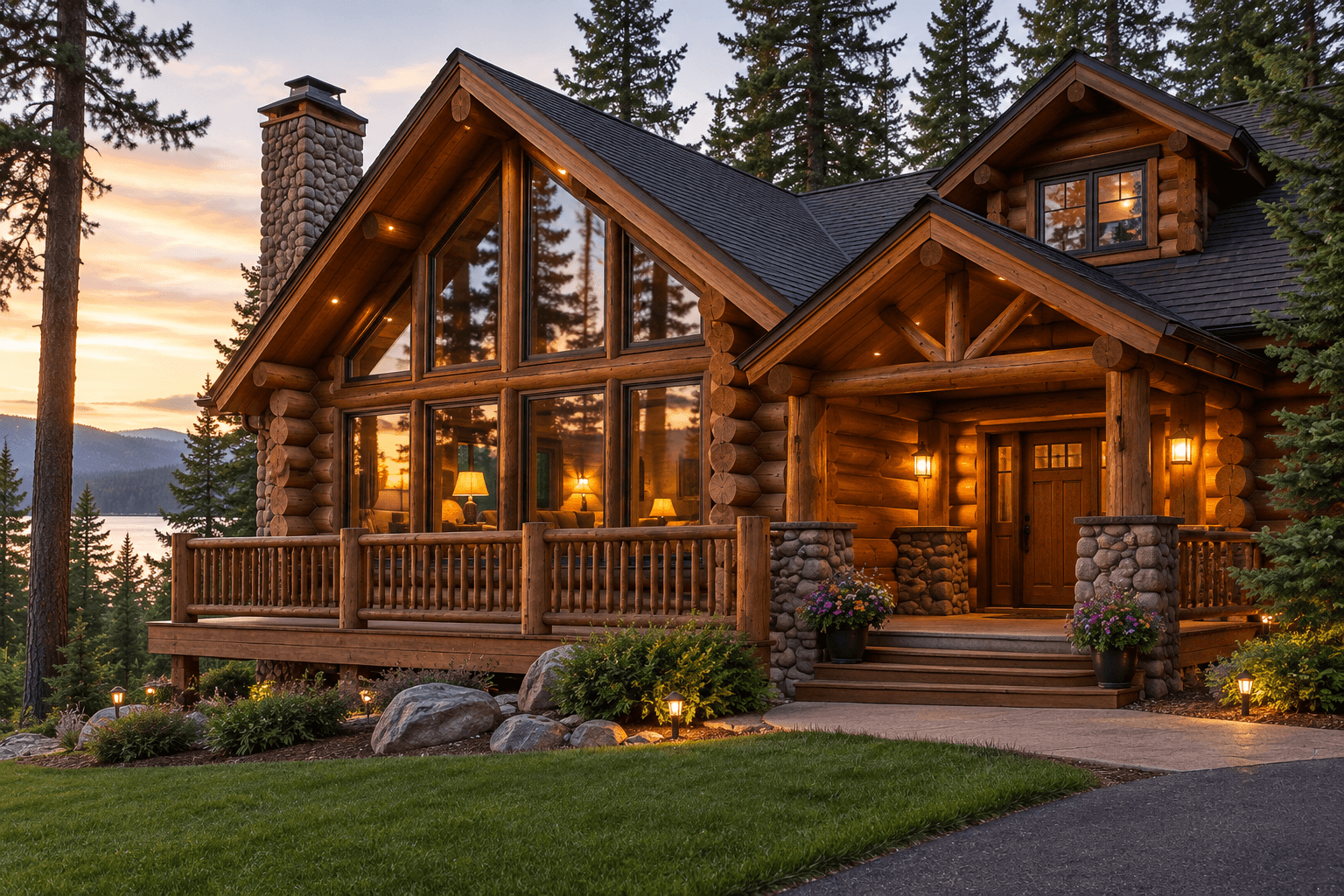
A log home offers distinctive character, craftsmanship, and a connection to the outdoors that is difficult to replicate with conventional construction. Whether your property is a full-time residence, mountain retreat, lake cabin, or vacation home, log home insurance can help protect the significant investment you've made in your property.
Insuring a log home can sometimes require additional consideration because construction methods, replacement costs, location, fire protection, roof type, and access to contractors experienced with log structures may differ from those of a traditional home.
Insurance companies also have different guidelines for log and timber homes. Comparing multiple insurers may help identify coverage appropriate for the construction, value, location, and use of your property.
What Types of Log Homes Can Be Insured?
Log homes range from small rustic cabins to substantial luxury residences. Depending on the property and insurance company, coverage may be available for:
- Full-time log homes
- Log cabins
- Luxury log homes
- Timber-frame homes
- Post-and-beam homes
- Mountain cabins
- Lake and waterfront log homes
- Vacation and seasonal log homes
- Secondary residences
- Custom-built log homes
Eligibility may depend on the home's construction, age, condition, occupancy, location, heating systems, roof, access, and other underwriting factors.
Why Can Log Homes Be Different to Insure?
A log home isn't necessarily insured the same way as a conventionally framed house. Insurance companies may evaluate several characteristics specific to log and timber construction.
Factors that could receive additional consideration include:
- Type and diameter of logs
- Full-log versus timber-frame construction
- Age and condition of the structure
- Replacement and reconstruction costs
- Availability of specialized contractors
- Distance from a fire station or hydrant
- Wildfire exposure
- Primary versus seasonal occupancy
- Wood-burning stoves and fireplaces
- Roof type and condition
Providing accurate information about the home's construction can help an insurance company properly evaluate the property.
Log Home Insurance Coverage
Depending on the insurance company and policy, coverage for a log home may include:
- Dwelling Coverage – May help pay to repair or rebuild the home following certain qualifying covered losses.
- Other Structures – May provide coverage for qualifying detached garages, shops, sheds, guest structures, or other buildings.
- Personal Property – May help protect furniture, electronics, clothing, and other qualifying belongings.
- Personal Liability – May provide protection against certain bodily injury or property damage claims for which you're legally responsible.
- Additional Living Expenses – May help with qualifying additional expenses if a covered loss temporarily makes the home uninhabitable.
- Water Backup Coverage – May be available as an endorsement or optional coverage.
- Equipment Breakdown – Some insurers may offer protection for certain qualifying mechanical or electrical equipment failures.
Coverage availability, limits, deductibles, conditions, and exclusions can vary considerably between insurance companies.
Replacement Cost for a Log Home
Determining an appropriate dwelling limit can be especially important for a log home. The home's market value or purchase price isn't necessarily the same as what it would cost to rebuild after a major covered loss.
Reconstruction could involve specialized logs, custom millwork, unique structural components, skilled labor, transportation costs, and contractors familiar with log construction.
Depending on the insurer and eligibility requirements, replacement cost or extended replacement cost coverage may be available. Homeowners should periodically review dwelling limits as construction and material costs change.
Wildfire Insurance for Log Homes
Many log homes are located in rural, forested, mountain, or recreational areas where wildfire can be an important insurance consideration.
Insurance companies may evaluate factors such as:
- Distance to vegetation and trees
- Wildfire history in the area
- Road and property access
- Distance from responding fire departments
- Availability of fire hydrants or water sources
- Roofing and other construction materials
- Defensible space around the home
Wildfire eligibility and coverage can vary significantly by location and insurance company. Certain properties may require specialty insurance options when traditional homeowners coverage is limited.
Wood Stoves and Fireplaces
Wood-burning stoves and fireplaces are common features in log homes and cabins. They can also be important underwriting considerations.
An insurance company may ask about the type of stove or fireplace, professional installation, chimney construction, clearances from combustible materials, maintenance, and inspections.
Having a wood stove doesn't necessarily prevent a home from being insured, but requirements and eligibility can vary between insurers.
Vacation and Seasonal Log Cabin Insurance
Not every log home is occupied year-round. Many are used as weekend retreats, vacation homes, hunting cabins, or seasonal properties.
A seasonal or secondary log home can have different insurance needs because it may remain unoccupied for extended periods. Water leaks, freezing pipes, theft, fire, and other problems may go unnoticed longer than they would at a primary residence.
Owners should accurately disclose how frequently the property is occupied. Certain insurers may offer coverage specifically designed for seasonal or secondary residences.
Log Homes in Rural and Remote Locations
Remote settings are part of the appeal of many log homes, but location can affect insurance eligibility and cost.
A property located many miles from a responding fire department, accessed by a private road, or without a nearby fire hydrant may be evaluated differently from a similar home located within a developed community.
Properties with detached garages, barns, workshops, generators, propane tanks, private wells, or other features should also be accurately described when obtaining insurance.
How Much Does Log Home Insurance Cost?
There isn't a standard price for log home insurance. Premiums may vary substantially depending on the property and insurance company.
Factors that may influence the cost include:
- Home replacement cost
- Log or timber construction type
- Property location
- Wildfire exposure
- Distance to fire protection
- Roof age and material
- Wood stoves and fireplaces
- Primary versus seasonal occupancy
- Coverage limits and deductibles
- Claims history
Because insurance companies can have very different underwriting guidelines for log homes, comparing multiple carriers may be particularly helpful.
Compare Log Home Insurance
A log home is a unique property, and its insurance should reflect its construction, location, value, and use. The lowest-priced policy may not necessarily provide the best protection if rebuilding costs or important property features aren't adequately considered.
An independent insurance agent can help compare insurance companies that may offer coverage for log homes, timber-frame properties, cabins, and other unique residences.
FAQs
Are log homes harder to insure?
Some insurance companies have additional underwriting requirements or restrictions for log homes, while others regularly insure them. Construction type, replacement cost, fire protection, location, roof condition, heating systems, and occupancy may all affect eligibility.
Does homeowners insurance cover a log cabin?
Homeowners insurance may be available for qualifying log cabins, but the appropriate policy can depend on whether the property is a primary residence, vacation home, seasonal cabin, or rental. Coverage and eligibility vary by insurance company.
Can I insure a log home with a wood-burning stove?
Potentially. Many insurers may consider homes with properly installed and maintained wood stoves, although underwriting requirements can vary. The insurance company may request information about the stove, chimney, installation, clearances, or inspections.
Does log home insurance cover wildfire?
Home insurance may provide coverage for qualifying fire losses, subject to the policy's terms, conditions, limits, and exclusions. However, homes in areas with significant wildfire exposure may face additional underwriting requirements or limited insurance availability.