

Duplex Insurance That Helps Protect Your Property.
Whether you live in one unit, rent out both, or own a duplex as an investment, the right insurance matters. Our agents compare options from 20+ top-rated carriers to help find coverage tailored to your property.
THE FIRSTMARK CHALLENGE
A better way to review coverage.
Four simple steps. Zero obligation.

Have A Conversation.

We shop the markets.

Review the results.

You decide.
- Licensed in 39 states
- 20+ Insurance Carriers
- Headquartered in Edmonds, WA
- Independent & Unbiased
A better way to review coverage.
The Firstmark Challenge
Our simple, guided process makes reviewing your insurance easy. We take the time to understand your needs, compare options across top carriers, and present clear results—so you can make a confident decision.
01
Have A Conversation
02
We Shop The Markets
03
Review The Results
04
You Decide!
Protection Designed Around Your Duplex
With FirstMark Insurance’s dedicated insurance team, you get local experts comparing coverage from over 20 insurance carriers to help protect your duplex, property, and investment—with strong coverage and competitive pricing.
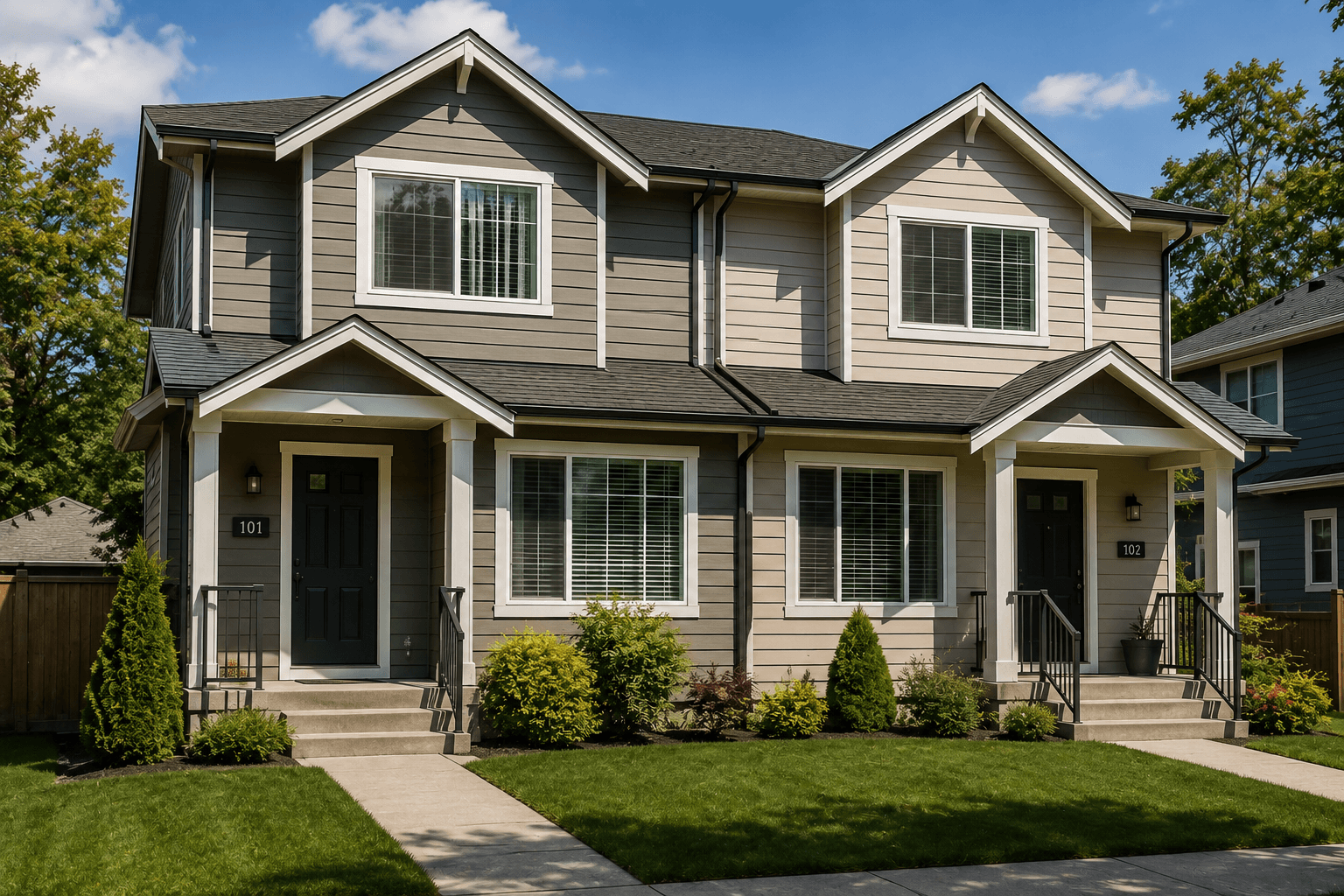
A duplex can be a home, an investment property, or a combination of both. You might live in one unit and rent the other, lease both sides to tenants, or own several duplexes as part of a real estate portfolio. Because of these different uses, choosing the right duplex insurance can require more consideration than insuring a traditional single-family home.
Insurance for a duplex may help protect the building, your liability exposure, certain personal property, and potentially lost rental income following a qualifying covered loss. The appropriate policy can depend heavily on whether the property is owner-occupied, fully rented, vacant, being renovated, or used in another way.
Working with an independent insurance agent can help you compare available options and find coverage appropriate for how your duplex is actually owned and used.
What Type of Insurance Does a Duplex Need?
There isn't one insurance policy that is automatically right for every duplex. The occupancy and ownership arrangement are particularly important when determining what type of policy might be appropriate.
Common duplex arrangements include:
- Owner lives in one unit and rents the other
- Both units are rented to tenants
- Family members occupy separate units
- One unit is temporarily vacant
- The property is undergoing renovation
- The duplex is part of a larger rental property portfolio
An insurance professional should know exactly how each unit is occupied so available coverage can be evaluated appropriately.
Owner-Occupied Duplex Insurance
If you live in one side of your duplex and rent the other, you may need an insurance policy designed to account for both your residence and the rental exposure.
Depending on the insurance company and property, coverage may be available for the dwelling, certain personal belongings, personal liability, and the portion of the property rented to a tenant.
It's important to tell the insurance company that part of the property is rented. A duplex with a tenant occupying one unit can present different risks than a home occupied exclusively by the owner.
Landlord Insurance for a Duplex
If both units are rented to tenants, the property may need landlord insurance or rental property insurance rather than a traditional homeowners policy.
A duplex landlord policy may include coverage for:
- Dwelling – May help cover qualifying damage to the duplex itself.
- Other Structures – Coverage may be available for qualifying detached garages, sheds, fences, or other structures.
- Landlord-Owned Property – May provide protection for certain appliances, maintenance equipment, or other property owned by the landlord.
- Premises Liability – May help provide protection against certain qualifying bodily injury or property damage claims.
- Loss of Rental Income – May help replace qualifying rental income when a covered loss makes a unit temporarily uninhabitable.
- Additional Coverage – Water backup, equipment breakdown, ordinance or law, and other options might be available depending on the insurer.
Coverage, limits, deductibles, exclusions, and eligibility requirements can vary by insurance company and policy.
Loss of Rental Income Coverage
Rental income can be an important reason someone owns a duplex. If a covered fire or other qualifying loss makes one or both units uninhabitable, repairs could potentially take weeks or months.
Loss of rental income coverage, sometimes included as part of a landlord insurance policy, may help replace certain lost rents during the covered restoration period.
This coverage typically applies only when the loss of rent results from a qualifying covered loss. It generally isn't intended to cover ordinary vacancies, tenant nonpayment, or every circumstance that causes rental income to stop.
Liability Insurance for Duplex Owners
Owning rental property creates potential liability exposures. A tenant, guest, delivery driver, contractor, or another visitor could potentially be injured on the property and make a claim against the property owner.
Liability insurance may provide protection for certain qualifying claims involving bodily injury or property damage for which the insured is legally responsible.
Duplex owners with significant assets or multiple rental properties may also want to consider whether umbrella or excess liability insurance could provide additional protection above qualifying underlying policies.
What About the Tenant's Belongings?
A duplex owner's insurance generally isn't intended to insure a tenant's furniture, electronics, clothing, and other personal belongings. Tenants may need their own renters insurance for personal property and personal liability protection.
Landlords may choose to require renters insurance as part of a lease agreement, subject to applicable laws and requirements.
Insurance for Multiple Duplexes
Real estate investors may own several duplexes or a combination of duplexes, single-family rentals, triplexes, fourplexes, and other residential investment properties.
Depending on the properties and insurance company, it may be possible to coordinate multiple rental locations under a broader insurance program. This could make it easier to manage liability limits, property coverage, deductibles, and renewals across a real estate portfolio.
Owners with multiple properties should accurately report the occupancy, rental arrangement, and use of each location.
Vacant or Renovated Duplex Insurance
A vacant duplex or a property undergoing significant renovations may not qualify for the same insurance options as a fully occupied property.
Vacancy can increase exposures involving theft, vandalism, water damage, and delayed discovery of losses. Major renovation work can create additional construction-related risks.
Vacant property or builders risk coverage might be available depending on the circumstances. Property owners should notify their insurance professional about significant vacancies or renovations rather than assuming an existing policy will automatically provide the expected protection.
How Much Does Duplex Insurance Cost?
There isn't a standard price for duplex insurance. Premiums can vary based on the property, occupancy, location, coverage selected, and insurance company.
Factors that may affect the cost of insuring a duplex include:
- Owner-occupied versus fully rented
- Property location
- Age and condition of the duplex
- Building replacement cost
- Roof, plumbing, electrical, and heating systems
- Rental income
- Number and type of units
- Coverage limits and deductibles
- Claims history
- Additional coverage selected
Because insurance companies can have different underwriting guidelines for owner-occupied and investment properties, comparing multiple insurers may help identify appropriate coverage and pricing.
Compare Duplex Insurance
Whether your duplex is your home, an investment, or both, the insurance policy should accurately reflect how the property is being used. An owner-occupied duplex can have different insurance needs than a property where both units are leased to tenants.
An independent insurance agent can help compare insurance companies and coverage options for owner-occupied duplexes, rental properties, and real estate investors with multiple locations.
FAQs
Do I need landlord insurance if I live in one side of my duplex?
Not necessarily. Insurance options for an owner-occupied duplex can vary depending on the insurance company and rental arrangement. The insurer should be informed that one unit is rented so the appropriate policy and coverage can be determined.
What insurance do I need if I rent out both sides of a duplex?
A fully rented duplex may qualify for landlord or rental property insurance. Coverage might include the dwelling, landlord-owned property, liability, and loss of rental income following certain qualifying covered losses.
Does duplex insurance cover my tenants' belongings?
Generally, a landlord's insurance isn't intended to cover a tenant's personal belongings. Tenants may purchase renters insurance to provide protection for qualifying losses involving their personal property and personal liability.
Can I insure several duplex rental properties together?
Depending on the insurance company and properties, owners may be able to coordinate coverage for multiple duplexes and other rental properties within a larger insurance program. Options can vary based on the number of locations, property types, occupancy, and other underwriting factors.