
House Cleaning Insurance That Helps Protect Your Business.
Working inside customers’ homes comes with responsibilities and unexpected risks. Our agents compare options from 20+ top-rated carriers to help build insurance solutions tailored to your housekeeping or cleaning business.
THE FIRSTMARK CHALLENGE
A better way to review coverage.
Four simple steps. Zero obligation.

Have A Conversation.

We shop the markets.

Review the results.

You decide.
- Licensed in 39 states
- 20+ Insurance Carriers
- Headquartered in Edmonds, WA
- Independent & Unbiased
A better way to review coverage.
The Firstmark Challenge
Our simple, guided process makes reviewing your insurance easy. We take the time to understand your needs, compare options across top carriers, and present clear results—so you can make a confident decision.
01
Have A Conversation
02
We Shop The Markets
03
Review The Results
04
You Decide!
Keep Your Cleaning Business Protected
With FirstMark Insurance’s dedicated commercial insurance team, you get experienced agents comparing coverage from over 20 insurance carriers to help protect your cleaning business, employees, equipment, vehicles, and daily operations—with strong coverage and competitive pricing.
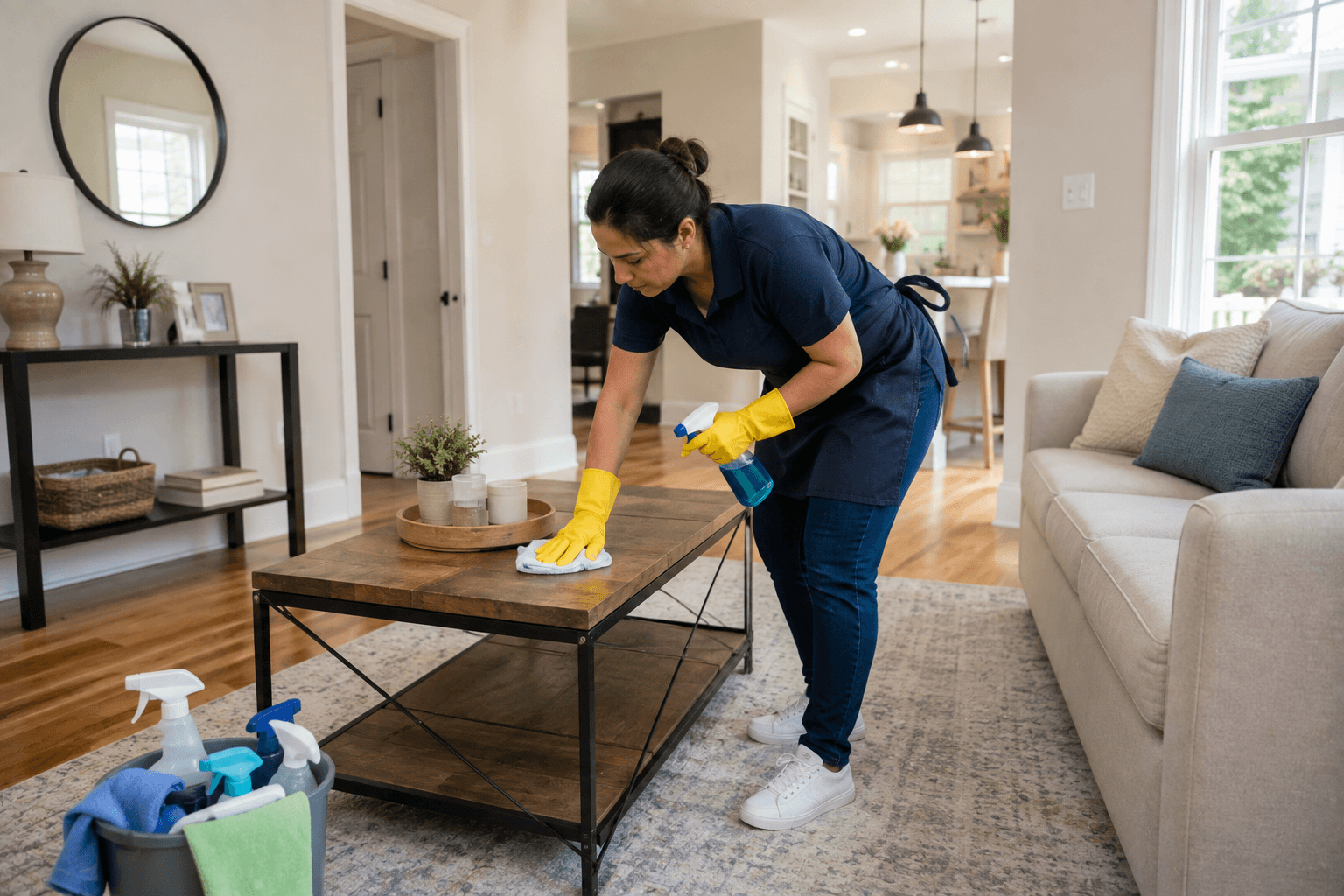
House cleaning and housekeeping businesses spend their days working inside other people's homes and properties. While professional cleaning may seem relatively low risk compared with construction or other trades, accidents can still happen. Damaged furniture, broken valuables, slip-and-fall injuries, employee accidents, lost keys, and vehicle incidents can all create potential financial exposures.
House cleaning business insurance can help protect your company against certain risks involving customer property, bodily injury, employees, vehicles, equipment, and other unexpected losses. Whether you're an independent housekeeper or operate a cleaning company with multiple employees and crews, an insurance program can be tailored around the way your business operates.
The appropriate coverage may depend on annual revenue, payroll, number of employees, cleaning services provided, vehicles, equipment, customer types, and whether your company performs residential, vacation rental, or other housekeeping services.
What Insurance Does a House Cleaning Business Need?
House cleaning company insurance generally isn't a single policy. Instead, several types of commercial insurance may be combined to address the different risks associated with providing cleaning services inside customers' properties.
General Liability Insurance
House cleaning general liability insurance may help protect your business against certain claims involving bodily injury or property damage arising from your operations.
For example, an employee could accidentally damage furniture or flooring, cleaning equipment could damage another portion of a home, or a customer could slip on a recently cleaned surface. Depending on the circumstances and policy terms, general liability insurance may provide coverage for qualifying claims.
Property managers, homeowners associations, vacation rental operators, and other customers may also require proof of general liability insurance before hiring a cleaning company.
Workers' Compensation Insurance
Housekeeping employees may encounter wet floors, stairs, repetitive lifting, cleaning products, sharp objects, and other potential workplace hazards.
Workers' compensation insurance may provide benefits for qualifying employees who experience work-related injuries or illnesses. Requirements can vary depending on the structure of the company and where the business operates.
Janitorial Bond or Employee Dishonesty Coverage
House cleaning employees are frequently given access to customers' homes and personal property. This can create concerns about allegations of theft or employee dishonesty.
A janitorial bond or employee dishonesty coverage may provide certain protection involving qualifying theft or dishonest acts committed by employees. The protection provided by a bond and an insurance policy can differ, so available options should be reviewed carefully.
Being bonded may also be important to customers who want additional reassurance before providing a cleaning company with access to their home.
Commercial Auto Insurance
Cleaning businesses may use cars, vans, or other vehicles to transport employees, cleaning products, and equipment between customers throughout the day.
Commercial auto insurance may provide liability and physical damage coverage for qualifying business-owned vehicles. Additional coverage, such as hired and non-owned auto liability, might be appropriate when employees use personal or rented vehicles for business purposes.
Vehicle ownership and employee driving arrangements should be accurately described when obtaining coverage.
Cleaning Tools and Equipment Insurance
Professional cleaning companies may own vacuums, carpet cleaners, floor machines, steam cleaners, and other portable equipment.
Inland marine or business property coverage may help protect qualifying equipment while it is being transported, used at a customer's property, or temporarily stored away from the company's primary location.
Coverage may be available for items such as:
- Commercial vacuums
- Carpet cleaning machines
- Steam cleaners
- Floor cleaning equipment
- Pressure washers
- Portable cleaning equipment
- Cleaning supplies
- Other qualifying business property
Available coverage, limits, deductibles, and eligible property can vary by policy.
Commercial Property Insurance
Cleaning companies that operate from an office, warehouse, shop, or storage facility may want to consider commercial property insurance.
Depending on the policy, coverage may help protect office equipment, cleaning supplies, inventory, furniture, and other qualifying business property against certain covered losses.
Insurance for Different Types of Cleaning Businesses
Residential cleaning companies can provide many different services, and the work performed may influence insurance eligibility, coverage options, and pricing.
Insurance options may be available for businesses providing:
- Residential house cleaning
- Recurring housekeeping services
- Deep cleaning
- Move-in and move-out cleaning
- Apartment cleaning
- Vacation rental cleaning
- Post-construction cleaning
- Window cleaning
- Carpet and floor cleaning
- Rental property turnover cleaning
Businesses should accurately describe all services they provide when applying for insurance. Commercial janitorial work, exterior window cleaning, pressure washing, work at significant heights, or specialized cleaning services may create different exposures and could require additional coverage.
Protecting Against Damage to Customer Property
One of the primary exposures for a house cleaning business is working around property belonging to someone else. Employees may be cleaning around furniture, electronics, artwork, flooring, countertops, appliances, and personal belongings.
An item could accidentally be dropped, a cleaning product might damage a surface, or equipment could potentially cause damage inside a customer's home.
General liability insurance may provide protection for certain qualifying property damage claims, but coverage depends on how a loss occurs and the specific terms, conditions, limits, and exclusions of the policy.
Cleaning companies should discuss their customer property exposures with an insurance professional to understand what coverage may be available.
House Cleaning Companies and Employee Theft
Trust is especially important in the residential cleaning industry. Customers may provide employees with keys, access codes, garage door openers, or unsupervised access to their homes.
Employee dishonesty insurance or a janitorial bond may provide certain protection if an employee commits a qualifying dishonest act. These options do not necessarily provide identical coverage, so cleaning businesses should understand how each form of protection works.
Companies may also want procedures for managing keys, access codes, hiring, employee screening, and customer property.
Insurance for Independent House Cleaners
Insurance isn't only a consideration for larger cleaning companies. A self-employed housekeeper can still potentially be held responsible for accidental property damage or injuries arising from cleaning operations.
Independent cleaners may want to consider general liability insurance along with coverage for equipment and business-related vehicle exposures. Customers or property management companies might also request proof of insurance before allowing work to begin.
Protect Your House Cleaning Business
A cleaning business can represent years of work building customer relationships, purchasing equipment, hiring employees, and developing a trusted reputation. Appropriate business insurance can help provide financial protection when certain unexpected accidents or losses occur.
The insurance needs of an independent housekeeper may differ considerably from those of a cleaning company operating multiple crews and vehicles. Annual revenue, payroll, services performed, number of employees, customer types, equipment, vehicles, and claims history can all influence coverage needs and pricing.
Working with an independent insurance agent can provide access to multiple insurance companies and coverage options, helping you find an insurance program appropriate for your cleaning business.
FAQs
What insurance does a house cleaning business need?
A house cleaning company's insurance program may include general liability, workers' compensation, commercial auto, business property, and employee dishonesty coverage. A janitorial bond and other specialized coverage may also be appropriate depending on the business and services provided.
Does house cleaning insurance cover damage to a customer's property?
General liability insurance may provide coverage for certain qualifying property damage claims arising from cleaning operations. Whether a particular loss is covered can depend on what was damaged, how the damage occurred, and the terms, conditions, limits, and exclusions of the policy.
Should a house cleaning company be bonded and insured?
Insurance and bonding can provide different forms of protection. General liability insurance may address certain injury or property damage claims, while a janitorial bond may provide protection involving certain dishonest acts by employees. Available protection can vary, so both options may be worth considering.
How much does house cleaning business insurance cost?
House cleaning business insurance costs can vary based on annual revenue, payroll, number of employees, services provided, customer types, vehicles, equipment, claims history, and selected coverage limits. Comparing options from multiple insurance companies can help identify an insurance program appropriate for the business.