

Wine Collector Insurance for Your Valued Collection.
Your wine collection can represent years of searching, collecting, and investment. Our agents compare options from 20+ top-rated carriers to help find insurance solutions tailored to your collection.
THE FIRSTMARK CHALLENGE
A better way to review coverage.
Four simple steps. Zero obligation.

Have A Conversation.

We shop the markets.

Review the results.

You decide.
- Licensed in 39 states
- 20+ Insurance Carriers
- Headquartered in Edmonds, WA
- Independent & Unbiased
A better way to review coverage.
The Firstmark Challenge
Our simple, guided process makes reviewing your insurance easy. We take the time to understand your needs, compare options across top carriers, and present clear results—so you can make a confident decision.
01
Have A Conversation
02
We Shop The Markets
03
Review The Results
04
You Decide!
Specialized Protection for Your Wine Collection
With FirstMark Insurance’s dedicated personal insurance team, you get local experts comparing coverage from over 20 insurance carriers to help find protection appropriate for your valuable wine collection—with strong coverage and competitive pricing.
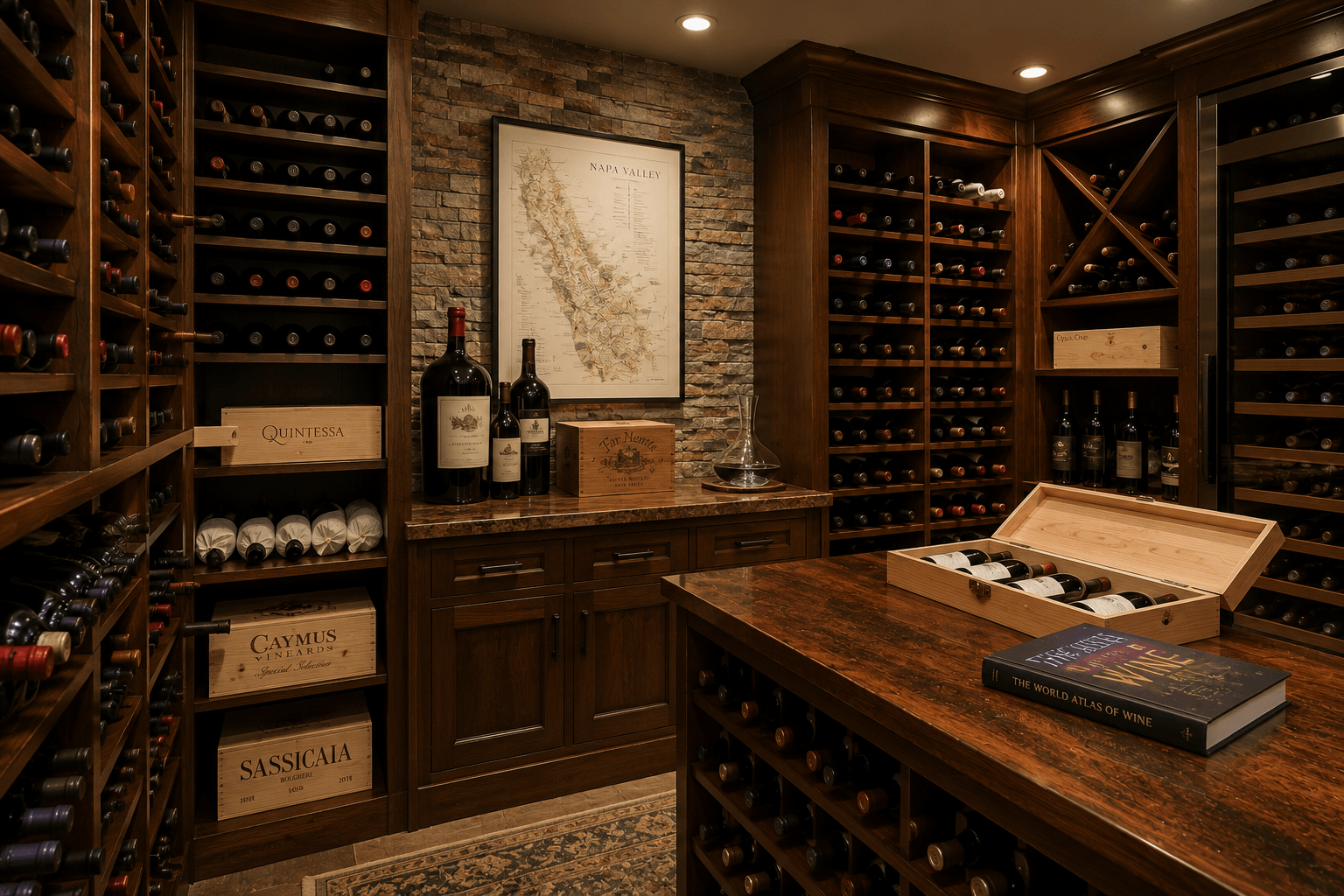
A carefully assembled wine collection can represent years of searching, collecting, proper storage, and significant financial investment. Whether your cellar contains a few cases of valuable vintages or hundreds of bottles from renowned producers around the world, wine collection insurance may provide protection designed specifically for the unique risks associated with collectible and high-value wine.
Standard homeowners insurance may provide some protection for wine, but coverage can be limited by policy terms, covered causes of loss, valuation methods, or other restrictions. For a substantial collection, specialized insurance may offer broader protection and coverage specifically designed around the value of the wine.
An independent insurance agent can help evaluate your existing coverage and determine whether separate or scheduled wine collection insurance may be appropriate.
What Can Wine Collection Insurance Cover?
Coverage varies by insurance company and policy, but specialized wine insurance may provide protection for qualifying losses involving:
- Fire and smoke damage
- Theft
- Water damage
- Accidental breakage
- Certain natural disasters
- Damage during transportation
- Loss resulting from certain mechanical failures
- Damage related to qualifying temperature changes
- Other covered causes of loss
Coverage may be written as part of a high-value homeowners policy, scheduled onto an existing policy, or provided through separate collectible insurance depending on the collection and insurance company.
Why Consider Special Insurance for a Wine Collection?
Wine differs from many other collectibles because its condition and value can be affected by its environment. Temperature, humidity, light, vibration, and storage conditions can all play a role in preserving a bottle.
A collection can also appreciate significantly over time. A bottle purchased years ago may be worth considerably more today, particularly if it comes from a desirable vintage or producer.
Specialized wine insurance may provide options designed to address issues such as:
- Changing market values
- Rare and difficult-to-replace bottles
- Large collections stored in a private cellar
- Wine refrigerators and climate-controlled storage
- Collections stored away from the primary residence
- Newly acquired bottles
- Wine transported or shipped between locations
Available protection can vary considerably, so the specific terms of a policy should be reviewed carefully.
Does Homeowners Insurance Cover a Wine Collection?
A homeowners policy may provide some coverage for wine, but homeowners insurance isn't necessarily designed around a substantial or particularly valuable collection.
Policy limits, exclusions, deductibles, valuation provisions, and covered causes of loss may affect how much protection is available. For example, a homeowners policy might respond differently to bottles destroyed in a house fire than to wine damaged because of a temperature-control problem.
Owners of valuable collections should disclose their wine to their insurance professional rather than assuming the full collection is automatically covered.
Insurance for a Home Wine Cellar
A custom wine cellar can involve two distinct insurance considerations: the wine itself and the physical cellar or equipment used to store it.
A collection could contain hundreds of individual bottles with a substantial combined value. At the same time, the cellar may include custom cabinetry, refrigeration equipment, climate-control systems, lighting, and other improvements.
Depending on the policy, the wine and the equipment used to store it may be insured differently. Equipment breakdown coverage or other endorsements might also be available for certain qualifying mechanical or electrical failures.
Temperature Changes and Equipment Failure
Temperature control can be particularly important for valuable wine. A malfunctioning cooling system could potentially expose an entire collection to temperatures capable of damaging the wine.
Some specialized policies may provide coverage for certain qualifying losses resulting from temperature changes or mechanical breakdown. However, this protection should never be assumed to be included automatically.
Collectors with climate-controlled cellars or wine refrigerators should discuss these exposures specifically when reviewing insurance options.
How Is a Wine Collection Valued?
Valuation is an important part of insuring collectible wine. Depending on the insurer, collection, and policy, coverage might involve scheduled values, agreed values, market values, or other valuation methods.
Factors affecting the value of wine can include:
- Producer and vineyard
- Vintage
- Bottle size
- Provenance and purchase history
- Storage conditions
- Rarity and availability
- Current market demand
- Condition of the bottle, label, cork, and packaging
Large or particularly valuable collections may require an inventory or professional appraisal. Periodic reviews can also be useful because wine values may change over time.
Insurance for Rare and Collectible Wine
Specialized coverage may be particularly valuable for collectors who own rare bottles, complete cases, large-format bottles, or wine from highly sought-after producers and vintages.
A collection might include Bordeaux, Burgundy, Champagne, Napa Valley Cabernet, Italian wines, cult wines, or bottles acquired directly from wineries and auctions.
The individual value of certain bottles can make accurate documentation especially important. Photographs, receipts, cellar management records, auction documentation, and professional valuations may help establish ownership and value if a qualifying loss occurs.
Wine in Transit and Off-Premises Storage
Wine isn't always kept in one location. Collectors may purchase bottles at auction, ship wine from wineries, move collections between homes, or use professional off-site storage facilities.
Depending on the policy, coverage may be available for qualifying losses while wine is being transported or stored away from the primary residence. Geographic limitations and shipping requirements may apply.
Collectors who regularly purchase or transport valuable wine should make sure their insurance program reflects how and where the collection is actually stored.
How Much Does Wine Collection Insurance Cost?
The cost of wine collection insurance can vary based on the size and value of the collection, storage arrangements, location, coverage selected, and insurance company.
Factors that may influence premiums include:
- Total collection value
- Value of individual bottles
- Home versus off-site storage
- Climate-control systems
- Security and fire protection
- Claims history
- Coverage limits and deductibles
- Transportation exposures
Because wine collections can range from a modest cellar to an investment worth hundreds of thousands of dollars or more, coverage should be tailored to the actual collection.
Protect Your Wine Collection
A wine collection can be both personally meaningful and financially valuable. Proper insurance can help protect the time, expense, and effort that went into building it.
An independent insurance agent can help review homeowners, high-value home, and specialty collectible insurance options to determine what coverage may be appropriate for your wine cellar or collection.
FAQs
Does homeowners insurance cover expensive wine?
Homeowners insurance may provide some protection for wine, but limits, exclusions, valuation provisions, and covered causes of loss can vary. A valuable collection may benefit from scheduled, high-value, or specialty wine insurance.
Can wine insurance cover a failed cooling system?
Certain specialized policies may provide coverage for qualifying wine losses resulting from temperature changes or equipment failure. This coverage isn't necessarily included automatically, so collectors should specifically review temperature and mechanical breakdown exposures.
Do I need an appraisal to insure my wine collection?
An appraisal may be required for certain collections or particularly valuable bottles, depending on the insurance company. Even when one isn't required, maintaining an updated inventory, receipts, photographs, and valuation information can be helpful.
Can insurance cover wine stored away from my home?
Coverage may be available for qualifying wine stored at professional storage facilities or other locations. Some policies may also provide protection while wine is being transported. Coverage limits, geographic restrictions, and other requirements can vary by insurer.