

Your Seattle vacation home represents a significant investment that sits empty for months at a time. Standard homeowners policies leave these properties dangerously exposed to weather damage, theft, and liability gaps that can cost thousands.
At FirstMark Insurance Group, we’ve seen too many vacation home owners discover coverage shortfalls only after a loss occurs. The right vacation home coverage Seattle strategy protects your property year-round and gives you genuine peace of mind.
Why Vacation Home Coverage Matters in Seattle
Seattle’s Weather Creates Specific Risks
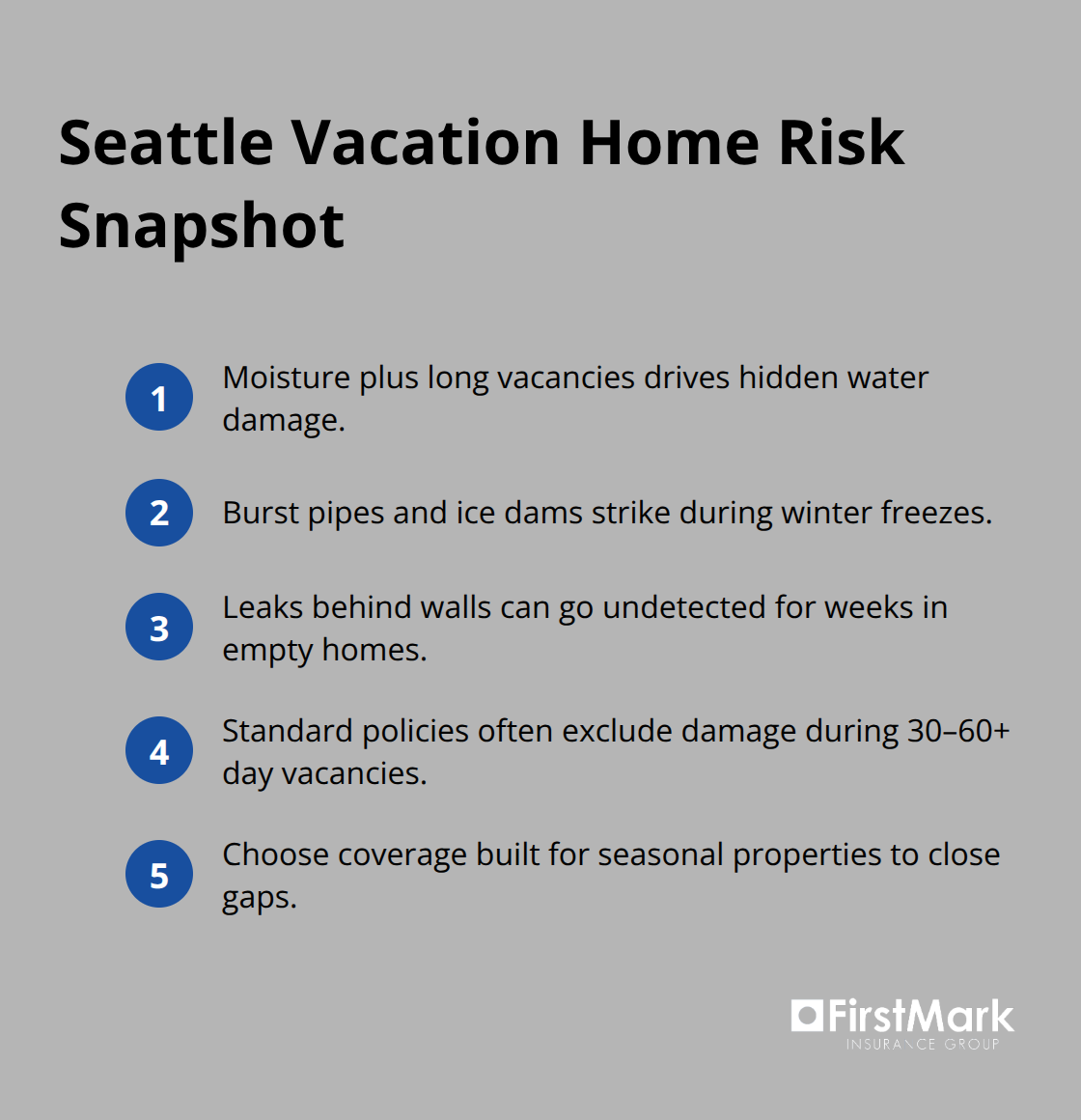
Seattle’s weather patterns create specific risks that standard homeowners policies simply don’t address. The Pacific Northwest’s relentless moisture-combined with extended vacancy periods-creates a perfect storm for water damage. Burst pipes in unheated homes during winter freezes, ice dam damage along rooflines, and undetected leaks behind walls can go weeks without notice when a property sits empty. A standard homeowners policy typically excludes coverage for damage that occurs during extended vacancy periods of 30 to 60 days or longer, leaving your seasonal property exposed during the exact months when you’re away.
Dwelling Coverage Falls Behind Rising Costs
Seattle construction costs have risen approximately 4 to 5 percent annually, meaning that if your dwelling coverage was set five years ago, it likely falls short of today’s rebuilding expenses. Current reconstruction costs in Seattle run roughly $150 to $200 per square foot, so a modest 2,000-square-foot vacation home would require $300,000 to $400,000 in coverage just to rebuild the structure-before accounting for contents or liability exposure.
Theft and Rental Activity Create Additional Exposure
Standard policies also fail to account for theft risk at unoccupied properties. Extended absence delays detection of break-ins, and thieves specifically target vacation homes they know will remain empty for months. If you rent your property seasonally or operate short-term rentals through platforms like Airbnb or VRBO, standard homeowners coverage becomes worthless; most policies explicitly prohibit rental income or guest-related claims, leaving you personally liable for injuries or property damage caused by renters. Washington state law requires primary liability insurance for short-term rentals, a requirement that platform protections like Airbnb’s AirCover cannot satisfy alone.
The Real Cost of Underinsurance
The financial consequences of underinsurance or coverage gaps are severe. A single water damage claim involving mold remediation, structural repairs, and contents replacement can easily exceed $50,000 to $100,000. A guest injury claim or theft loss during a rental period could bankrupt an uninsured owner. A vacation home policy designed specifically for secondary properties addresses these gaps directly-covering vacancy-related water damage, theft during unoccupied periods, and explicit liability protection for guest injuries and property damage. This targeted approach means claims are handled by insurers who understand secondary home risks rather than adjusters trained only on primary residences. Understanding which coverage options actually fit your property’s use and value requires careful evaluation of your specific situation.
Choosing the Right Policy Structure for Your Property
Standard Policies Fall Short for Seasonal Properties
A vacation home demands a fundamentally different insurance approach than your primary residence, and the distinction between policy types matters far more than most owners realize. Standard homeowners policies are engineered for year-round occupancy with continuous maintenance oversight; they explicitly exclude coverage gaps created by extended vacancy. A vacation home policy, by contrast, acknowledges that your property sits dormant for months and structures coverage around that reality. The dwelling fire policy represents the most basic option, covering only the structure itself without liability protection. This approach works only if your primary home’s liability policy extends to the secondary property-a condition that requires explicit coordination and verification with your current insurer. Many owners assume this coordination happens automatically and later discover their primary liability policy stops at their primary address.

Vacation Home Policies Address Seasonal Exposure
A proper vacation home policy bundles dwelling coverage with the specific perils that plague seasonal properties: burst pipes during winter freezes, ice dam damage, theft during extended absences, and water intrusion from the Pacific Northwest’s relentless moisture. The policy is priced to reflect actual risk rather than applying a primary residence formula to a fundamentally different exposure. This targeted approach means claims are handled by insurers who understand secondary home risks rather than adjusters trained only on primary residences.
Rental Activity Requires Specialized Coverage
If you rent your vacation home seasonally or operate short-term rentals through platforms like Airbnb or VRBO, your insurance structure must shift entirely. Standard homeowners policies explicitly prohibit rental income and guest-related claims, rendering them worthless the moment you accept payment from renters. A specialized vacation rental policy provides what homeowners coverage cannot: commercial general liability to satisfy Washington state law, coverage for guest injuries and property damage caused by renters, protection against theft and vandalism by visitors, and critically, business interruption coverage that replaces lost rental income when a covered claim forces cancellation of bookings.
Your platform provider’s protection-whether Airbnb AirCover or similar offerings-cannot serve as primary insurance; these protections exclude business property and revenue loss, and fail to meet Washington’s statutory requirement for primary liability insurance. Annual premiums for vacation rental policies typically range from $1,200 to $2,500, a cost that becomes negligible against a single large claim or an extended revenue loss from fire damage or weather events.
Calculating Your Actual Coverage Needs
The policy structure depends entirely on your rental activity: occasional seasonal rentals require different coverage than weekly turnover properties. A fully furnished vacation home with hot tubs, premium appliances, and high-value furnishings demands scheduled personal property endorsements that guarantee replacement cost for items exceeding standard policy limits. Calculate your actual exposure by determining average monthly occupancy, average guest stay length, peak seasons, and total property value including all furnishings and amenities. This calculation drives appropriate liability limits and contents coverage, ensuring you pay for protection you actually need rather than theoretical maximums. An independent insurance broker who understands Seattle’s vacation home market can shop multiple carriers and tailor coverage to your property’s specifics, verifying that your policy meets Washington’s requirements while controlling costs.
Key Protections Every Seattle Vacation Home Owner Needs
Water Damage Threatens Unoccupied Properties
Water damage stands as the primary threat to Seattle vacation homes, and standard policies handle it poorly. The Pacific Northwest’s moisture-heavy climate combines with extended vacancy to create conditions where burst pipes and ice dams cause thousands in dollars in damage before detection. A pipe bursting in January while your home sits empty can go unnoticed for weeks, allowing water to saturate walls, destroy subflooring, and spawn mold colonies that remediation crews charge $10,000 to $30,000 to address. Vacation home policies specifically cover water damage from burst pipes and ice dams during vacancy periods where standard homeowners policies explicitly exclude claims.
Contents Coverage Must Match Your Actual Investment
Beyond the structure itself, you need contents coverage that reflects your actual investment in furnishings and equipment. A fully equipped vacation kitchen easily contains $15,000 to $25,000 in appliances, cookware, and small equipment that standard contents limits fail to cover adequately. You should conduct a detailed inventory with photographs and receipts to establish true replacement costs; this documentation prevents underinsurance disputes and ensures your claim settlement actually covers rebuilding your kitchen rather than receiving a depreciated fraction of its value.
Theft Exposure Increases During Absences
Theft during extended absences represents your second critical exposure, and it deserves explicit coverage with specific dollar limits. Vacation homes attract thieves precisely because extended absence delays detection of break-ins; a burglary discovered three months after it occurs leaves minimal investigative trail and allows stolen items to disappear into secondary markets. Your vacation rental policy must include theft and vandalism coverage with limits matching your property’s vulnerability and contents value.
Lost Rental Income Requires Business Interruption Coverage
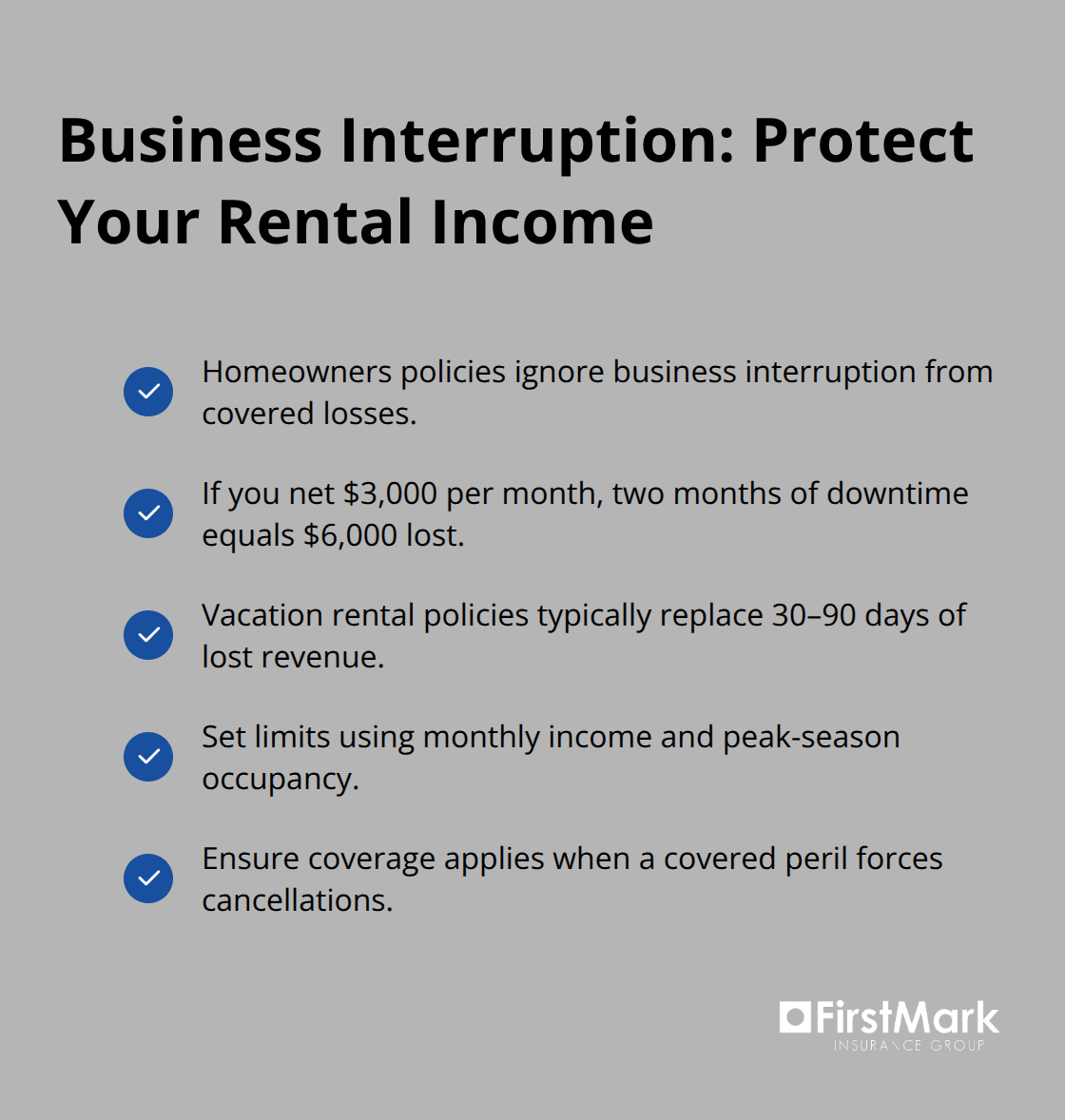
Loss of rental income protection becomes essential if you generate income from seasonal rentals or short-term guests, since a fire, storm damage, or water event that forces cancellation of bookings creates business interruption exposure that homeowners policies completely ignore. If your property generates $3,000 monthly from short-term rentals and a covered claim forces cancellation for two months, you face $6,000 in lost income that standard coverage never addresses. Specialized vacation rental policies include business interruption coverage that replaces lost rental income when a covered peril forces cancellation, typically covering 30 to 90 days of lost revenue depending on your policy terms. You should calculate your monthly rental income and peak season occupancy to determine appropriate business interruption limits; this figure should reflect your actual earning capacity rather than theoretical maximums.
Final Thoughts
Your vacation home represents a significant financial asset that demands protection matching its value and seasonal use patterns. The coverage gaps in standard homeowners policies create real exposure that costs tens of thousands when water damage, theft, or guest injuries occur. Vacation home coverage Seattle requires a fundamentally different approach than insuring your primary residence, one that acknowledges extended vacancy, weather-specific risks, and potential rental income.
The right policy structure depends entirely on how you use your property. A seasonal home with occasional family visits needs different coverage than a short-term rental generating monthly income, and a property in an area prone to ice dam damage requires explicit water damage protection that standard policies exclude. A fully furnished vacation home with high-value contents demands scheduled personal property endorsements that guarantee replacement cost rather than depreciated value (these distinctions determine whether your claim gets paid or denied when loss occurs).
An independent broker who understands Seattle’s vacation home market transforms this complexity into clarity and can shop multiple carriers, compare coverage options, and tailor a policy that addresses your property’s specific risks while meeting Washington state requirements. Contact FirstMark Insurance Group to schedule a comprehensive policy review and close coverage gaps in your vacation home protection.
Disclaimer: The information provided in this blog is for general informational purposes only and does not constitute legal, financial, or insurance advice. Coverage options, terms, and availability may vary. Please consult with a licensed professional for advice specific to your situation