

Fall weather brings beautiful colors, but it also signals time for serious home preparation. Your property faces months of harsh winter conditions ahead.
We at FirstMark Insurance Group know that a comprehensive fall home maintenance checklist prevents costly damage and keeps your family safe. Smart homeowners who tackle these tasks now save thousands in emergency repairs later.
Essential Exterior Fall Maintenance Tasks
Your home’s exterior bears the brunt of winter’s assault. Professional gutter cleaners charge $0.95 to $2.25 per linear foot, but clogged gutters cause thousands in water damage when ice dams form. Clean gutters twice each fall and install mesh guards to block future debris accumulation. Check that downspouts direct water away from your foundation – water that pools near your home creates foundation cracks that expand during freeze-thaw cycles.
Roof and Window Protection Before Winter Strikes
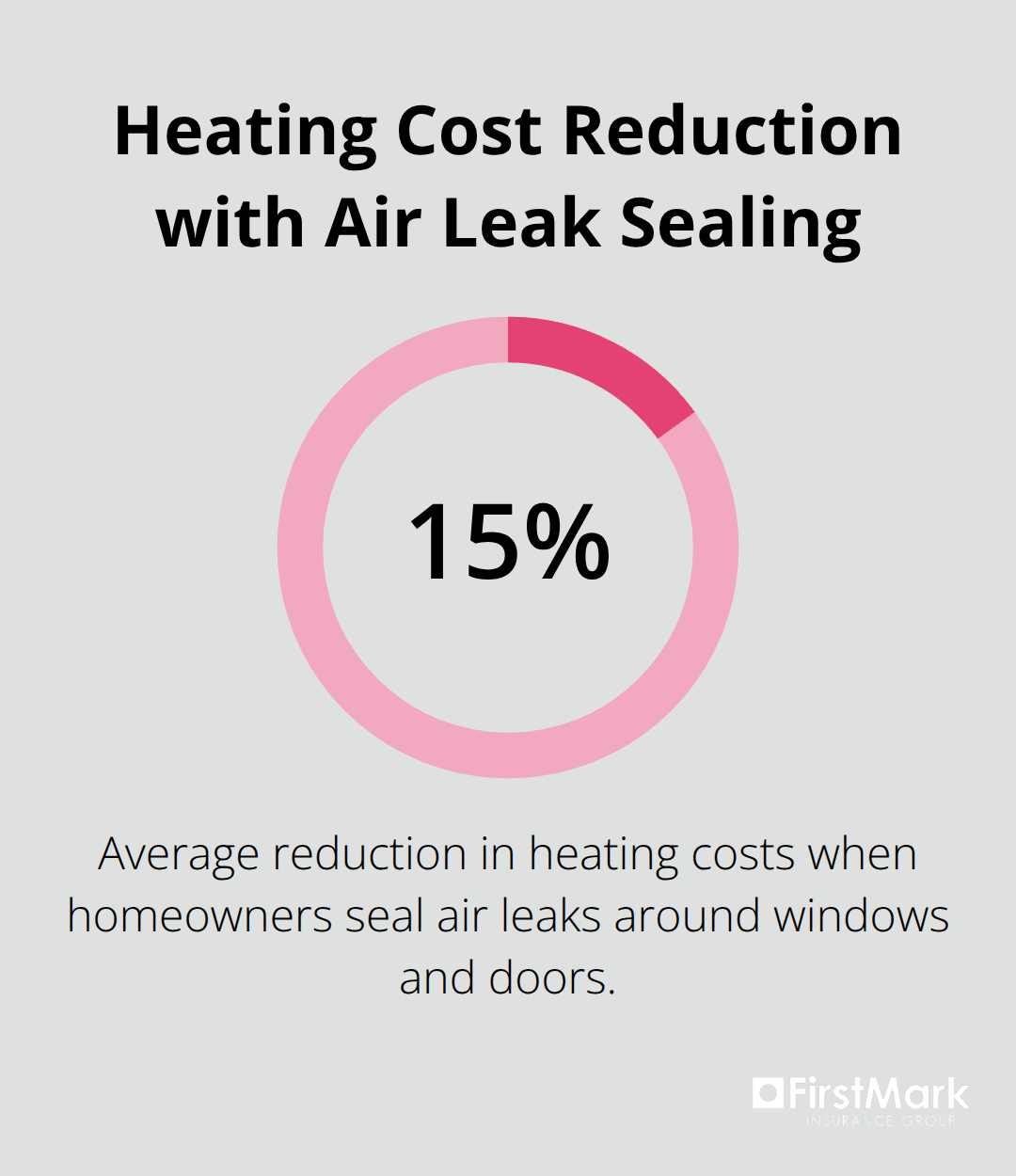
Roof inspections cost approximately $200 but prevent major leaks during winter storms. Look for loose or missing shingles, damaged flashing around chimneys, and granule loss that signals material deterioration. The U.S. Environmental Protection Agency reports that homeowners who seal air leaks around windows and doors reduce heating costs by an average of 15%. Weather stripping installation costs between $131 to $146 per Homeadvisor, but pays for itself within one heating season. Focus on gaps where you can see daylight – these waste the most energy.
Winterize Water Systems to Prevent Burst Pipes
Outdoor faucet covers cost just $10 to $20 but prevent thousands in pipe repair bills. Shut off outdoor water valves and drain all lines completely – even small amounts of trapped water expand when frozen and crack pipes. Disconnect garden hoses and store them indoors. Sprinkler systems need professional winterization with compressed air to remove all water from underground lines. Most homeowners skip this step and face expensive spring repairs when broken sprinkler heads and cracked pipes surface after snowmelt.
Seal Entry Points Against Winter Elements
Walk around your home’s perimeter and identify gaps where cold air enters (particularly around electrical outlets, cable entries, and foundation joints). Use spray foam insulation for larger gaps and caulk for smaller cracks. Check garage door seals and replace worn weatherstripping that allows drafts. These small investments in materials prevent significant heat loss throughout winter months, while your interior systems work more efficiently to maintain comfortable temperatures.
Interior Fall Preparation and Safety Checks
Your heating system faces its biggest test during winter months, yet most homeowners neglect basic maintenance that prevents expensive breakdowns. Schedule professional HVAC inspections between $65 to $200 according to This Old House – this small investment prevents emergency service calls that cost $300 to $500 during peak winter demand. Replace furnace filters monthly throughout heating season, not seasonally. Dirty filters force systems to work 15% harder and increase energy bills substantially.
Gas System Safety Inspections Prevent Deadly Leaks
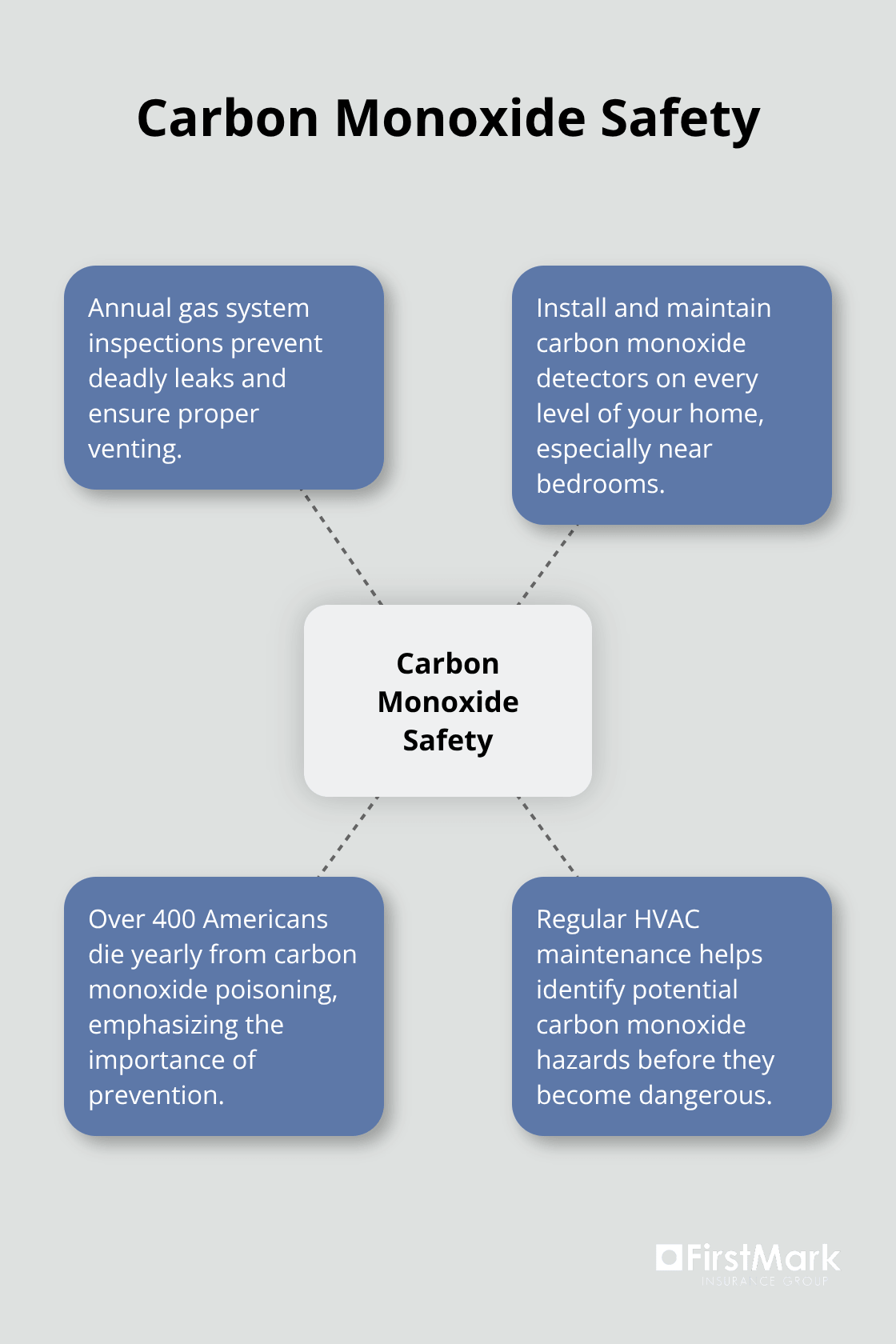
Gas heating systems require annual safety inspections to prevent carbon monoxide leaks that kill over 400 Americans yearly per the CDC. Technicians check heat exchangers, venting systems, and gas connections for potential hazards. Carbon monoxide detectors provide backup protection, but proper system maintenance stops problems before they start. Professional inspections cost less than one emergency room visit for carbon monoxide exposure.
Fireplace and Chimney Maintenance Prevents House Fires
Wood-burning fireplaces need professional chimney cleaning annually since creosote buildup causes chimney fires according to the Chimney Safety Institute. Creosote forms when wood burns incompletely and creates a highly flammable coating inside chimneys. Professional cleaning removes this dangerous buildup and inspects for structural damage that compromises safety.
Detection Systems Provide Life-Saving Protection
Test smoke detectors monthly and replace batteries annually – working detectors reduce fire death risk by 50% per the National Fire Protection Association. Carbon monoxide detectors need battery replacement every six months since faulty units fail to detect this silent killer. Install detectors on every level of your home, especially near bedrooms and heating equipment (these locations provide maximum protection for sleeping families).
Interior Weatherproofing Reduces Energy Waste
Weather-strip interior doors and windows with foam tape or V-strip materials that cost under $50 per room. This creates better temperature zones and reduces heating system workload by up to 10%. Check door thresholds for gaps and replace worn weatherstripping that allows cold drafts to enter living spaces. Proper interior sealing works with your exterior weatherproofing efforts to create a complete thermal barrier.
Your indoor preparations set the foundation for winter comfort, but your outdoor spaces need equal attention to protect your property investment.
Yard and Landscape Winter Preparation
Fallen leaves create more problems than most homeowners realize. Thick leaf layers block sunlight and trap moisture, which creates perfect conditions for lawn diseases like snow mold that devastate grass during winter months. Rake leaves weekly during peak fall season rather than wait for one massive cleanup session. According to This Old House landscape contractor Jenn Nawada, you should continue to water plants until the first hard freeze to promote winter survival. Cool-season grasses need approximately one inch of water weekly until ground freezes, while newly transplanted shrubs require consistent moisture to establish roots before winter stress begins.
Strategic Tree Management Prevents Property Damage
Tree branches that hang within six feet of your roof create serious winter hazards. Ice accumulation adds tremendous weight that causes branches to snap and damage shingles, gutters, or windows during storms. Trim branches now while weather permits safe ladder work. Professional tree services charge $200 to $800 per tree, but emergency storm damage repairs cost thousands more. Apply late-fall fertilizer to lawns, trees, and shrubs between mid-October and early November to promote root hardiness that helps plants survive freezing temperatures (early-to-mid fall provides optimal timing for transplants since cooler temperatures reduce transplant shock before winter dormancy begins).
Equipment Storage Extends Outdoor Investment Lifespan
Outdoor furniture left exposed to winter weather deteriorates rapidly from freeze-thaw cycles that crack materials and rust metal components. Store cushions indoors and cover remaining furniture with waterproof covers designed for your specific pieces. Clean grills thoroughly before storage since grease and food residue attract pests during winter months. Drain and store garden hoses indoors to prevent cracking from frozen water expansion. Winterize lawn mowers by draining fuel or adding stabilizer, changing oil, and storing in dry locations away from temperature extremes (proper storage extends equipment life by several years).
Lawn Care Preparation for Spring Recovery
Aerate your lawn in fall to improve nutrient penetration and promote healthier grass growth for the upcoming season. Fall aeration allows oxygen, water, and nutrients to reach grass roots more effectively than spring treatments. Apply winter fertilizer after aeration to maximize nutrient absorption before ground freezes. Remove grub infestations early in fall to protect lawn health and avoid significant damage that becomes visible in spring when grass fails to recover from winter dormancy.
Final Thoughts
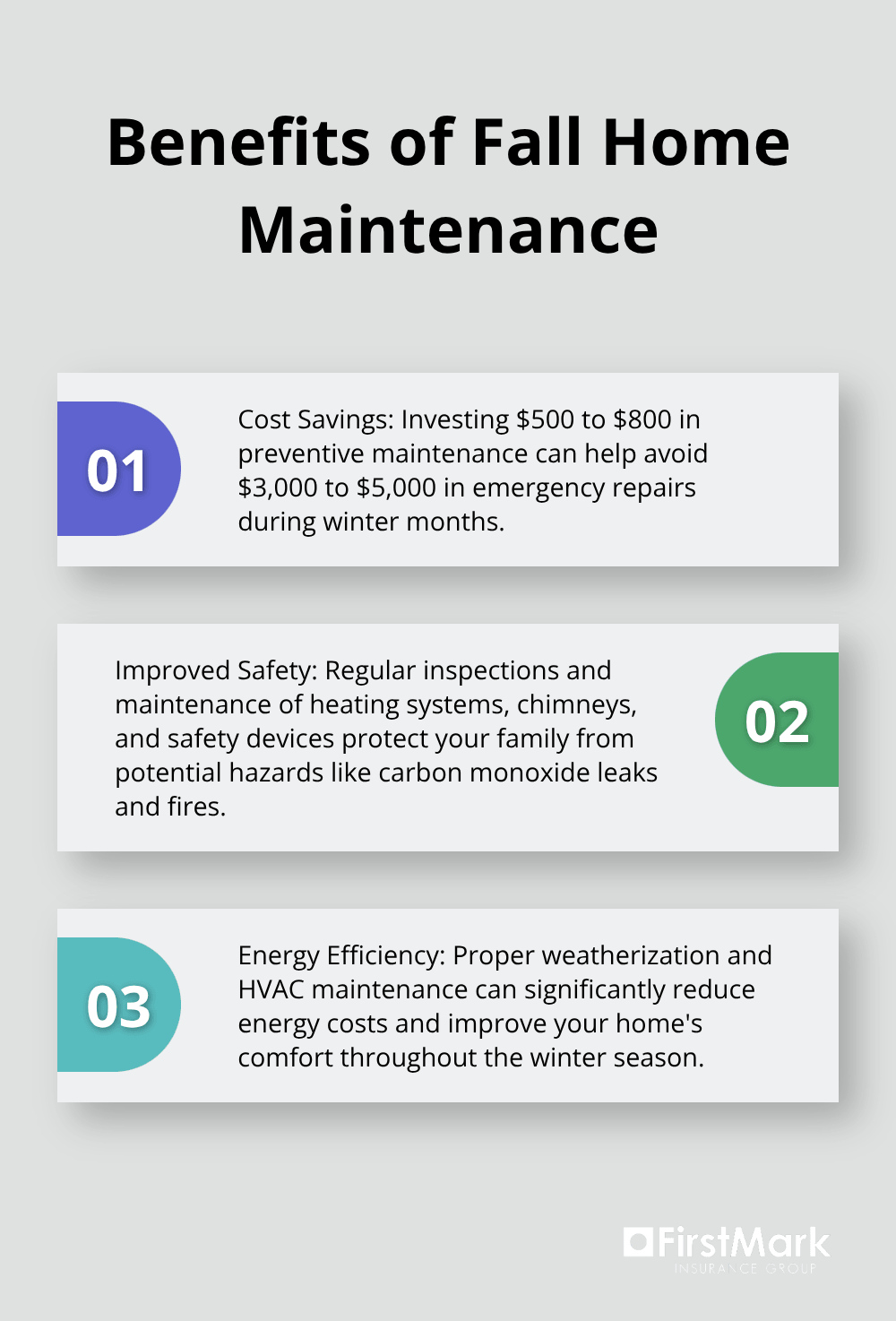
Your fall home maintenance checklist protects your property investment and prevents expensive winter emergencies. Homeowners who invest $500 to $800 in preventive maintenance typically avoid $3,000 to $5,000 in emergency repairs during winter months. Professional HVAC inspections cost $113 on average but prevent system failures that leave families without heat during freezing temperatures.
Smart maintenance schedules reduce insurance claims and keep premiums stable. Well-maintained properties face fewer weather-related damages and costly repairs throughout winter months. Emergency service calls during winter storms cost three times more than scheduled maintenance visits (making fall preparation a wise financial decision).
Schedule professional inspections for complex systems like heating equipment, electrical panels, and roofing before winter weather arrives. These experts identify problems you might miss and provide solutions that protect your family’s safety. FirstMark Insurance Group helps families protect their homes with comprehensive coverage that complements smart maintenance practices.