


Your Seattle vacation rental property generates income, but standard homeowners insurance won’t protect it. Guest injuries, property damage, and liability gaps can expose you to significant financial risk.
At FirstMark Insurance Group, we’ve seen too many hosts discover these coverage shortfalls after problems arise. The right insurance strategy protects both your investment and your peace of mind.
Why Your Homeowners Policy Won’t Cover Your Rental
The Fundamental Mismatch Between Home and Business
Your standard homeowners insurance policy was written with one scenario in mind: you living in the home with your family. The moment you start accepting guests for payment, that policy becomes fundamentally misaligned with your actual risk profile. Insurance companies view residential and commercial activities differently, and they price accordingly. When you operate a vacation rental, you’ve shifted from homeowner to business operator, but your policy hasn’t shifted with you.
What Your Standard Policy Actually Excludes
Most homeowners policies explicitly exclude income-generating activities. If a guest slips on your kitchen tile and breaks their leg, your standard liability coverage likely won’t pay their medical bills or any lawsuit that follows. The policy language typically states that coverage applies only to non-rented properties used as a primary residence. Many hosts continue relying on standard homeowners insurance without supplemental coverage, unaware of the gaps.
Your insurer can deny a claim outright if they discover you’ve been operating a rental business. Additionally, standard policies cap liability at $300,000 to $500,000, which proves insufficient if a guest suffers a serious injury. Short-term rental hosts face liability claims averaging $35,000 to $150,000 when guest injuries occur.
The Income Protection Gap
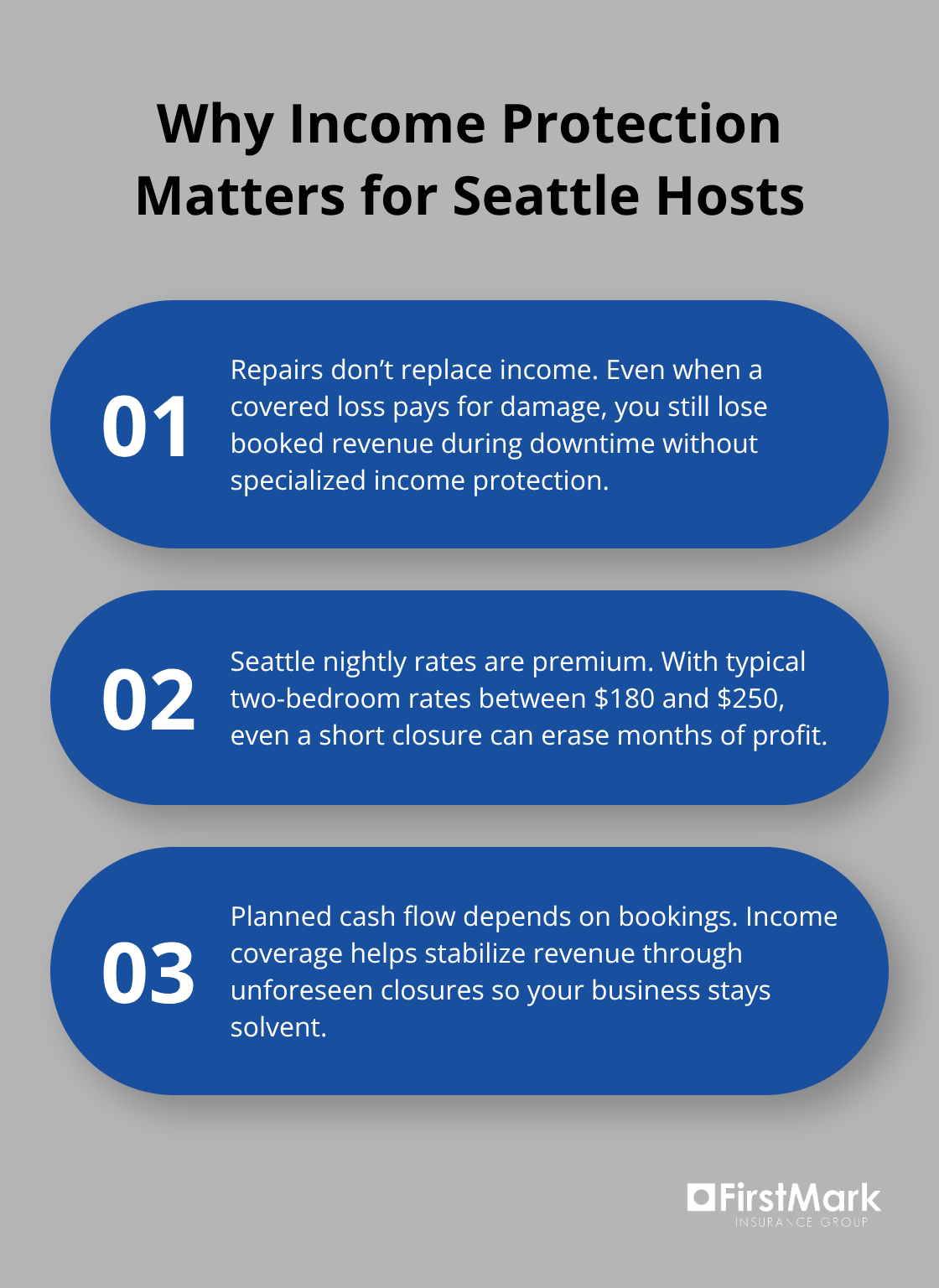
Beyond liability, your standard policy doesn’t cover loss of rental income if your property becomes temporarily uninhabitable due to damage. If a pipe bursts and forces you to cancel bookings for three months, your homeowners insurance will cover the repair but not the lost rental revenue. Seattle’s rental market commands premium nightly rates-averaging $180 to $250 per night for a two-bedroom property-making income protection particularly important.
Additional Exposures Your Policy Ignores
You also lack coverage for theft by guests, damage to furnishings from rental use, or business liability for injuries on your property (including slip-and-fall incidents or accidents involving guest belongings). These gaps create a dangerous situation where you operate an uninsured business without realizing it. The financial exposure extends far beyond what most hosts anticipate when they list their first property.
Understanding these limitations sets the stage for exploring the specific coverage types that actually protect Seattle vacation rental operators.
Coverage That Actually Protects Your Seattle Rental
Host protection insurance has real limits
Host protection insurance forms the foundation of vacation rental coverage, and it’s where most hosts make their first critical mistake. Airbnb and Vrbo offer baseline host protection programs, but these come with severe limitations that leave you exposed. Airbnb’s Host Protection Insurance covers up to $1 million in liability for bodily injury or property damage claims, but only when a guest physically occupies your property during their reservation. The moment a guest leaves, that protection vanishes. Vrbo’s coverage operates similarly, capping at $1 million and excluding incidents that occur outside the booking period.
Neither platform covers damage your guests cause to neighboring properties, intentional acts by guests, or claims from guests who assert the property description was inaccurate. Seattle hosts operating premium properties generating $200,000 to $400,000 annually in rental income cannot treat these gaps as theoretical risks. A single guest injury lawsuit can exceed $500,000 in damages, making platform-provided coverage insufficient for protecting your actual financial exposure.
Dedicated Rental Insurance Fills Critical Gaps
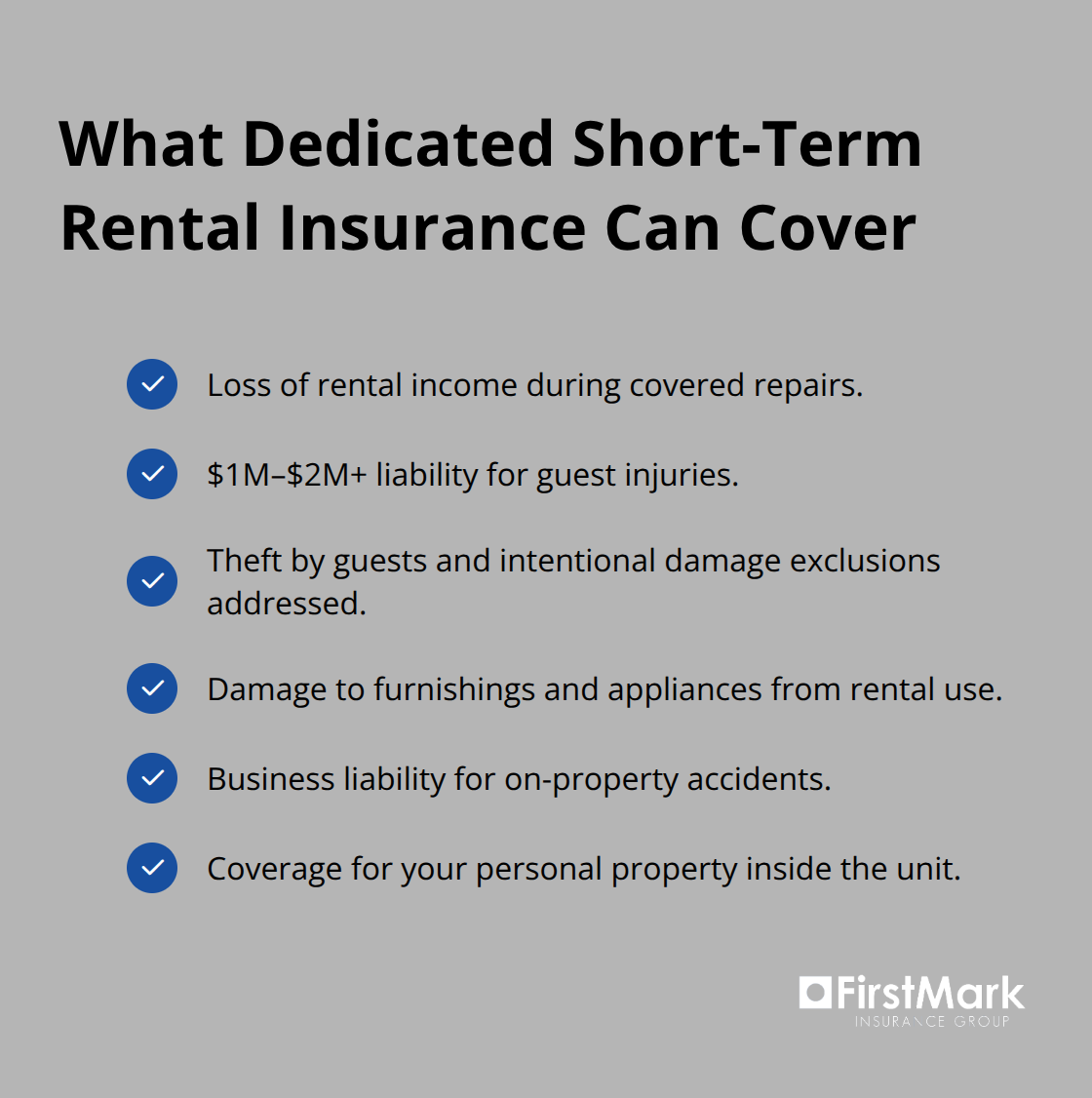
Dedicated short-term rental insurance fills these gaps with specificity that standard policies never will. This coverage includes loss of rental income protection-if a fire or major damage forces you to cancel bookings, your policy covers the revenue you would have earned during the repair period. For a Seattle two-bedroom averaging $200 per night, a three-month closure costs $18,000 in lost income that your homeowners policy ignores entirely.
Quality rental insurance also covers guest injury liability starting at $1 million and extending to $2 million or higher through umbrella policies, theft by guests, damage to your furnishings and appliances from rental use, and business liability for accidents on your property. Some policies include coverage for your personal property inside the rental unit, distinguishing between what you own and what guests might damage.
Managing Additional Insured Requirements
Additional insured requirements from property management companies or mortgage lenders become manageable when you work with an agent who understands these specific demands. Your lender or property manager may require your insurance to name them as an additional insured, protecting their financial interest in the property. An experienced agent navigates these requirements without forcing you to accept inadequate coverage limits.
The right coverage matches your actual revenue and risk profile, rather than accepting whatever minimums platforms suggest. This alignment between your income level and your protection level determines whether your rental investment remains truly protected.
What Platform Coverage Actually Protects You In Seattle
Airbnb Host Protection Has Real Boundaries
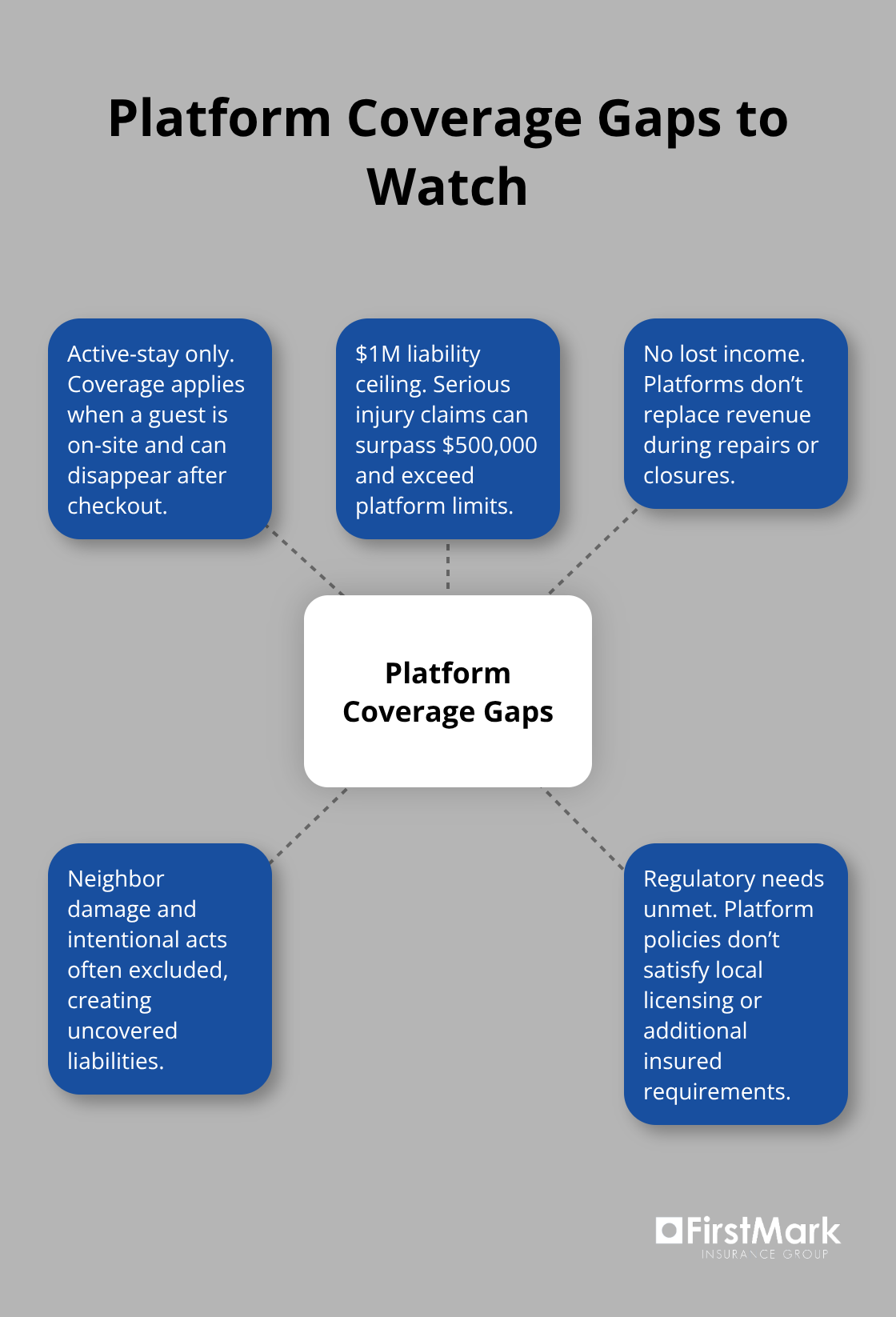
Airbnb’s Host Protection Insurance provides up to $1 million in liability coverage, yet this protection applies only while a guest actively occupies your property during a confirmed reservation. The moment checkout happens, that coverage vanishes entirely. A guest injured during their stay files a claim weeks later, and you rely on your personal liability insurance-which standard homeowners policies explicitly exclude for rental operations. Seattle’s short-term rental market generates fierce competition, with hosts frequently listing premium two-bedroom properties at $200 to $250 per night, making serious injury lawsuits a realistic financial threat that can exceed $500,000 in damages.
Vrbo Coverage Leaves Similar Gaps
Vrbo operates under similar constraints, capping liability at $1 million and excluding damage guests cause to neighboring properties, intentional guest misconduct, or claims arising from inaccurate property descriptions. Platform coverage fails to address the specific risks that Seattle hosts face when operating premium properties. A guest who slips on your stairs and suffers a permanent injury can pursue damages well beyond what Vrbo’s policy covers. Neither platform protects your lost rental income if property damage forces you to cancel bookings, a gap that costs thousands of dollars monthly for active rental operators.
Local Regulations Platform Coverage Cannot Satisfy
Local Seattle regulations add another layer of complexity that platform insurance ignores completely. The city requires short-term rental operators to obtain licenses and maintain specific liability minimums, yet many hosts remain unaware that their platform coverage fails to satisfy these municipal requirements. Your mortgage lender or property management company likely demands you name them as an additional insured on your policy-a requirement platform coverage cannot fulfill. This regulatory mismatch creates legal exposure that hosts often overlook until they face a licensing audit or a claim denial.
Dedicated Rental Insurance Bridges the Gaps
Dedicated short-term rental insurance becomes essential rather than optional when you operate a property generating meaningful income. Quality rental policies cover loss of rental income during repairs, guest injury liability beyond platform minimums, theft by guests, and business liability for accidents on your property. Rather than treating platform coverage as sufficient protection, savvy Seattle hosts layer dedicated rental insurance on top, ensuring that liability claims, income interruptions, and regulatory requirements never leave them financially exposed. This approach transforms your insurance from a reactive afterthought into a proactive business protection strategy.
Final Thoughts
Your Seattle vacation rental generates real income, which means it demands real protection that standard homeowners insurance and platform coverage cannot provide. Standard policies explicitly exclude rental operations, and platform coverage vanishes the moment your guest checks out, leaving you exposed to liability claims that can reach $500,000 or more. Seattle vacation rental insurance fills these gaps with liability protection, income loss coverage, and business liability that actually matches your property’s risk profile.
Finding the right coverage requires an agent who understands short-term rental operations and can match your protection to your actual revenue and local regulatory requirements. Your property’s nightly rate, annual income, lender demands, and municipal licensing rules all shape what protection works for your situation. A $200-per-night two-bedroom property needs different coverage than a luxury four-bedroom commanding $400 per night, yet many hosts accept generic policies that fail to address their specific exposure.
Contact FirstMark Insurance Group to discuss your property’s protection needs with an agent who specializes in short-term rental coverage. We work with top insurance providers to find coverage that fits your specific situation at the best available pricing. Your investment deserves protection that matches its actual value.
Disclaimer: The information provided in this blog is for general informational purposes only and does not constitute legal, financial, or insurance advice. Coverage options, terms, and availability may vary. Please consult with a licensed professional for advice specific to your situation