

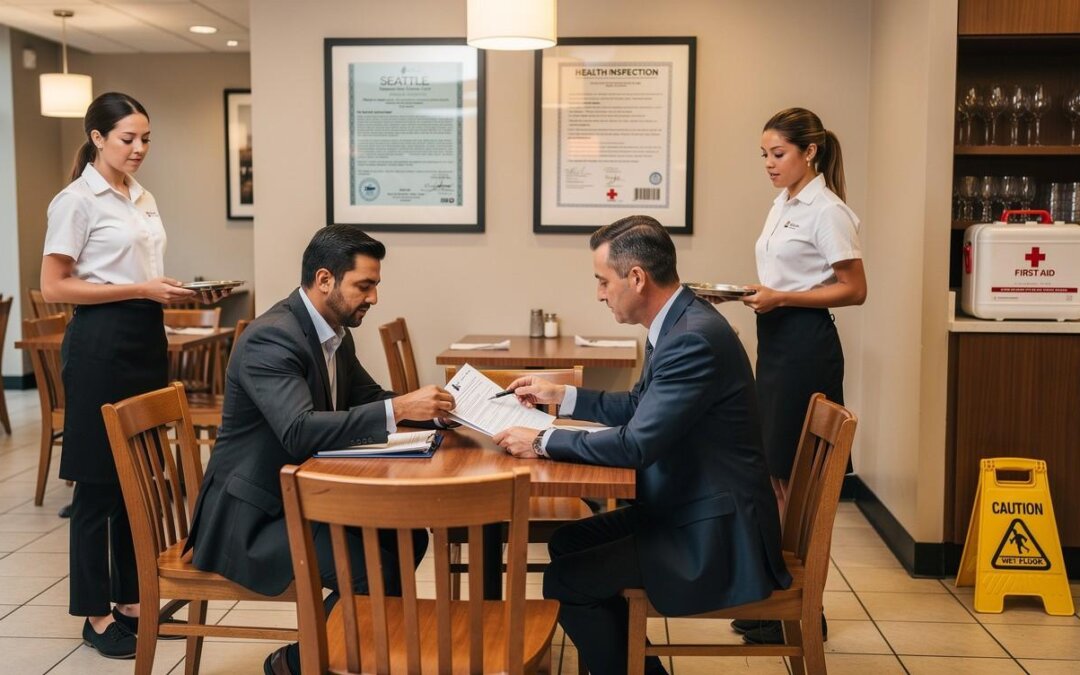
Running a restaurant in Seattle means managing countless moving parts-from food preparation to customer interactions. Every day brings exposure to liability risks that can threaten your business financially and operationally.
At FirstMark Insurance Group, we work with restaurant owners who understand that the right coverage isn’t optional. This guide walks you through restaurant liability in Seattle, the protections you need, and practical steps to keep your guests and business safe.
What Restaurant Owners Face in Seattle
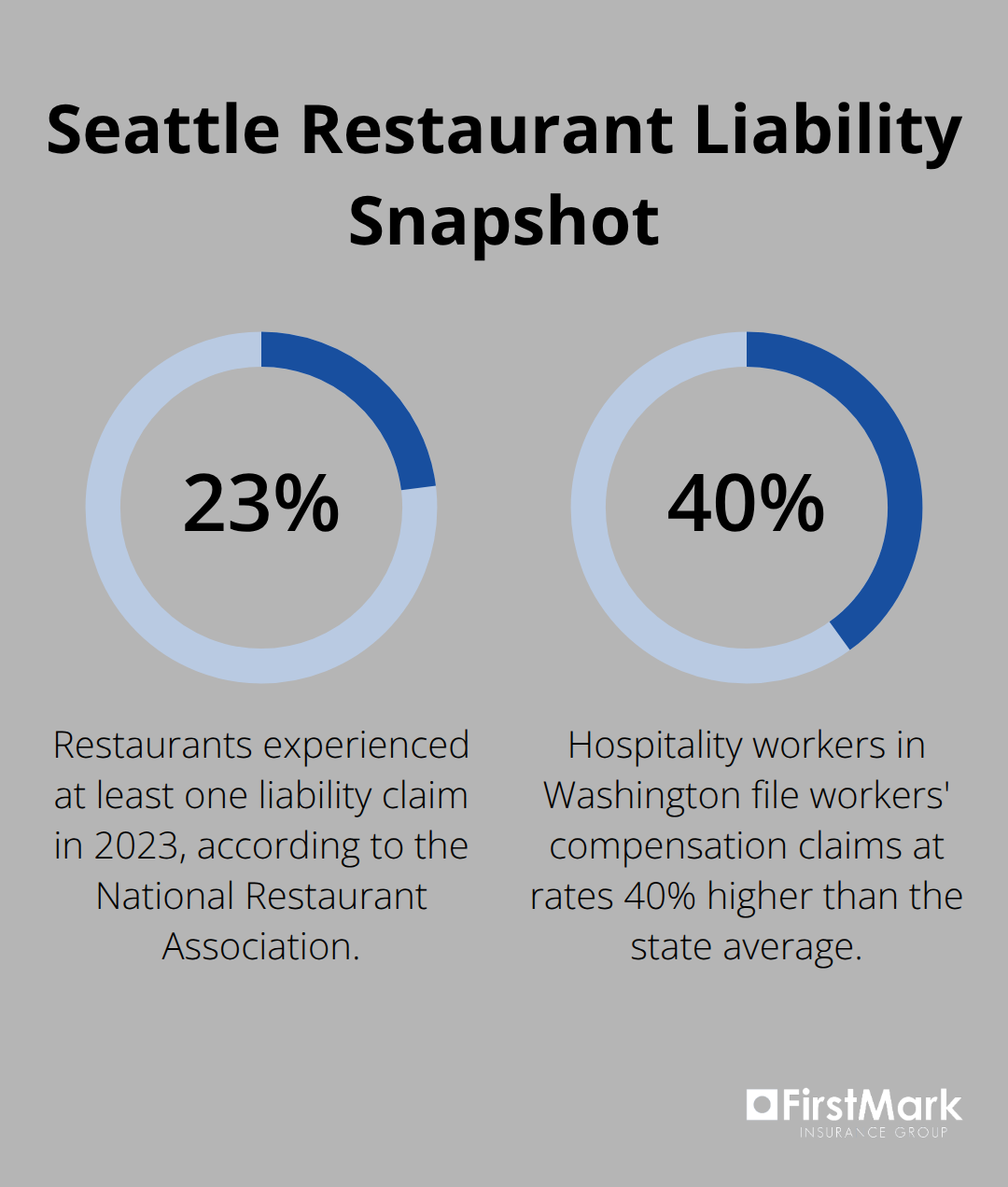
Liability in the food service industry extends far beyond a single slip-and-fall incident. Restaurant owners in Washington State operate in an environment where multiple exposure points create compounding financial risk. A 2023 National Restaurant Association survey found that 23% of restaurants faced at least one liability claim annually. In Seattle specifically, where the hospitality sector generates over $28 billion in annual economic activity, the regulatory environment adds another layer of complexity that directly impacts your bottom line.
The Real Cost of Liability Claims
When a guest suffers foodborne illness traceable to your establishment, or a server sustains an injury during their shift, the financial consequences ripple through your operation immediately. Beyond the direct claim payout, you face increased insurance premiums, potential legal defense costs that can exceed $50,000 before trial, and operational disruptions that reduce revenue. Washington State’s comparative negligence laws mean you can be held partially liable even if you’re not entirely at fault, which amplifies your financial exposure.
The Washington Department of Labor reports that hospitality workers file workers compensation claims at rates 40% higher than the state average, making employment-related injuries a persistent drain on restaurant profitability. Many owners discover too late that their existing coverage contains gaps or exclusions that leave them personally liable for portions of claims. A single serious incident forces a restaurant to close temporarily for investigation and remediation, costing thousands in lost revenue before any legal settlement occurs.
Washington State’s Specific Requirements
Washington mandates that restaurants maintain workers compensation insurance if they employ even one person, with minimum coverage starting around $0.60 per $100 of payroll. The state also enforces strict food safety codes through the Washington Department of Health, with violations resulting in fines up to $2,000 per infraction and potential license suspension.
Liquor liability presents particular complexity in Washington. If your establishment serves alcohol and a patron causes injury or property damage after consuming at your business, you face third-party liability claims regardless of whether the person was visibly intoxicated. The Washington Liquor and Cannabis Board holds servers to strict training standards, requiring completion of approved alcohol service education programs. Non-compliance results in fines starting at $1,000 and potential license revocation.
Seattle’s Local Compliance Layer
Seattle’s local health code adds additional requirements around allergen labeling and notification, with enforcement through routine inspections that occur at least twice yearly for full-service restaurants. These inspections examine not only food handling practices but also your documentation systems and staff training records. The city’s health department takes violations seriously, and repeated infractions can trigger license suspension or revocation.
Understanding these layered requirements-state mandates, local codes, and industry-specific standards-reveals why many restaurant owners struggle to maintain compliant operations without professional guidance. The complexity intensifies when you factor in the specific coverage types your business actually needs to address these exposures.
Coverage Your Seattle Restaurant Cannot Skip
General Liability: Your Foundation Against Guest Injuries
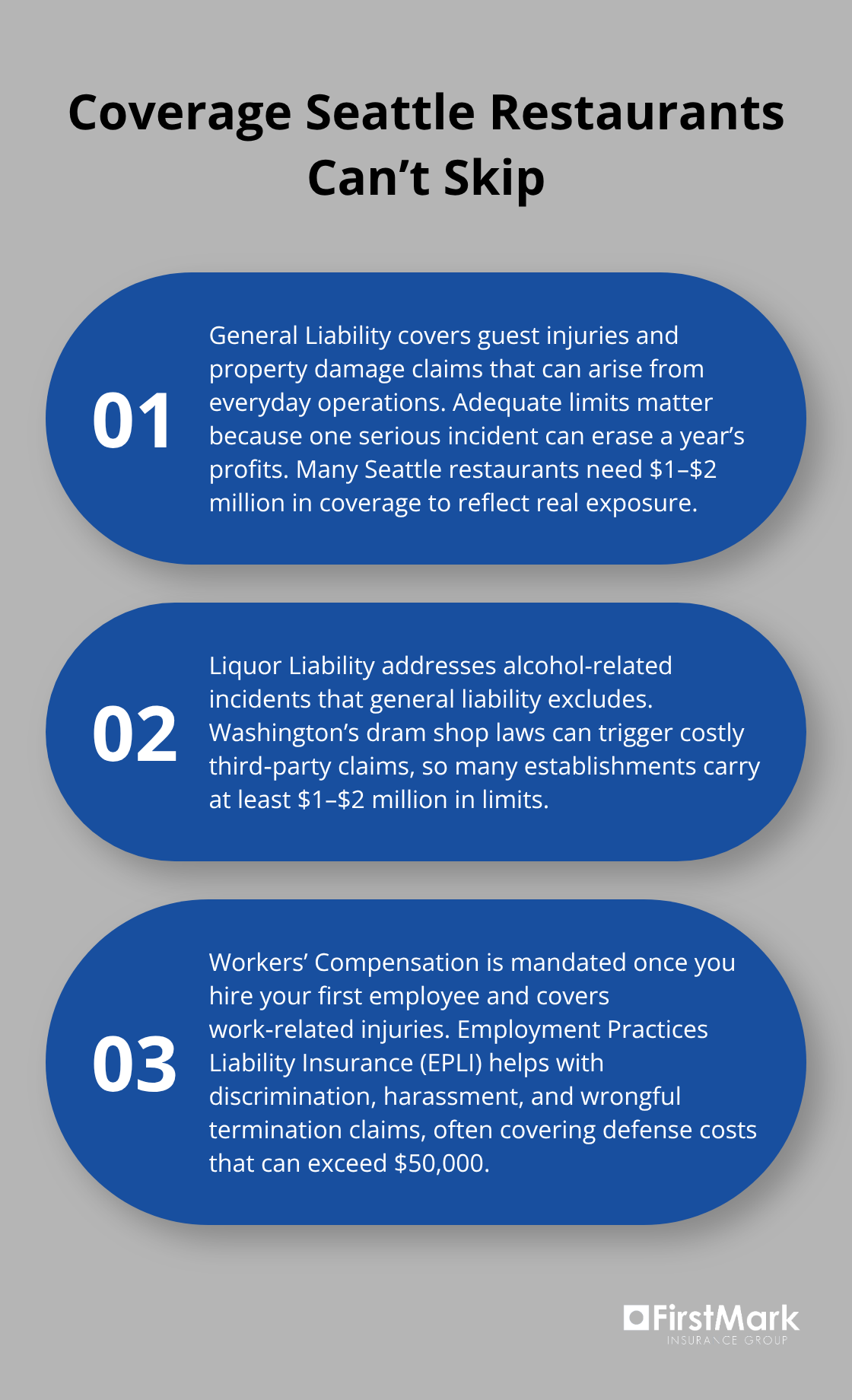
General liability forms the foundation of any restaurant’s insurance strategy, yet many owners purchase inadequate limits without understanding what they actually cover. This coverage protects you when a guest slips on a wet floor, suffers a burn from hot cookware, or claims injury from food preparation areas. Seattle restaurants frequently carry limits of only $300,000 when $1 million to $2 million better reflects actual exposure.
Property damage coverage within this policy protects your business if you accidentally damage a guest’s belongings or a neighboring business’s property. Washington State doesn’t legally mandate general liability, but your landlord almost certainly requires it through lease requirements, and most equipment financing agreements demand it as a condition of the loan. One serious incident can wipe out a year’s profits without this protection in place.
Liquor Liability: Addressing Alcohol-Specific Exposure
Liquor liability demands separate, focused attention in Seattle because serving alcohol creates exposure that general liability explicitly excludes. Washington’s dram shop laws hold your establishment liable if an intoxicated patron causes injury or property damage after consuming alcohol at your business, regardless of whether you overserved them. A single incident involving an intoxicated customer who causes a car accident or injures someone can generate claims exceeding $500,000.
The Washington Liquor and Cannabis Board requires all servers to complete approved alcohol service training, but training alone doesn’t eliminate your liability exposure. You need liquor liability limits of at least $1 million, and many establishments carrying $2 million find that reasonable given the severity of potential claims.
Workers Compensation and Employment Practices Liability
Workers compensation insurance covers employee injuries and illnesses arising from work duties, and Washington mandates this coverage the moment you hire your first employee. The Washington Department of Labor sets rates based on your payroll and industry classification, with restaurant operations classified as higher risk. Hospitality workers experience injury rates 40% above the state average according to Washington’s labor statistics, meaning your claims history directly impacts future premium costs.
Employment practices liability protects you separately against discrimination claims, wrongful termination lawsuits, and harassment allegations, covering legal defense costs that frequently exceed $50,000 before resolution. Many Seattle restaurant owners overlook this coverage, assuming general liability provides protection, only to discover they personally fund defense costs when an employee files a discrimination complaint. These three coverage types work together to address the distinct exposures your restaurant faces daily, yet selecting appropriate limits requires understanding how each type responds to different scenarios your operation encounters.
How to Build a Risk-Reduction System That Actually Works
Your insurance coverage protects you after something goes wrong, but the real power lies in preventing incidents before they happen. Seattle’s regulatory environment demands that restaurant owners move beyond compliance checkboxes and build operational systems that make safety automatic. The Washington Department of Health conducts routine inspections, and inspectors scrutinize not just current conditions but your documented procedures and training records. Restaurants that treat safety as a systematic process rather than reactive damage control consistently lower their claims frequency and maintain better premium rates over time.
Food Safety Systems That Reduce Claims
Food safety violations in Seattle start at $500 per infraction and escalate quickly, but more importantly, a single foodborne illness outbreak forces temporary closure and can generate liability claims exceeding your general liability limits. Your staff represents your first line of defense against these exposures, yet many owners invest minimal time in structured training programs. When a server understands how to recognize slip hazards, respond to customer complaints about food quality, and document incidents immediately, you eliminate gaps that transform minor situations into major claims.
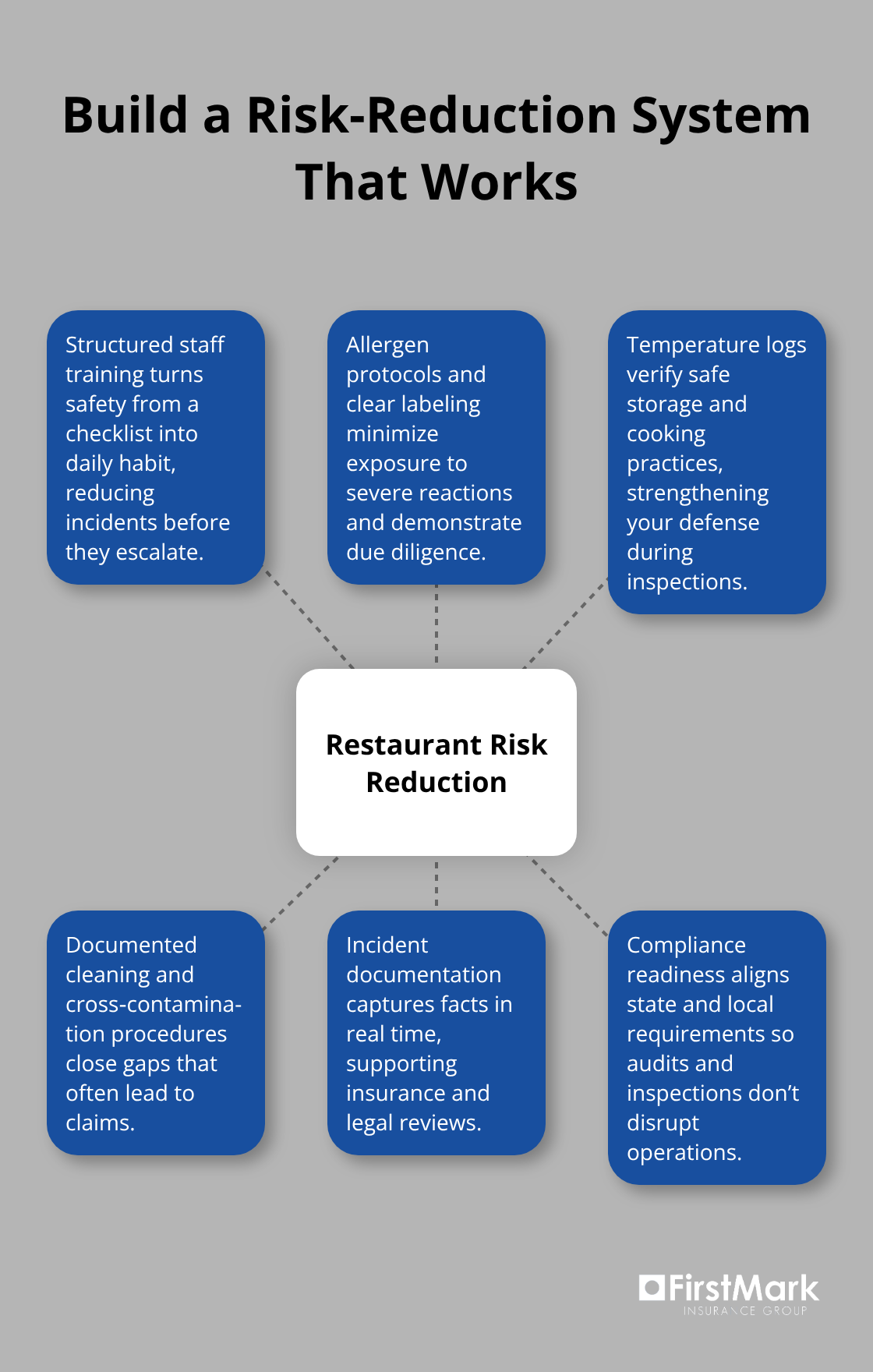
Staff training on allergen protocols, proper food storage temperatures verified through daily logs, and documented cleaning procedures for cross-contamination prevention transform abstract compliance requirements into concrete operational practices. These systems reduce actual incidents and strengthen your legal position simultaneously. Seattle’s local health code requires allergen labeling and notification protocols that go beyond state requirements, and restaurants that maintain detailed records of allergen handling procedures demonstrate due diligence if a customer later claims allergic reaction.
Documentation Systems That Protect Your Business
Documentation systems separate restaurants that successfully defend against claims from those that face devastating settlements. Insurance adjusters reviewing a claim want to see contemporaneous records showing what happened, how staff responded, and what corrective actions followed. Restaurants operating without systematic incident documentation struggle to prove they acted reasonably, even when they actually did everything correctly.
A simple incident log that captures date, time, location, parties involved, and immediate response takes five minutes to complete but becomes invaluable if a guest later claims injuries were worse than initially apparent. Health code compliance intersects directly with liability exposure because violations create evidence that your establishment failed to maintain safe conditions. When you maintain detailed records of allergen handling, temperature verification, and cleaning procedures, you demonstrate that your operation followed industry standards and acted with reasonable care.
Creating a Safety-Conscious Culture
The Washington Liquor and Cannabis Board mandates server training for alcohol service, but restaurants that stop there miss the broader opportunity to create a safety-conscious culture across all roles. Your servers, kitchen staff, and management team all contribute to preventing incidents that could trigger liability claims. When your entire team understands how their actions affect guest safety and your business’s legal exposure, they become active participants in risk reduction rather than passive observers.
Training programs that address slip hazards, food quality concerns, and incident response procedures equip your staff to handle situations before they escalate into claims. This culture shift-where safety becomes everyone’s responsibility rather than a compliance burden-produces measurable results in reduced incident frequency and lower insurance costs over time.
Final Thoughts
Restaurant liability in Seattle demands more than compliance checkboxes. You now understand that Washington’s comparative negligence laws, alcohol service regulations, and hospitality industry injury rates create real financial stakes for your operation. The restaurants that thrive treat liability protection as an integrated system combining proper insurance coverage with operational practices that prevent incidents before they occur.
Your foundation starts with honest assessment of coverage gaps. General liability, liquor liability, and workers compensation address distinct exposures, yet many owners carry limits that leave them personally vulnerable if a serious incident strikes. Food safety protocols, staff training, and incident documentation simultaneously reduce your actual incident frequency and strengthen your legal position if a claim arises. These practices demonstrate due diligence that often results in lower premiums over time.
At FirstMark Insurance Group, we work with Seattle restaurant owners to navigate restaurant liability Seattle protection with clarity and confidence. Our experience guiding businesses through insurance decisions means we understand the specific exposures your restaurant faces and identify where your coverage may need strengthening. Contact FirstMark Insurance Group to review your current protection and find the balance between coverage that actually protects your business and operational practices that prevent claims from occurring.
Disclaimer: The information provided in this blog is for general informational purposes only and does not constitute legal, financial, or insurance advice. Coverage options, terms, and availability may vary. Please consult with a licensed professional for advice specific to your situation