

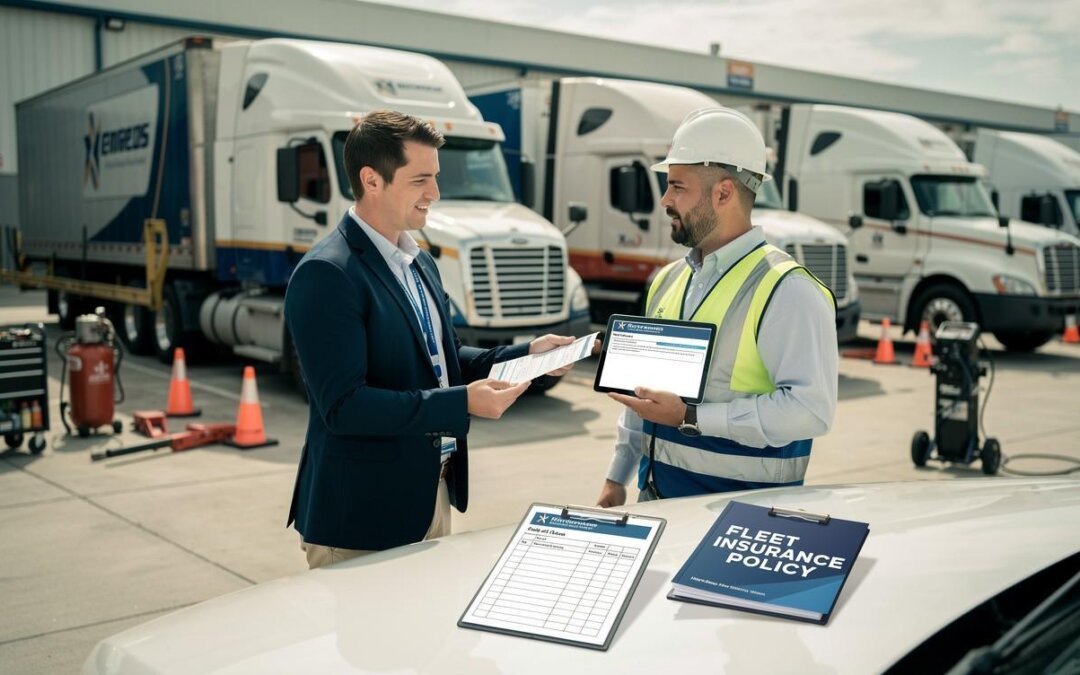
Running a fleet in Washington means navigating complex insurance requirements that go beyond basic coverage. Commercial truck insurance in Washington requires careful attention to state minimums, federal regulations, and the specific risks your operation faces.
At FirstMark Insurance Group, we help fleet operators build protection strategies that match their actual needs. The right coverage protects your assets, your drivers, and your bottom line.
Commercial Truck Insurance Requirements in Washington
State Minimum Coverage Limits
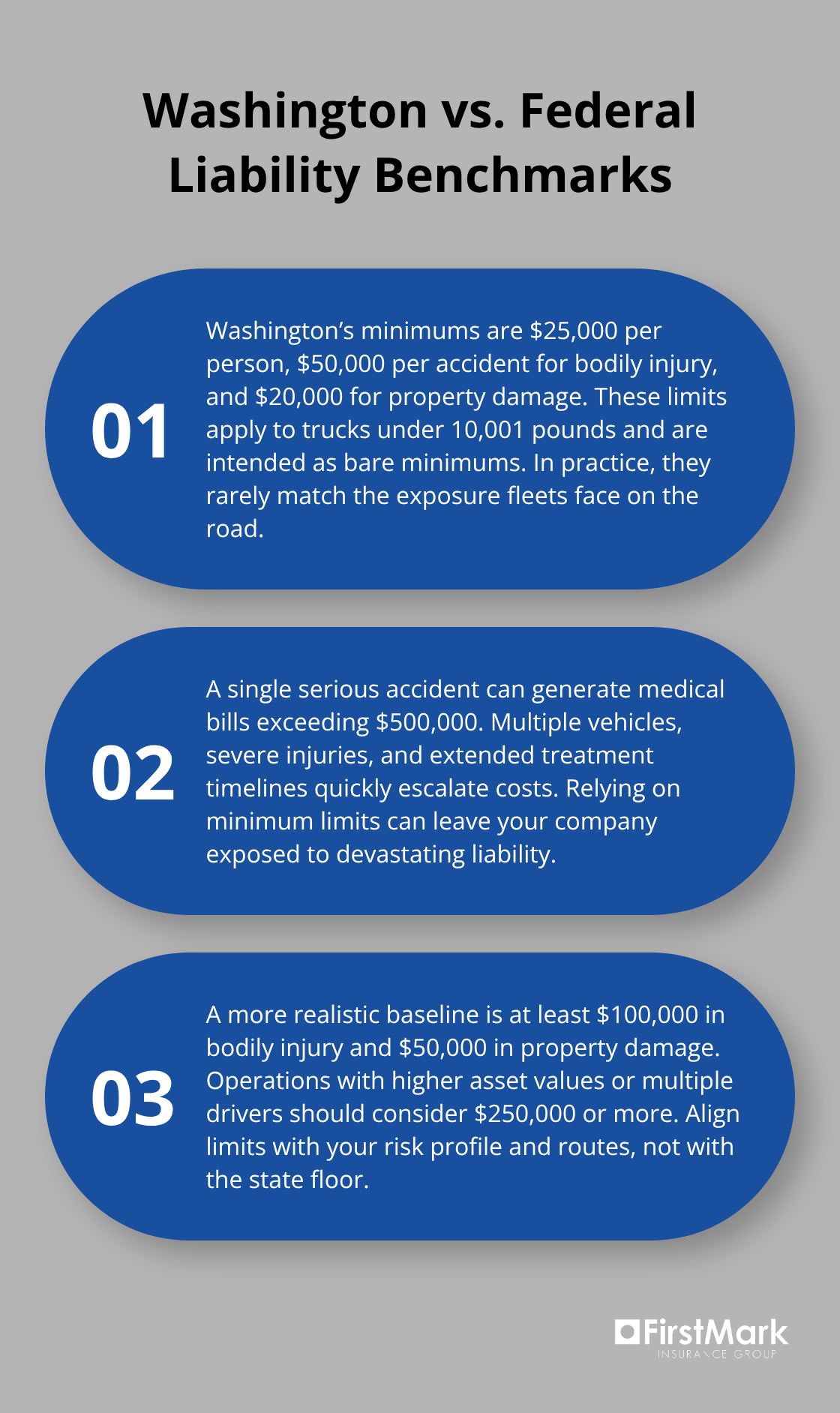
Washington State mandates minimum liability coverage of $25,000 for bodily injury per person and $50,000 per accident, along with $20,000 for property damage. These minimums apply to trucks under 10,001 pounds. Most fleet operators quickly discover that state minimums fall far short of real-world protection. A single accident involving serious injuries can generate medical bills exceeding $500,000, leaving your company exposed to devastating liability claims. We recommend carrying at least $100,000 in bodily injury coverage and $50,000 in property damage as a practical baseline, though operations with higher asset values or multiple drivers should consider $250,000 or more.
Federal Requirements for Interstate Operations
Interstate operations trigger federal requirements that override state minimums. The Federal Motor Carrier Safety Administration mandates coverage of $750,000 for general freight haulers and up to $5,000,000 for hazmat carriers. If your fleet crosses state lines even occasionally, these federal thresholds apply regardless of Washington’s lower state minimums.
Coverage Options Beyond State Minimums
Physical damage coverage protects your actual trucks and equipment, which most lenders require if you’ve financed vehicles. Cargo insurance becomes essential if you transport goods for clients, protecting their merchandise if damage occurs during transit.
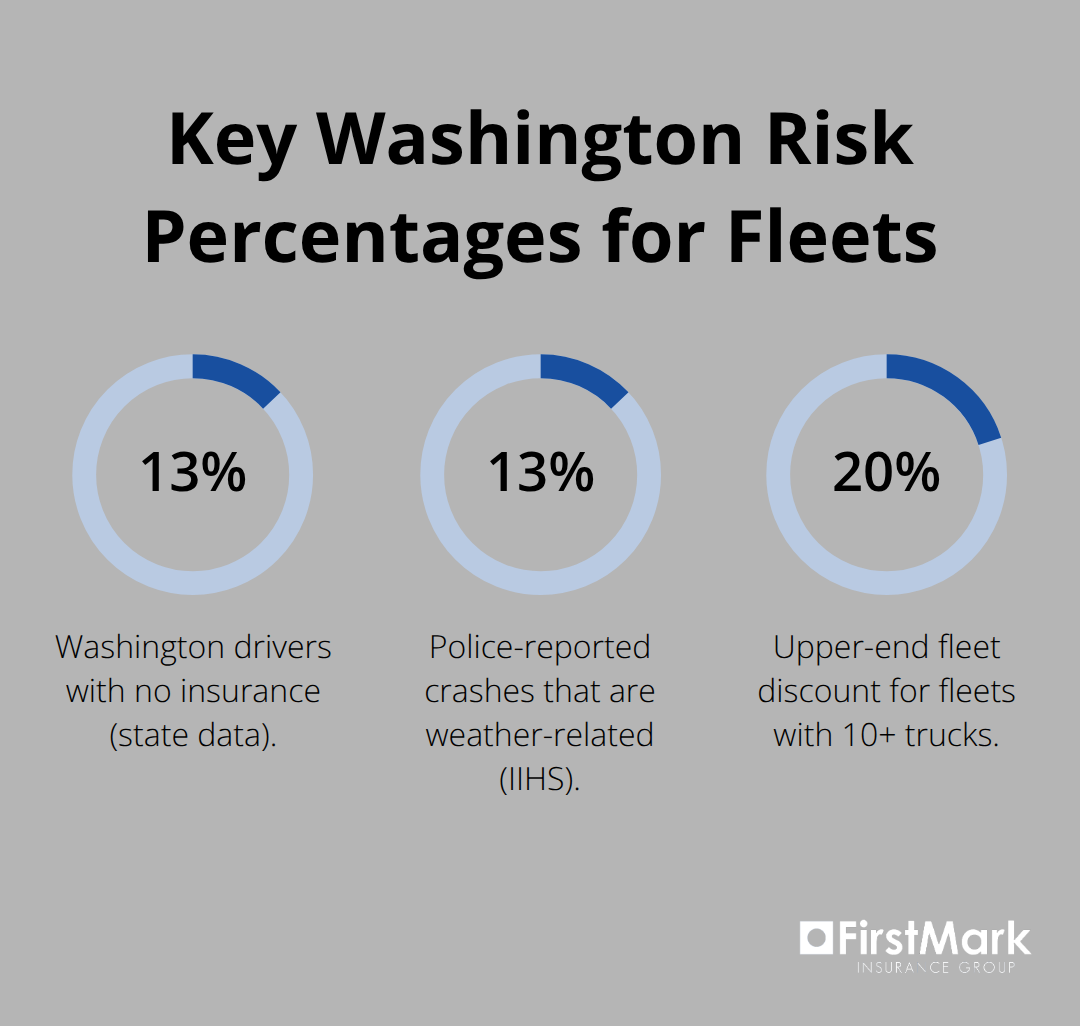
Specialized coverage options address specific operational needs. Bobtail insurance covers non-cargo movements, hired and non-owned auto coverage applies when drivers use personal vehicles for business, and uninsured motorist protection guards against uninsured drivers (approximately 13 percent of Washington drivers carry no insurance according to state data). The decision between these options depends entirely on your operation’s structure and risk profile.
Understanding what Washington requires forms only part of your protection strategy. The types of coverage available-and how they work together-determine whether your fleet truly has adequate protection or carries dangerous gaps.
Types of Commercial Truck Insurance Coverage
Liability Coverage: Your Primary Protection
Liability coverage protects your company when a truck causes injury or property damage to someone else. Washington State requires minimums, but those minimums leave you exposed. A serious accident involving multiple vehicles and injuries generates claims well beyond $50,000 in property damage. The Federal Motor Carrier Safety Administration mandates $750,000 in liability coverage for most freight operations-view this federal threshold as your actual floor, not your ceiling.
If your fleet operates in high-density urban areas or carries high-value goods, $1,000,000 in combined single-limit coverage provides better protection against catastrophic claims. Bodily injury claims escalate quickly-medical treatment for serious injuries, lost wages, and pain-and-suffering awards accumulate rapidly. Property damage coverage handles the other vehicle, structures, or infrastructure your truck damages. These two components work together, and separating them weakens your protection strategy.
Physical Damage Coverage: Protecting Your Assets
Physical damage coverage pays to repair or replace your own trucks after collision, comprehensive events like theft or weather, or uninsured motorist incidents. This coverage matters most if you’ve financed vehicles, as lenders require it. The National Highway Traffic Safety Administration reports that commercial truck collisions cost the economy approximately $99 billion annually, reflecting both the frequency and severity of these incidents.
Comprehensive coverage protects against theft, which remains a real concern in Washington-commercial vehicle theft claims have increased steadily over the past five years. Collision coverage handles accidents with other vehicles or objects. Deductibles typically range from $500 to $2,500, and choosing the right deductible requires honest assessment of your cash flow and risk tolerance. If your fleet operates around Seattle or Tacoma with heavy traffic and weather exposure, you’ll file more claims than operations in rural areas, making lower deductibles more practical despite higher premiums.
Cargo and Specialized Coverage Options
Cargo insurance protects merchandise your trucks transport, covering loss or damage during transit. This coverage becomes non-negotiable if clients hold you responsible for their goods. Specialized coverages like hired and non-owned auto insurance apply when drivers use personal vehicles for business purposes, which many fleets do occasionally for deliveries or client visits.
Bobtail coverage addresses the gap when your truck operates without a trailer, which some standard policies exclude. These specialized options exist because standard commercial auto policies contain specific exclusions that create coverage gaps for particular operational scenarios. Your operation’s structure and risk profile determine which of these options you actually need.
Selecting the right combination of these coverages requires understanding how your specific fleet operates. The next section walks through the process of matching your coverage choices to your actual business needs.
How to Choose the Right Commercial Truck Insurance for Your Fleet
Assess Your Fleet’s Specific Operations
Document exactly what your fleet does, because insurance companies price and structure coverage around operational specifics. A fleet hauling produce from Spokane to Seattle faces different risks than one delivering construction materials within a single county, and your coverage should reflect those differences. Write down your average daily mileage, typical routes, number of drivers, cargo types, vehicle values, and whether you operate year-round or seasonally. This foundation prevents you from purchasing coverage gaps or overpaying for protection you don’t need.
If you operate in mountainous terrain during winter months, weather-related claims increase substantially compared to flat-terrain operations. The Insurance Institute for Highway Safety reports that weather-related crashes account for 13 percent of police-reported crashes, with higher percentages in fatal and injury-related incidents. Your specific geographic and seasonal patterns matter more than generic industry averages.
Evaluate Your Actual Risk Exposure
Examine your claims history and operational vulnerabilities to identify your actual risk exposure. If your fleet has experienced multiple cargo damage claims, cargo insurance becomes non-negotiable rather than optional. If you frequently hire temporary drivers during peak seasons, uninsured motorist coverage protects you against their potential at-fault accidents.
Washington’s 13 percent uninsured driver rate means statistically, your fleet will interact with uninsured motorists regularly. Larger fleets with 10 or more trucks typically qualify for fleet discounts ranging from 10 to 20 percent, so obtaining quotes from multiple providers becomes essential. You’re not just comparing coverage options but also uncovering discounts your size legitimately earns.
Compare Quotes Across Multiple Providers
Request quotes from at least three providers, and be specific about your operation when requesting them. Generic quotes based on limited information produce misleading comparisons. When comparing quotes, separate the premium from the coverage, because a lower price often means reduced limits or higher deductibles that create dangerous gaps.
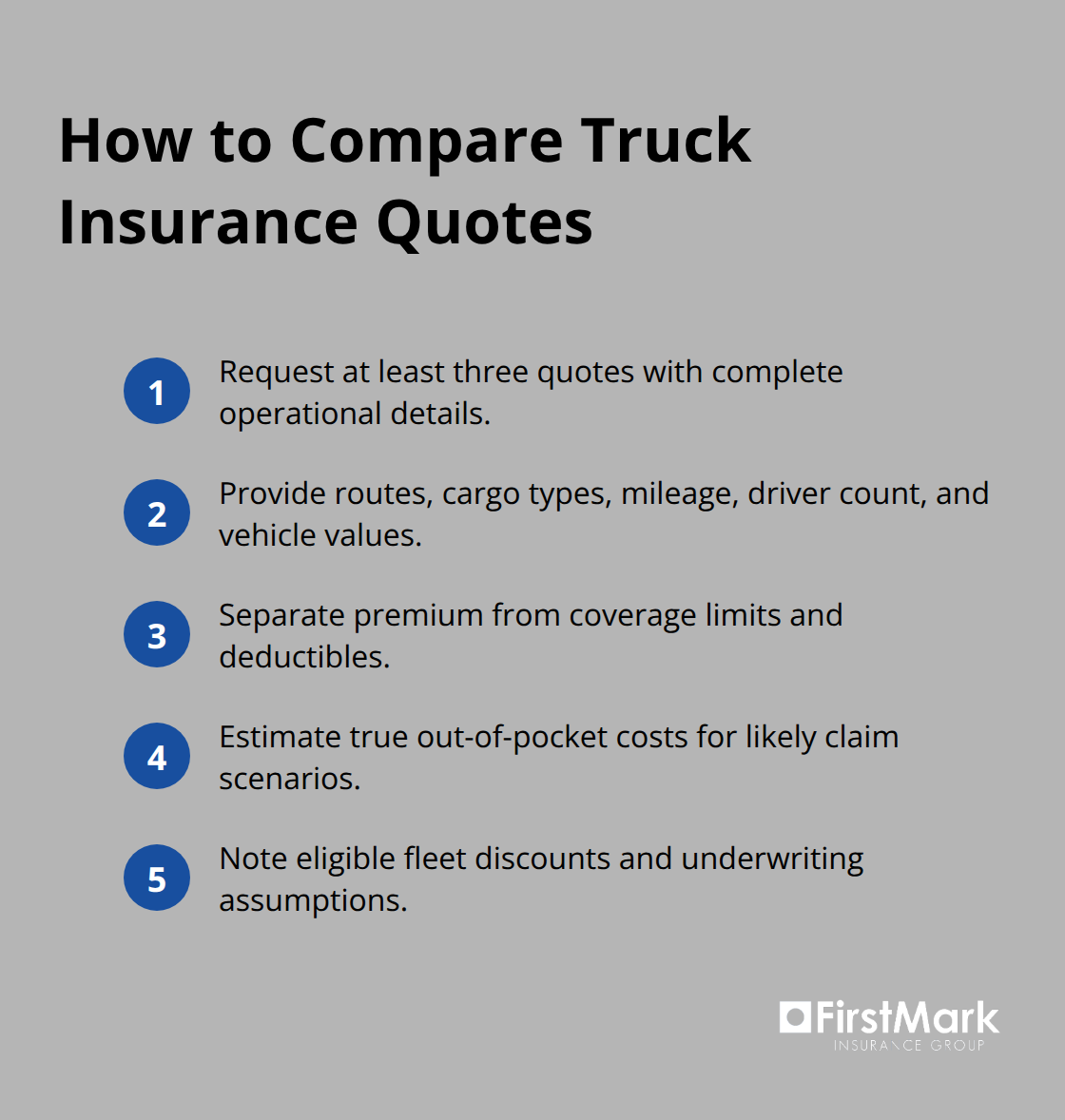
A $500 premium difference might represent $250,000 less in liability coverage or a $2,000 deductible increase. Calculate your true out-of-pocket cost if a claim occurs, not just your annual premium. This approach reveals which quotes actually provide the protection your fleet needs at each price point.
Final Thoughts
Commercial truck insurance in Washington requires more than checking boxes against state minimums. Federal thresholds exceed state requirements, physical damage and liability coverage work together to protect your operation, and specialized options address gaps in standard policies. The coverage decisions you make directly impact your financial exposure when accidents happen.
Your next step involves gathering your fleet’s operational details and requesting quotes from multiple providers. When you request quotes, specify your routes, cargo types, driver count, and vehicle values to prevent comparing apples to oranges and to reveal which providers actually understand your operation’s unique risks. Calculate your true cost by factoring in deductibles and coverage limits, not just annual premiums.
We at FirstMark Insurance Group have spent 30 years helping businesses navigate insurance complexity. We match your commercial truck insurance Washington coverage to your actual needs rather than selling you policies you don’t require, and we maintain regular contact throughout the year to verify your coverage aligns with your evolving business needs. Contact FirstMark Insurance Group to discuss your coverage strategy with professionals who’ve guided businesses through these decisions for three decades.
Disclaimer: The information provided in this blog is for general informational purposes only and does not constitute legal, financial, or insurance advice. Coverage options, terms, and availability may vary. Please consult with a licensed professional for advice specific to your situation