

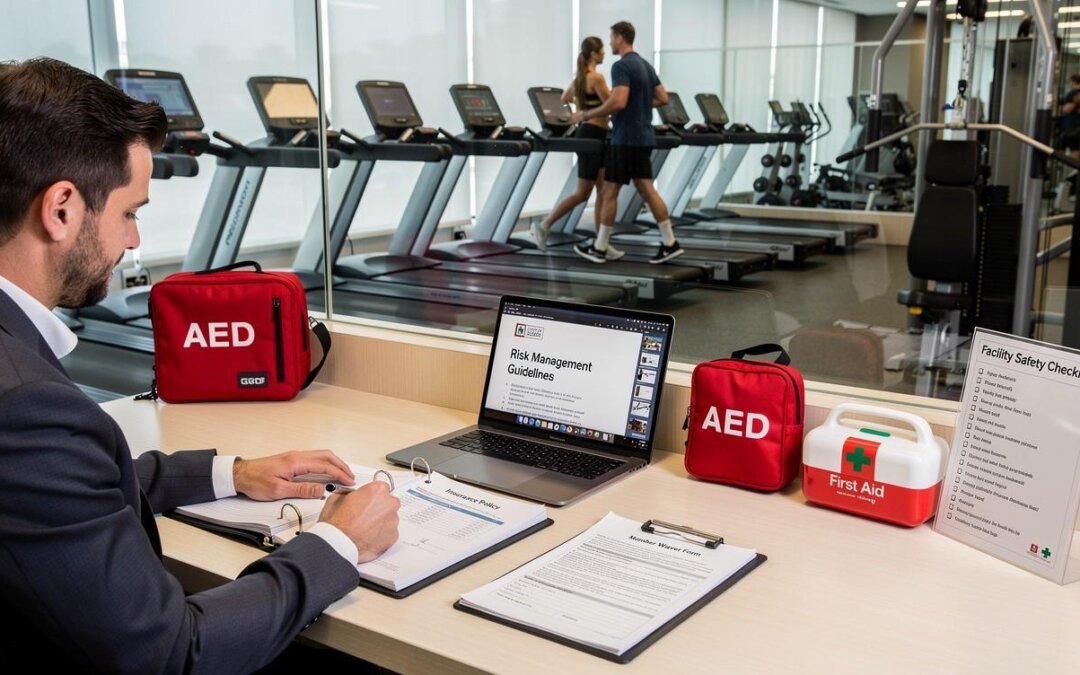
Running a fitness center in Seattle means managing more than just memberships and equipment. You face real liability risks that require proper protection, and understanding Seattle gym insurance requirements isn’t optional-it’s essential for your business survival.
At FirstMark Insurance Group, we work with gym owners who recognize that the right coverage prevents catastrophic financial losses. This guide walks you through what Washington State requires and what smart operators actually carry.
Washington State Gym Insurance Requirements: What the Law Mandates and What You Actually Need
State Law Doesn’t Impose Universal Gym Insurance Mandates
Washington State lacks a single statewide insurance requirement that applies universally to all fitness centers, which surprises many gym owners who expect clear regulatory guidance. However, this absence of mandate doesn’t mean you can operate without coverage. Your mortgage lender will demand general liability insurance with minimums typically ranging from $1 million to $2 million per occurrence if your facility carries debt. Most commercial property owners also require gym tenants to carry liability coverage as a lease condition.
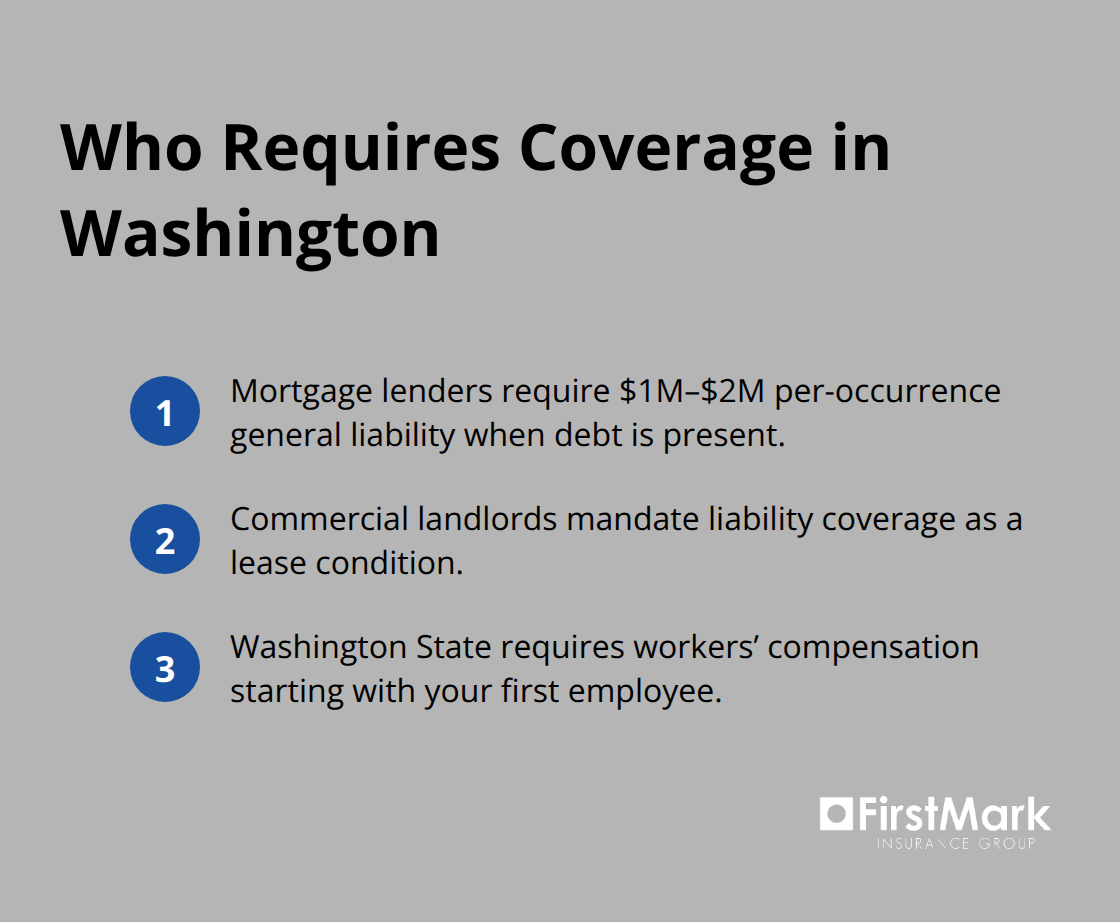
The Washington Department of Labor requires workers’ compensation insurance if you have any employees, with coverage beginning from your first hire.
General Liability and Professional Liability Serve Different Purposes
The real protection gap emerges when gym owners confuse general liability with professional liability. General liability covers member injuries from slips, falls, or equipment malfunction. Professional liability addresses claims arising from your instruction or advice-a distinction that matters significantly when a member claims improper spotting technique caused their injury. Many gym owners carry only one type when their operation genuinely needs both. A member’s serious injury claim can quickly exceed $500,000 in medical costs and lost wages, far surpassing the liability minimums your mortgage lender requires.
Property Insurance Protects Against Equipment and Facility Losses
Equipment and facilities present another coverage consideration that state law doesn’t explicitly mandate but that financial reality demands. A fire damages your weight machines, cardio equipment, or building infrastructure, and property insurance protects against losses that could exceed $100,000 easily depending on your setup size. Your state doesn’t regulate the specific dollar amounts of general liability coverage for fitness centers the way it does for other industries, meaning you must assess your actual exposure rather than defaulting to minimum requirements.
Cyber Liability Addresses Data Breach Obligations
Cyber liability sits outside most gym owners’ awareness entirely, yet Washington State data breach notification laws require you to notify members if their personal information is compromised. The cost of a breach-including notification expenses, credit monitoring services, and potential regulatory fines-can reach tens of thousands of dollars for a mid-sized facility. This coverage protects your operation from financial exposure that state law can impose on you.
Finding the Right Coverage for Your Specific Operation
The distinction between what’s legally required and what’s financially prudent matters tremendously for Seattle gym operations. Your state doesn’t regulate the specific dollar amounts of general liability coverage for fitness centers the way it does for other industries, meaning you must assess your actual exposure rather than applying generic fitness industry standards to your Seattle location. An experienced insurance advisor who understands gym operations specifically can identify your unique risks and help you build a protection strategy tailored to your facility’s actual exposure.
Types of Insurance Coverage Gym Owners Need
General Liability Insurance Forms Your Foundation
General liability insurance forms the foundation of gym protection, but the coverage limits matter far more than most owners realize. Washington State doesn’t mandate specific minimums for fitness centers, yet serious injuries in fitness facilities can result in substantial claims. A member slips on the pool deck, tears ligaments, and requires surgery plus physical therapy-suddenly you face medical bills exceeding $75,000 before lost wages enter the calculation. Your lease likely requires $1 million to $2 million in general liability coverage, but that baseline protection evaporates quickly when serious injuries occur.
Property Insurance Protects Your Equipment Investment
Property insurance deserves equal attention because gym equipment represents substantial capital investment. A single cardio machine costs $3,000 to $8,000 new, and a modest facility with 30 machines carries $100,000 to $200,000 in equipment value alone. Fire, theft, or water damage eliminates your revenue-generating assets overnight, making property coverage non-negotiable regardless of what state law technically requires. This coverage protects the physical infrastructure that keeps your operation running.
Workers’ Compensation Covers Your Staff
Washington State mandates workers’ compensation insurance from your first employee hire, with no exceptions for part-time staff or independent contractors. The Washington Department of Labor enforces this requirement strictly, and operating without coverage exposes you to criminal penalties and unlimited personal liability if an employee suffers a workplace injury. Gym operations carry genuine occupational hazards-trainers experience repetitive strain injuries, front desk staff develop carpal tunnel from constant computer work, and maintenance personnel risk back injuries moving heavy equipment. Proper coverage protects both your employees and your business finances.
Cyber Liability Addresses Data Breach Exposure
Cyber liability represents the coverage gap most gym owners completely overlook until a breach occurs. Your membership management system stores names, addresses, phone numbers, email addresses, and often payment card information for every member. Washington State’s data breach notification law requires you to notify affected individuals if their personal information is compromised. Cyber liability coverage handles notification expenses, forensic investigation costs, regulatory fines, and member notification services, protecting your operation from financial exposure that grows larger every year as cyber threats increase.
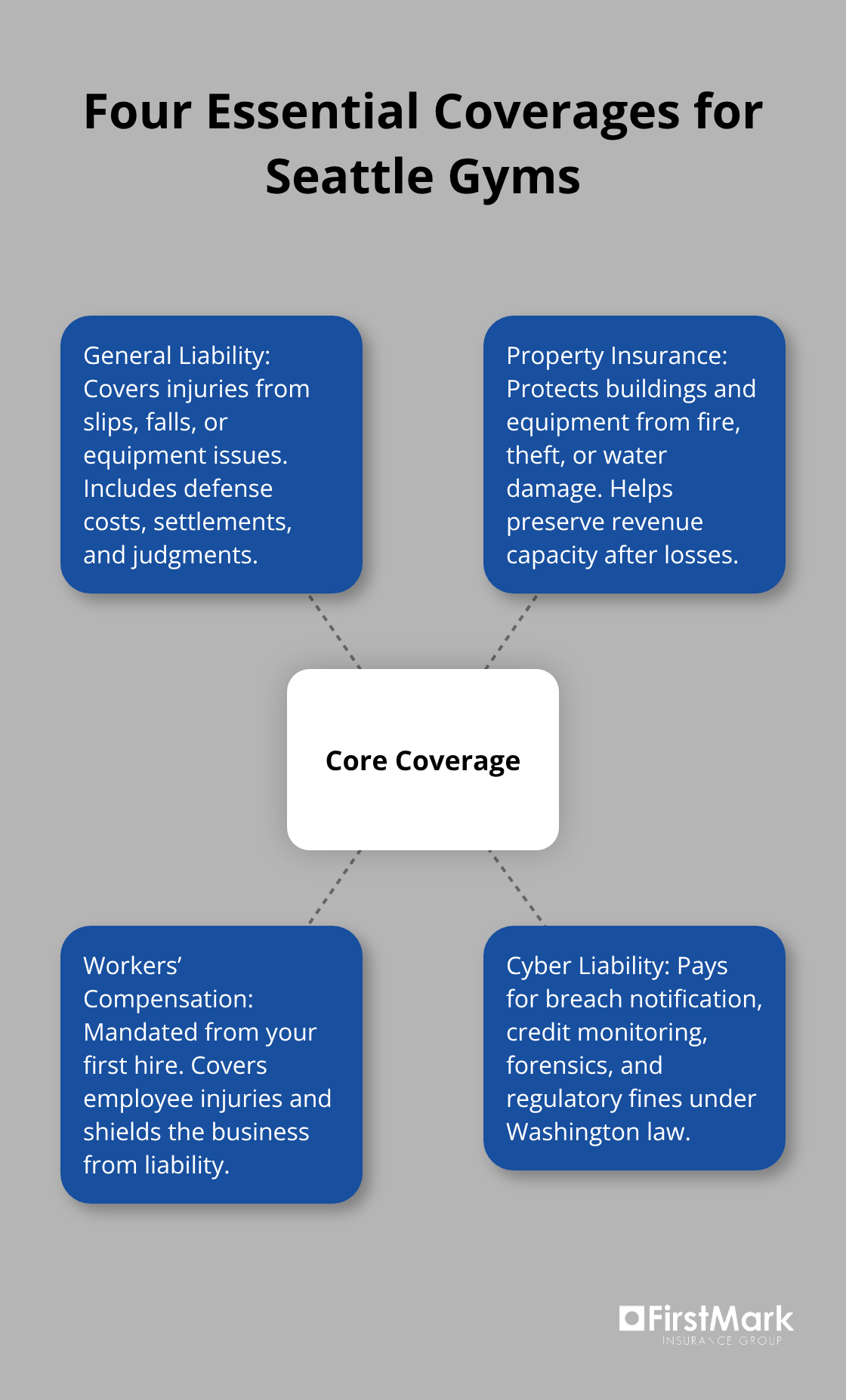
These four coverage types work together to address the specific risks your Seattle gym faces. The next section examines the actual claims gym owners encounter and how each coverage type responds when incidents occur.
Common Claims Gym Owners Face and How Insurance Protects Against Them
Member Injury Claims Demand Serious Financial Protection
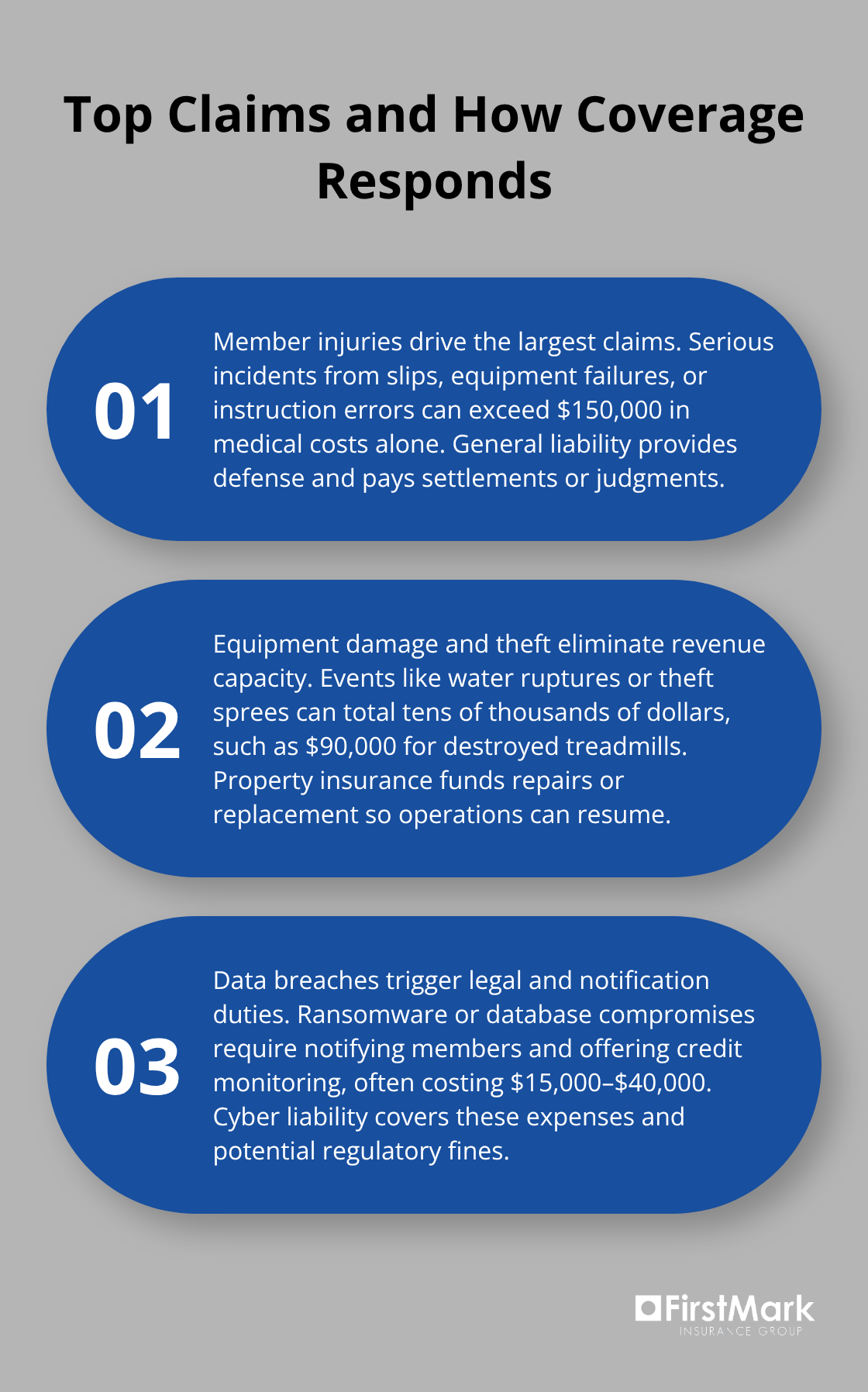
Member injuries at fitness facilities generate the largest insurance claims gym owners face, and the injuries that occur are far more varied than most operators anticipate. Slip-and-fall incidents on wet pool decks or locker room floors represent the most common scenario, but serious claims also stem from equipment malfunction, improper instruction, or inadequate supervision. A member using a leg press machine experiences a catastrophic equipment failure that fractures their femur, resulting in emergency surgery and six months of rehabilitation-medical costs alone exceed $150,000 before lost wages and pain-and-suffering damages enter the calculation. General liability insurance responds to these claims by covering medical expenses, legal defense costs, and settlements or judgments. Without this coverage, your personal assets become exposed to collection efforts.
Equipment Damage and Theft Eliminate Revenue Capacity
Equipment damage and theft present a second category of claims that directly impacts your operational capacity. Thieves target high-value cardio machines, dumbbells, and resistance training equipment because these items resell easily, and a single theft event can remove thousands of dollars in revenue-generating assets from your facility. A water pipe rupture damages your cardio floor and destroys fifteen treadmills valued at $6,000 each-that’s $90,000 in equipment loss plus business interruption losses if members cancel memberships during repairs. Property insurance covers both scenarios and restores your ability to generate revenue.
Employment-Related Liability Claims Carry Hidden Costs
Employment-related liability claims emerge when staff members allege wrongful termination, harassment, or wage violations, and these claims carry significant legal defense costs regardless of merit. A personal trainer claims you terminated them for reporting safety violations, and defending that claim costs $25,000 to $50,000 in legal fees even if you ultimately prevail. Employment practices liability insurance covers defense costs and settlements for these claims.
Data Breaches Impose Notification and Regulatory Obligations
Data breaches represent the fastest-growing risk category for gym operations because membership management systems store sensitive personal and financial information on thousands of members. A ransomware attack encrypts your member database, and attackers demand payment to restore access-simultaneously, you must notify all affected members under Washington State law and provide credit monitoring services. Notification and credit monitoring expenses typically range from $15,000 to $40,000 depending on your member count, and cyber liability insurance covers these costs plus regulatory fines that state law may impose. Every one of these claim categories will likely occur at some point during your gym’s operation, making comprehensive coverage a financial necessity rather than an optional expense.
Final Thoughts
Seattle gym insurance requirements demand more than compliance with state law-they demand alignment with your actual financial exposure. General liability, property, workers’ compensation, and cyber liability coverage work together to protect your facility, your staff, and your members from the real risks your business faces. A serious member injury claim or equipment loss can exceed $100,000 quickly, making the difference between adequate coverage and minimum coverage the difference between financial survival and catastrophic loss.
We at FirstMark Insurance Group understand that gym owners need more than generic insurance advice tailored to fitness industry standards. Your facility carries specific exposures that differ from other businesses, and your coverage should reflect those realities. We review your lease requirements, your equipment value, your staff size, and your member data practices to build a comprehensive picture of your actual exposure and present you with coverage options that address your specific needs.
Contact FirstMark Insurance Group today to discuss your current coverage and identify any gaps in your protection. We’ll help you understand what each coverage type protects and why the limits matter for your operation, then present you with choices that fit your requirements at the best available pricing.
Disclaimer: The information provided in this blog is for general informational purposes only and does not constitute legal, financial, or insurance advice. Coverage options, terms, and availability may vary. Please consult with a licensed professional for advice specific to your situation