

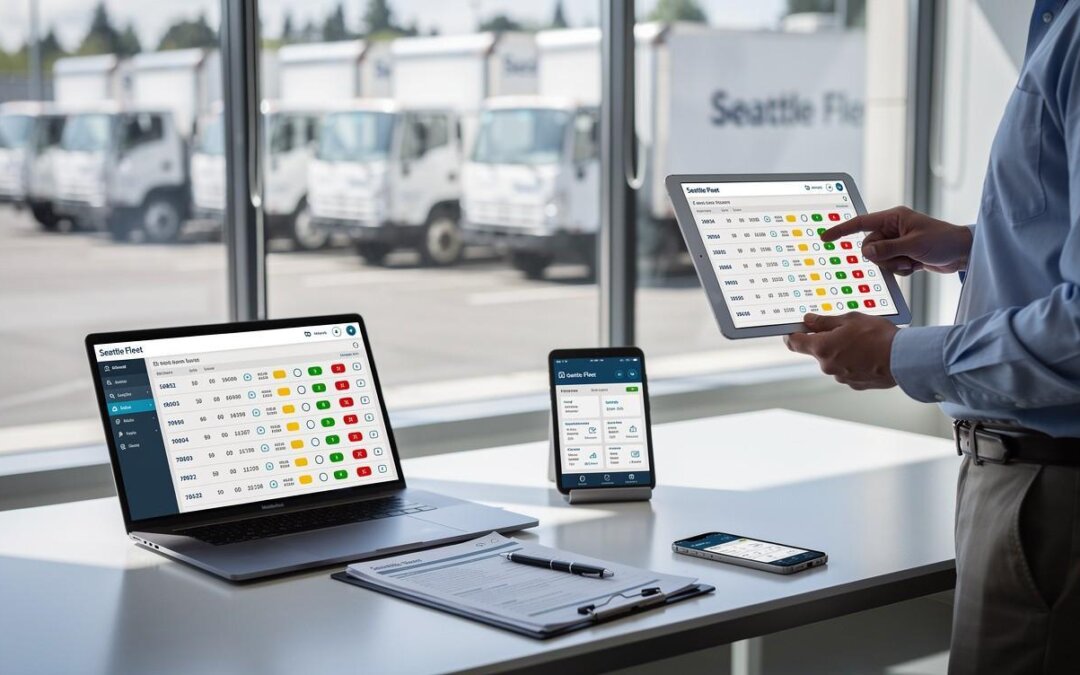
Running a truck fleet in Seattle means navigating complex insurance requirements while managing costs across multiple vehicles. At FirstMark Insurance Group, we work with fleet operators who understand that generic policies leave gaps and waste money.
This guide walks you through Seattle truck fleet coverage options, cost-saving strategies, and claims management practices that actually work for established operations.
What Seattle Fleet Operators Actually Need to Know About Coverage
Washington state sets minimum liability limits for trucks under 10,001 lbs at $25,000 per person, $50,000 per accident, and $20,000 property damage. These numbers fall short for any serious operation. A single catastrophic claim in Seattle’s congested port corridors or along I-5 can exceed these limits within seconds, leaving your business exposed to personal liability. If your fleet crosses state lines, federal FMCSA requirements override state minimums entirely, requiring $750,000 in liability for general freight haulers. Many brokers working with Seattle carriers insist on $1,000,000 coverage for port and container work because the risk profile justifies it. The Northwest Seaport Alliance handles the seventh-largest container gateway in North America, which means tight scheduling pressure, sharp turns through the Duwamish Valley industrial corridor, and heavy dock traffic that increases accident frequency and claim severity. A practical baseline for Seattle fleets should reach at least $100,000 bodily injury and $50,000 property damage, with $250,000 or higher for operations with multiple drivers or higher asset values. Your actual limit should reflect your routes, cargo types, and driver count, not a generic industry standard.
Coverage That Protects Your Actual Assets
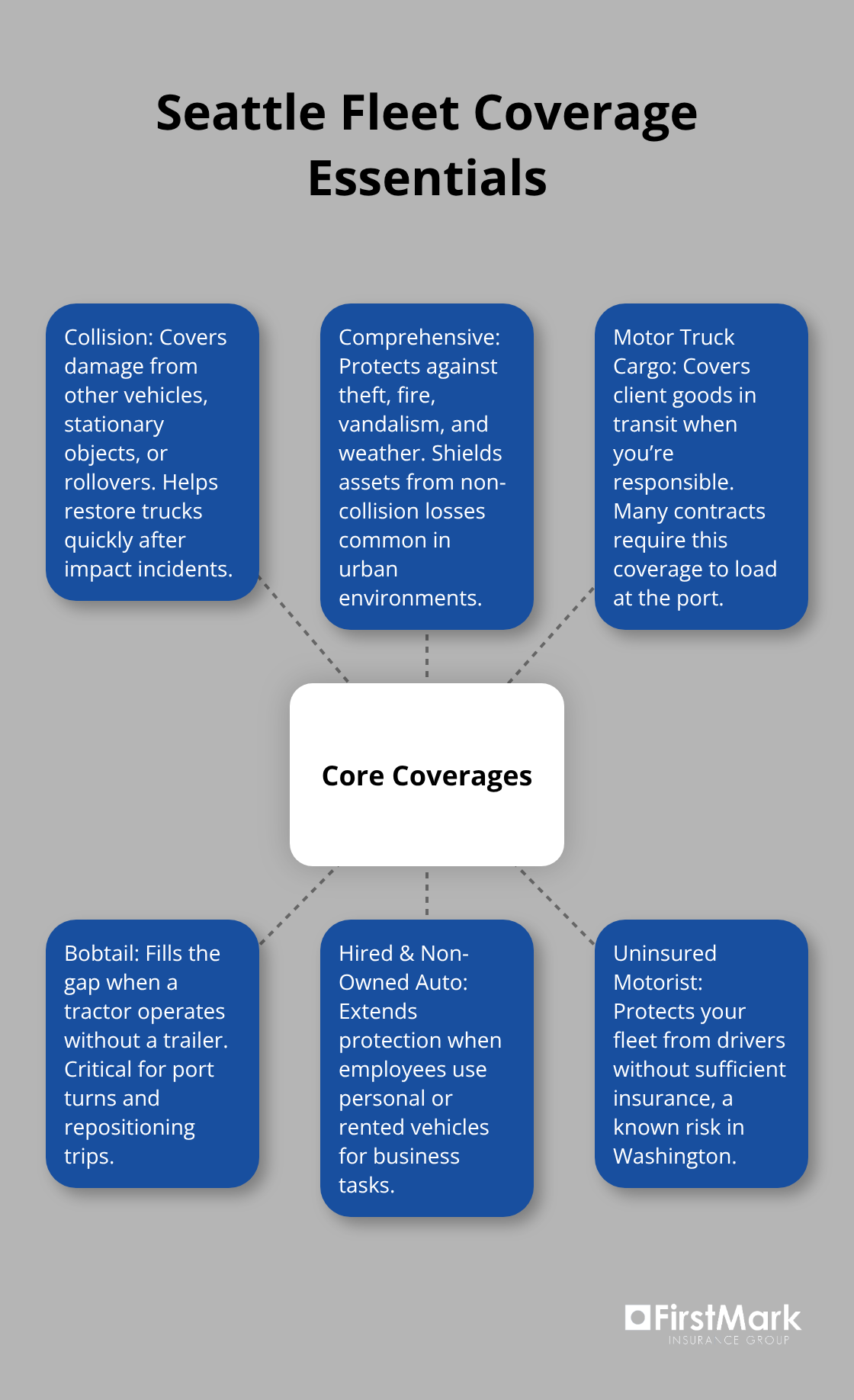
Physical damage coverage splits into collision and comprehensive. Collision covers damage from other vehicles, stationary objects, or rollovers, while comprehensive protects against theft, fire, vandalism, and weather. Nationally, commercial truck collisions cost the economy about $99 billion annually according to the National Highway Traffic Safety Administration, and theft claims for Washington commercial vehicles have risen over the past five years. This is not theoretical risk; it is happening in your market. Typical collision deductibles range from $500 to $2,500, and in Seattle’s high-claim-frequency environment, lower deductibles often make practical sense despite higher premiums. Motor truck cargo insurance is non-negotiable if clients hold you responsible for goods in transit. Bobtail coverage fills a critical gap when your truck moves without a trailer, and hired and non-owned auto covers situations where drivers use personal vehicles for business purposes. Uninsured motorist protection guards against the estimated 13% uninsured driver rate in Washington.
The Documentation Reality
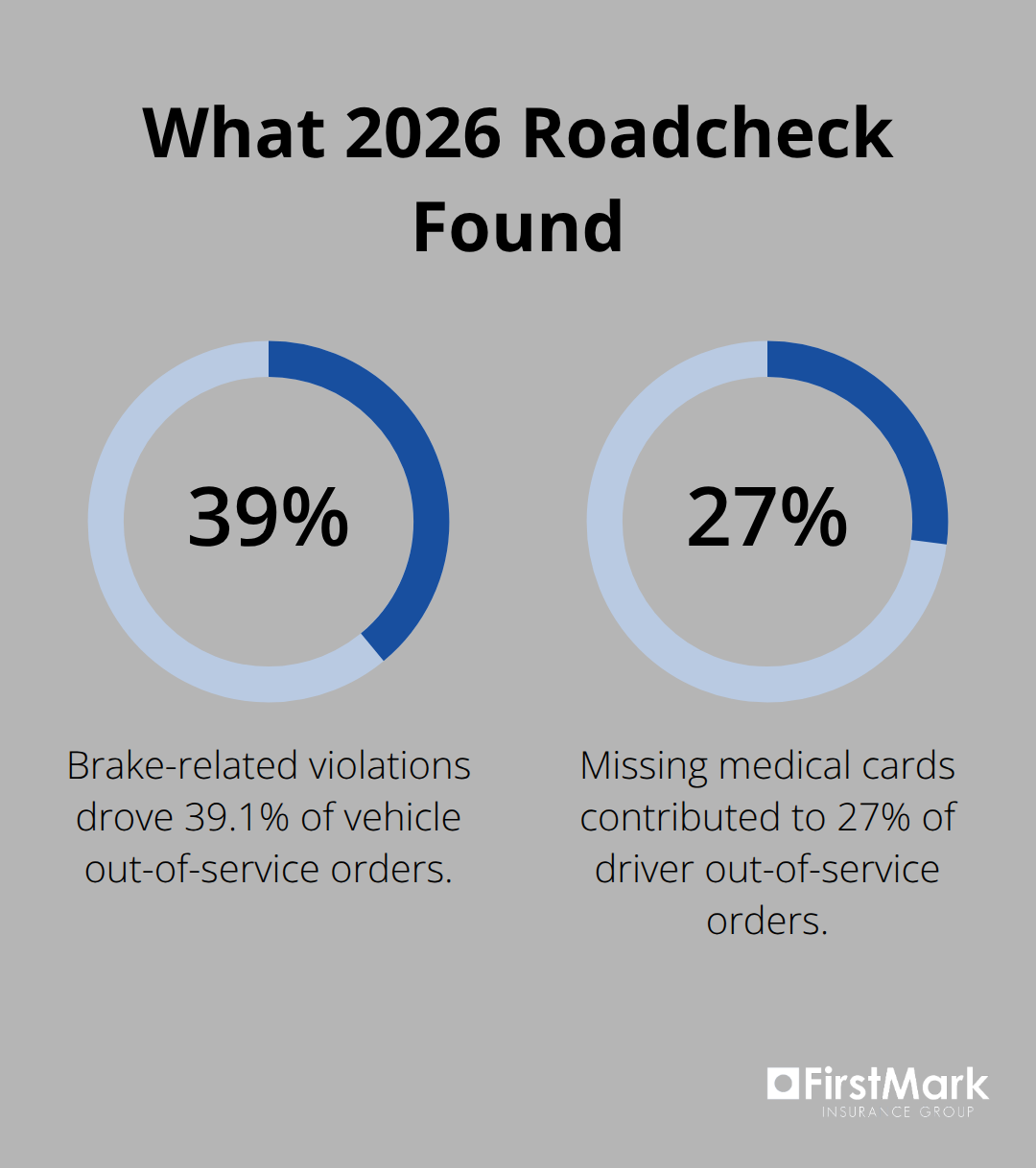
Documentation determines claim outcomes. Without a recorded repair history linking inspection entries through work orders to completion, enforcement risk and claims defense both deteriorate. The 2026 CVSA International Roadcheck reported that brake-related violations drove 39.1% of vehicle out-of-service orders, and missing medical cards contributed to 27% of driver out-of-service orders. These violations appear in enforcement records and influence insurance pricing. Standardizing inspections across multiple Seattle sites with digital DVIR tools (including timestamped photos and signatures) creates defensible evidence when claims arise.
A mock inspection review of your own records before enforcement periods identifies documentation gaps while there is time to close them. Telematics platforms that connect GPS tracking, integrated video, AI insights, and dashboards help surface failed inspections and overdue maintenance in real time, enabling timely intervention rather than reactive scrambling.
Moving Forward with Compliance and Cost Control
Your coverage strategy must align with your actual operations. The next section covers how bundling multiple vehicles under one policy reduces administrative burden while lowering per-vehicle costs, and how safety programs and telematics data directly influence what insurers charge for your fleet.
How Bundling and Safety Data Cut Your Fleet Insurance Costs
Consolidating Multiple Vehicles Reduces Cost and Complexity
Bundling multiple vehicles under one fleet policy cuts your administrative overhead while delivering measurable cost savings. Fleets with 10 or more trucks typically qualify for 10 to 20 percent discounts compared to insuring vehicles individually, and that gap widens as your operation grows. The savings stem from simplified renewals, one billing date, and one point of contact instead of managing separate policies across multiple carriers. More importantly, bundling standardizes your coverage across all vehicles, eliminating the risk that one truck carries inadequate limits while another over-insures.
When you specify your exact fleet composition-number of vehicles, routes through Seattle’s port corridors and I-5, cargo types, and driver count-carriers price your entire operation as a cohesive risk rather than a collection of individual exposures. This transparency cuts through generic pricing and reveals your true protection gaps. A practical first step involves gathering your fleet data and requesting quotes from at least three providers.
Comparing Quotes Accurately Protects Your Coverage
Separate the premium from the coverage terms in each quote; a 500-dollar premium difference can mask substantial variations in liability limits, deductibles, or cargo coverage that leave you exposed. Obtain competing quotes and compare apples to apples by specifying identical coverage limits and deductibles across all three proposals. Your actual limit should reflect your routes, cargo types, and driver count, not a generic industry standard.
Telematics data justifies lower premiums
Safety data now directly influences what insurers charge. Telematics platforms with AI dashcams, GPS tracking, and engine diagnostics provide insurers with objective evidence of your fleet’s actual risk profile rather than relying on industry averages or claims history alone. B.A.M. Trucking reduced annual insurance premiums by approximately 200,000 dollars after deploying AI dashcams to defend against liability claims and demonstrate lower risk to carriers.
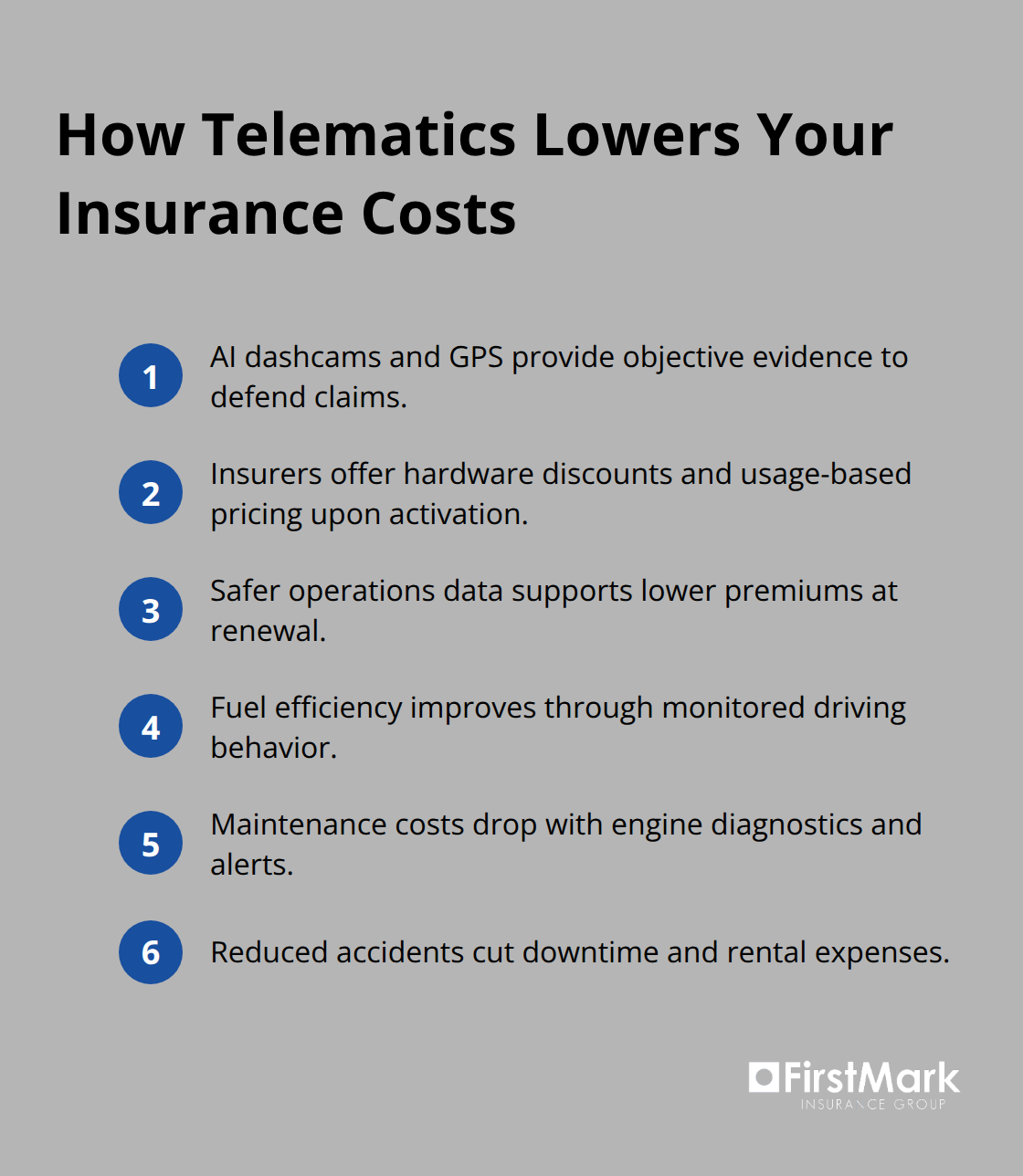
Insurers increasingly reward fleets that implement telematics with immediate hardware discounts upon activation, usage-based insurance programs, and marketplace discounts. The data justifies lower premiums because it proves your fleet operates safely; insurers no longer price based on assumptions. Beyond insurance savings, telematics lowers overall costs through improved fuel efficiency, reduced maintenance expenses, and fewer accident-related downtime incidents.
Rising Premiums Make Safety Data Your Strongest Negotiating Tool
Insurance costs rose 5.8 percent per mile nationally in the first quarter of 2025 and nearly 10 percent for renewal rate hikes in the first half of 2025. For Seattle fleets, the combination of bundling multiple vehicles and submitting telematics data to your insurer creates a compelling case for renewal rate reductions. Demonstrating measurable safety improvements through data becomes your strongest lever against rising premiums.
A Seattle fleet hauling containers through the Duwamish Valley faces different risk than a regional delivery operation, and your limits should reflect that distinction. The next section covers how preventive maintenance programs and proper documentation practices further reduce claims costs and strengthen your position with carriers during renewal negotiations.
Claims, Maintenance, and Documentation That Actually Lower Your Costs
Dashcam Footage and Telematics Accelerate Claims Settlement
A streamlined claims process starts before you file. When a vehicle sustains damage, your telematics data and dashcam footage provide insurers with objective evidence of what happened, accelerating investigation and settlement. A fleet operating without this documentation faces weeks of back-and-forth over fault and liability; with video evidence, claims settle in days. Report accidents immediately through your carrier’s portal or claims line, but first gather your DVIR records and any dashcam footage from the incident. Digital inspection tools with timestamped photos and driver signatures create a defensible record that strengthens your position if liability is disputed. For Seattle fleets navigating congested port corridors and I-5, where multi-vehicle incidents occur frequently, this documentation difference translates directly into faster payouts and lower deductible exposure across your entire fleet.
Preventive Maintenance Reduces Claims More Than Coverage Limits
Preventive maintenance programs reduce claims costs far more effectively than any coverage limit adjustment. The 2026 CVSA International Roadcheck showed that brake-related violations drove 39.1 percent of vehicle out-of-service orders, meaning fleets that ignore brake maintenance face enforcement risk and higher insurance premiums simultaneously. Establish a monthly preventive maintenance compliance target and track it as a core KPI across your entire operation. Connect your inspection data to work orders so repairs are documented from detection through completion; without this traceability, enforcement auditors and claims adjusters cannot verify that you addressed known defects.
Prioritize Maintenance Gaps With a Risk Matrix
Implement a simple two-by-two risk matrix listing likelihood versus impact to prioritize which maintenance gaps pose the greatest threat to your fleet’s safety rating and insurability. A fleet with documented PM compliance and zero repeat defects presents lower risk to carriers than one with sporadic maintenance, and that difference justifies renewal rate reductions during negotiations. Use real-time dashboards that surface failed inspections and overdue maintenance immediately rather than discovering problems at month-end; this approach enables timely intervention before violations accumulate.
Engine Diagnostics Predict Component Wear
Engine diagnostics from telematics platforms predict wear on tires, brakes, and other high-cost components, helping you stay ahead of catastrophic failures that trigger both claims and regulatory scrutiny. Seattle’s aging bridge infrastructure and heavy port traffic mean your fleet operates in a high-stress environment; preventive maintenance is not optional cost management, it is operational survival.
Final Thoughts
Seattle truck fleet coverage demands more than selecting the lowest premium-your operation faces distinct risks shaped by port corridors, aging infrastructure, and regulatory complexity that require coverage aligned with your actual exposures. Start with liability limits that exceed state minimums, physical damage protection tailored to your asset values, and cargo coverage that matches your client obligations. Bundling vehicles under one policy reduces administrative friction while delivering measurable cost savings, and submitting telematics data to your carrier transforms how insurers price your fleet.
Safety programs backed by dashcam footage and preventive maintenance documentation lower claims costs far more effectively than any coverage adjustment alone. Gather your fleet data including routes, vehicle count, cargo types, and driver profiles, then request quotes from multiple carriers specifying identical coverage terms across all proposals (this transparency reveals your true protection gaps and prevents premium comparisons from masking coverage differences). Implement telematics and digital inspection tools that create defensible records and provide real-time visibility into maintenance compliance and safety performance.
FirstMark Insurance Group has spent 30 years guiding businesses through insurance complexity by aligning coverage with actual operations rather than forcing fleets into generic tiers. Our team works with Seattle carriers to navigate port-adjacent corridors, bridge infrastructure constraints, and regulatory requirements that shape your risk profile. Contact us to schedule a coverage review and discover how tailored Seattle truck fleet coverage strengthens your operation while controlling costs.
Disclaimer: The information provided in this blog is for general informational purposes only and does not constitute legal, financial, or insurance advice. Coverage options, terms, and availability may vary. Please consult with a licensed professional for advice specific to your situation