


Washington homeowners with substantial properties face distinct insurance challenges that standard policies simply don’t address. High-value assets, specialized features, and regional risks demand elite homeowner insurance in WA that goes beyond basic coverage.
At FirstMark Insurance Group, we work with discerning homeowners to build protection strategies tailored to their specific circumstances. This guide walks you through what sets luxury home insurance apart and how to select coverage that genuinely reflects your property’s worth.
How Luxury Home Insurance Differs from Standard Coverage
Standard homeowner policies cap dwelling coverage at $500,000 to $1 million, which leaves significant gaps for Washington properties valued at $2 million or higher. Luxury insurance recognizes that high-value homes require different protection strategies. These policies typically offer dwelling limits starting at $1 million and extending well beyond, with some carriers providing limits up to $10 million or more. The difference isn’t just higher numbers-it’s how coverage responds to the complexity of expensive properties.
Coverage for Specialized Assets
Standard policies often exclude coverage for items like fine art, wine collections, jewelry, and antique furnishings entirely. Luxury policies build these protections in through scheduled endorsements that list specific items with agreed-upon values, eliminating disputes when claims occur. A homeowner in Seattle with a $5 million residence and a $200,000 art collection needs this specificity because a standard policy would deny coverage on the artwork altogether.
Water Damage and Liability Protection
Water damage from Seattle’s wet climate affects all homes, but high-value properties face additional exposure-damage to expensive hardwood floors, custom cabinetry, and integrated smart home systems costs substantially more to repair. Luxury policies increase water damage limits and often include coverage for system failures and accidental discharge. Similarly, liability coverage in standard policies typically maxes out at $300,000 to $500,000. For a homeowner hosting events or with significant property exposure, this creates real risk. Luxury policies routinely offer higher liability protection, with options to extend further through umbrella coverage.
Home businesses also require specialized attention; a standard policy actively excludes business operations, while luxury insurers can endorse coverage for home-based professional activities. Washington homeowners should know that replacement cost coverage becomes essential at higher property values. Standard policies sometimes use actual cash value, which depreciates coverage year after year. Luxury policies commit to full replacement cost, meaning your insurer rebuilds your home to its original condition regardless of depreciation.
Risk Assessment and Claims Expertise
High-value homeowners deserve more than a quote and a policy document. Luxury insurance requires actual risk assessment-someone who visits your property, understands its unique features, and identifies exposures that an automated system would miss. This might include evaluating your home’s construction materials, roof age, security systems, or proximity to wildfire zones.
In Washington, wildfire risk has increased substantially in recent years, particularly for properties in eastern Washington and near forested areas west of the Cascades. An insurer who takes time to assess these regional risks can recommend specific protections, like ember-resistant roofing or defensible space requirements, that reduce both your exposure and your premiums. Responsive service also matters when claims happen. A homeowner with $3 million in coverage needs an adjuster who understands luxury restoration, not someone processing claims by checklist. The best luxury insurers maintain specialized claims teams and relationships with preferred contractors who handle high-end repairs properly.
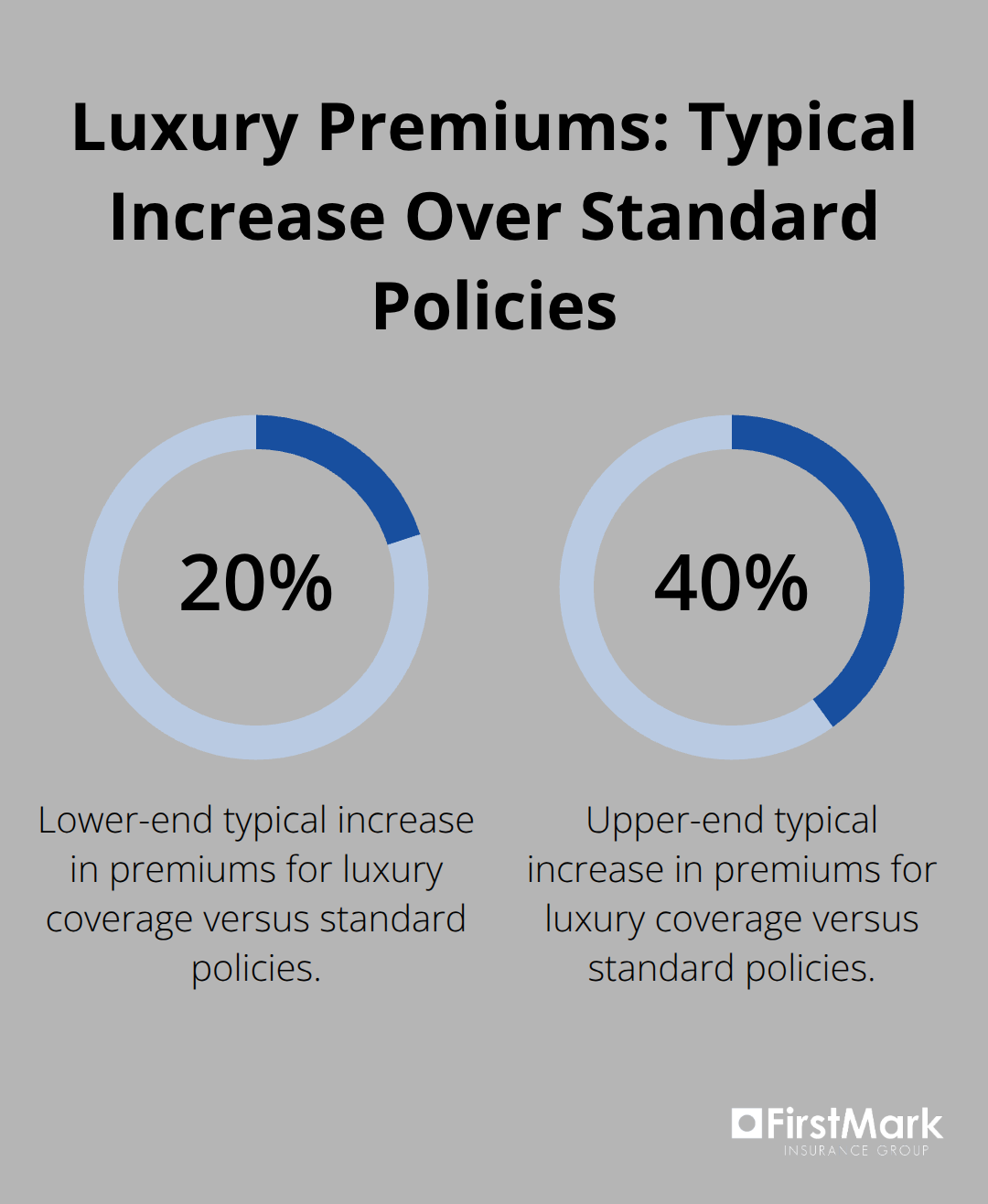
Your insurer should also review your coverage annually as your property changes-renovations, new purchases, or market value increases all warrant policy adjustments. Luxury homeowners typically pay 20 to 40 percent more in premiums than standard coverage costs, but this reflects genuinely broader protection, not just inflated pricing. Understanding these differences positions you to evaluate which provider truly matches your property’s complexity and your expectations for service.
Washington’s High-Value Home Insurance Market
Market Growth and Coverage Gaps
Washington’s luxury home market has expanded significantly, with median home prices in King County reaching $835,385 in 2026, according to Zillow. This growth has created genuine demand for high-value coverage, yet many homeowners remain underinsured because standard policies haven’t kept pace with property appreciation. Insurance carriers have responded by expanding their luxury offerings, but the market remains fragmented-some insurers actively compete for high-net-worth clients while others quietly exit this segment. This fragmentation means homeowners must work with agencies that match them to carriers genuinely equipped for complex properties, rather than treating luxury coverage as a premium version of basic policies.
Wildfire and Water Damage Exposure
Regional risks in Washington create specific insurance pressures that generic national carriers often underestimate. Wildfire exposure has intensified dramatically across the state-the 2023 wildfire season burned over 500,000 acres in Washington according to the Department of Natural Resources, and properties within five miles of high-risk zones now face significantly higher premiums or coverage restrictions from standard insurers. Eastern Washington properties face particularly acute exposure, but western communities near forested areas also confront real risk.
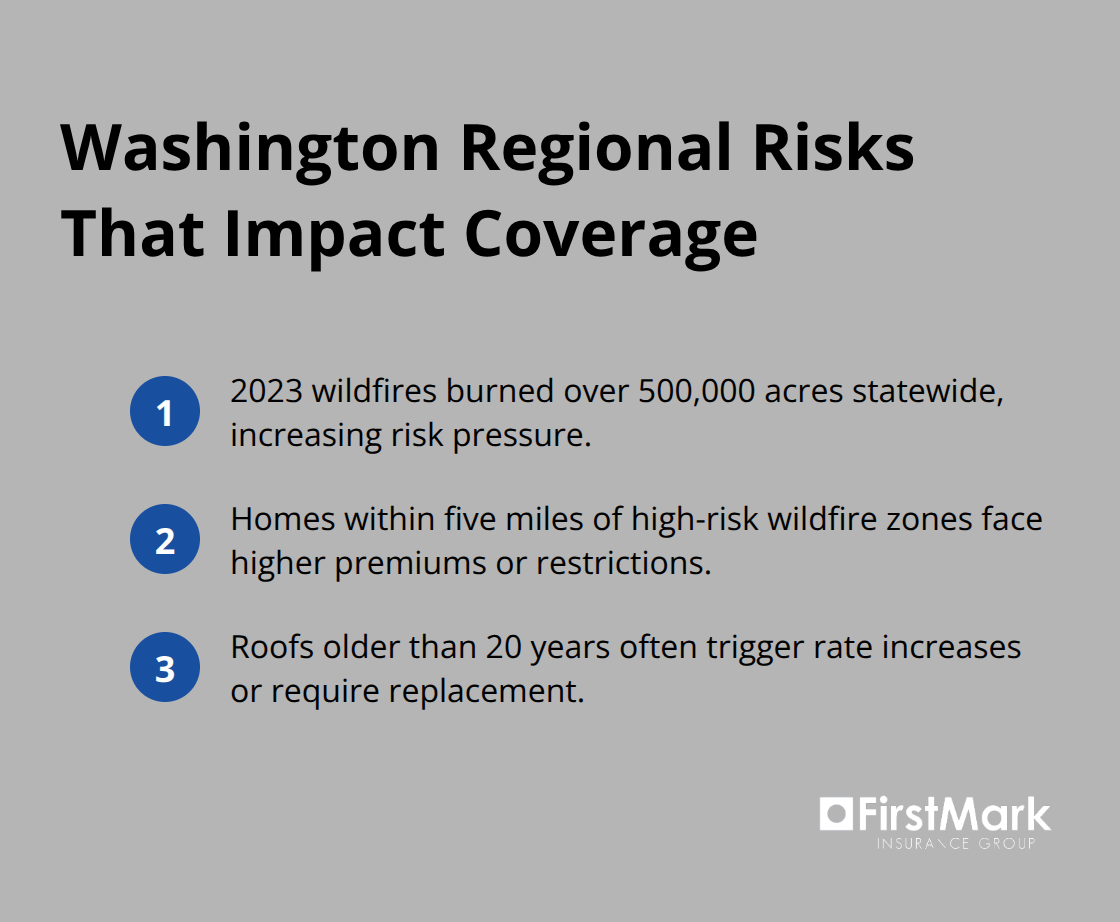
Water damage remains the leading homeowner claim in Washington, driven by heavy rainfall, aging infrastructure, and complex plumbing systems in older luxury homes. Insurers now scrutinize roof age more carefully since Washington’s wet climate accelerates deterioration-roofs older than 20 years often trigger rate increases or require replacement before coverage is approved.
Earthquake Risk and Home-Based Operations
Earthquake risk, while less frequent than in California, still concerns insurers; Washington sits on the Cascadia Subduction Zone, and carriers factor this into underwriting decisions. Additionally, Washington’s high concentration of tech workers and entrepreneurs means home-based business operations appear frequently on applications, requiring specialized endorsements that standard policies explicitly reject.
Regulatory Requirements and Standards
Insurance regulators in Washington maintain relatively strict filing requirements under the Washington Insurance Commissioner’s oversight, meaning rates and forms must be approved before use. This regulatory environment actually benefits luxury homeowners because it prevents race-to-the-bottom pricing that sacrifices claims handling quality. Your policy must comply with Washington’s homeowner insurance minimum standards, which require coverage of at least 80 percent of your home’s replacement value-a threshold that high-value properties typically exceed substantially. These regional dynamics and regulatory realities directly shape which insurers can serve your property effectively, making provider selection far more complex than comparing quotes alone.
The number 100% seems to be not appropriate for this chart. Please use a different chart type.
Selecting the Right Luxury Home Insurance Provider
Evaluate Coverage Limits Against Replacement Costs
Selecting a luxury home insurance provider requires more than comparing premium quotes side by side. Washington’s high-value home market demands insurers who understand regional exposures, maintain specialized claims expertise, and adjust coverage as your property evolves. The wrong choice leaves gaps in protection; the right partnership adapts to your circumstances over years.
Start with what coverage limits actually mean for your specific property. A $2 million dwelling limit sounds substantial until you calculate replacement costs for a Seattle home with custom finishes, radiant heating systems, and imported materials. Request detailed replacement cost estimates from your contractor or a qualified appraiser-this figure, not your purchase price, determines the coverage you genuinely need. Most luxury insurers require dwelling coverage at 100 percent of replacement cost, not the 80 percent threshold that satisfies standard policies. This matters enormously because underinsurance on a high-value property creates catastrophic exposure.
Assess Specialized Asset Coverage and Water Protection
Examine how each insurer handles specialized assets. Request their scheduled personal property process and ask specifically about coverage for art, jewelry, wine, and collections relevant to your home. Some carriers limit scheduled items to $50,000 per category; others provide unlimited scheduling. If you own significant collections, this difference represents thousands of dollars in annual protection.
Water damage coverage deserves particular attention in Washington-ask whether policies cover system failures, accidental discharge from appliances, and water backup from municipal systems. The best luxury policies cover all three; weaker policies exclude at least one. This distinction matters significantly given Washington’s wet climate and the expense of repairing high-end finishes and integrated systems.
Determine Liability Limits and Deductible Structure
Liability limits matter substantially if you entertain frequently or employ household staff. Standard $300,000 limits prove inadequate for a $3 million home with regular events. Luxury policies typically start at $500,000 to $1 million in liability; verify the insurer offers this without forcing you into separate umbrella policies for basic protection.
Deductibles in luxury policies often run higher than standard coverage-$2,500 to $5,000 is common rather than $500 or $1,000. This reflects the reality that luxury homeowners can absorb larger out-of-pocket costs and that higher deductibles reduce premium costs meaningfully. Calculate your actual out-of-pocket tolerance before selecting a deductible, accounting for multiple potential claims in a given year. Some insurers offer percentage-based deductibles for water damage or wind, meaning you pay 2 to 5 percent of your dwelling coverage rather than a fixed amount-understand this structure before committing.
Compare Quotes and Claims Capabilities
When comparing quotes, request that all carriers quote identical coverage terms so comparisons reflect actual differences rather than feature variations. Ask each insurer about their claims process specifically for high-value homes, including whether they maintain preferred contractor networks and what their average claim settlement timeline runs. An insurer offering 15 percent lower premiums means nothing if their claims process takes six months while competitors settle in six weeks.
Assess whether the insurer conducts genuine risk assessment or simply processes applications electronically. The best luxury insurers send representatives to evaluate your property, discuss your specific exposures, and identify opportunities to reduce premiums through risk mitigation. This consultation should be free and thorough-if an insurer quotes your home without visiting it, they lack sufficient understanding of your actual risk profile. At FirstMark Insurance Group, we work with top insurance providers to match you with carriers equipped to handle your property’s complexity and provide the service level your circumstances warrant.
Final Thoughts
Securing comprehensive protection for a high-value Washington home requires matching your property’s complexity with an insurer equipped to handle it. The factors that separate elite homeowner insurance WA from standard coverage-specialized asset protection, regional risk assessment, responsive claims handling, and coverage that adapts to your property-demand careful evaluation. Your dwelling limits must reflect actual replacement costs, your liability protection must account for your lifestyle, and your insurer must visit your home to understand its unique features.
Many homeowners compare quotes without understanding whether each insurer truly serves high-value properties or simply charges higher premiums for standard coverage. They accept the first offer rather than exploring options from carriers genuinely competing for luxury clients. They fail to schedule specialized assets or adequately protect against regional exposures like wildfire or water damage, leaving significant gaps in their protection.
Contact FirstMark Insurance Group to discuss your property’s protection needs, and we’ll evaluate your current coverage, identify gaps, and present options from carriers positioned to serve your home. We’ll clarify what comprehensive protection actually costs and what coverage truly fits your circumstances. Protecting a significant asset deserves this level of attention.
Disclaimer: The information provided in this blog is for general informational purposes only and does not constitute legal, financial, or insurance advice. Coverage options, terms, and availability may vary. Please consult with a licensed professional for advice specific to your situation