

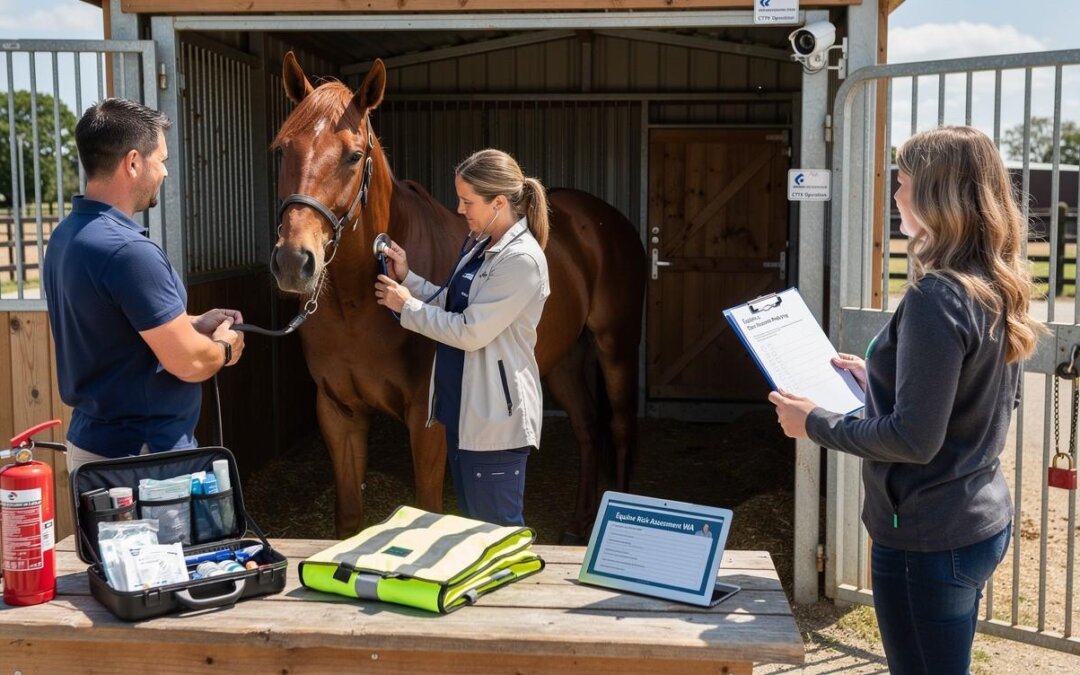
Horse ownership in Washington comes with significant financial and liability responsibilities that many owners underestimate. Whether you’re managing a single horse or operating a larger facility, equine risk management in WA requires a comprehensive approach that goes beyond basic care.
At FirstMark Insurance Group, we’ve seen firsthand how the right coverage protects both your animals and your assets when unexpected incidents occur. This guide walks you through the risks specific to Washington, the insurance options available, and the practical steps that keep your equine investment secure.
What Risks Actually Threaten Your Washington Horses
Climate-Related Health Threats
Horse owners in Washington face distinct exposures that differ significantly from other regions. The Pacific Northwest’s wet climate creates persistent challenges-Washington averages 152 rainy days annually, and that moisture breeds respiratory infections and hoof problems that drain your veterinary budget quickly. Colic remains the leading cause of death in horses according to the American Association of Equine Practitioners, and emergency colic surgery costs between $5,000 and $15,000. Lameness from conditions like navicular disease and arthritis sidelines valuable animals for months or permanently.

Liability Exposures on Your Property
Liability exposure intensifies if you board horses, offer riding lessons, or allow others onto your property-a single accident involving an injured rider or escaped horse can trigger lawsuits exceeding $500,000. Washington’s terrain includes steep pastures and rocky ground that increase injury risk, particularly for young or untrained horses. Trailer accidents during transport represent another serious exposure, especially given Washington’s mountainous roads and frequent weather changes that complicate driving conditions.
The True Cost of Inadequate Coverage
A horse requiring emergency surgery depletes savings within days, and without mortality coverage, the loss of a young breeding prospect or competition animal represents thousands in lost investment. Liability claims for injuries on your property escalate rapidly once medical bills and legal fees accumulate. Washington horse owners who experience major incidents without proper insurance often face impossible choices-paying catastrophic veterinary bills, euthanizing treatable animals, or declaring bankruptcy. The cost of replacing a lost horse, accounting for purchase price plus training and development time, frequently exceeds $50,000 for quality animals. Weather-related incidents like barn fires or storm damage to facilities compound these losses when property protection gaps exist.
These exposures demand more than basic care-they require structured insurance that addresses the specific risks your Washington operation faces. The right coverage strategy protects both your animals and your financial stability when incidents occur.
Structuring Coverage That Actually Protects Your Investment
Mortality Coverage Addresses Your Complete Financial Loss
Mortality coverage addresses the financial reality that a horse’s death-whether from colic, accident, or illness-eliminates your entire investment overnight. Standard mortality policies cover death from any cause except those explicitly excluded, typically paying between 75% and 100% of the horse’s appraised value. The American Association of Equine Practitioners reports that emergency colic surgery costs between $5,000 and $15,000, and many horses don’t survive these procedures, making mortality coverage essential for animals valued above $10,000.
Major Medical Coverage Handles Surgical and Hospitalization Expenses
Major medical coverage reimburses the surgical and hospitalization expenses that mortality policies don’t, covering 80% to 90% of eligible veterinary bills after you meet your deductible. This distinction matters significantly: mortality pays a lump sum when your horse dies, while major medical reimburses specific treatment costs while the horse lives.

A competition horse that requires emergency colic surgery and survives receives coverage through major medical for the $8,000 bill; if the horse doesn’t survive, mortality coverage replaces your investment. Combining both creates a complete safety net that protects your animal and your finances across different scenarios.
Liability Coverage Separates Protected Owners From Unprotected Ones
Liability protection separates horse owners who can afford lawsuits from those who cannot. A single incident where a boarder’s horse escapes onto a neighbor’s property or a riding student falls and sustains a serious injury can trigger claims exceeding $500,000. Washington’s liability environment demands coverage limits of at least $1 million for anyone boarding horses, offering lessons, or allowing regular visitors on their property.
Loss of Use and Boarding Liability Policies Complete Your Protection
Loss of use policies protect your income if a competition or breeding horse becomes temporarily or permanently unable to perform, reimbursing you for lost earnings during recovery or paying a percentage of the horse’s value if the animal never returns to work. Boarding liability specifically covers injuries to animals in your care and damage those animals cause to third-party property, protecting you if a boarded horse injures another animal or damages a neighbor’s fence. These specialized protections address whether you operate a small private facility or a larger boarding and lesson operation, and your coverage should match your actual exposure and business activities.
Understanding which coverage types apply to your specific situation requires honest assessment of your operation’s scope and the animals under your care.
How to Prevent Losses Before Insurance Matters
Preventative care and facility maintenance form the foundation of equine risk management, yet many Washington horse owners treat these as optional expenses rather than loss prevention investments. A single veterinary emergency that could have been prevented through routine care costs far more than the annual expense of consistent checkups, vaccinations, and dental work.
Establish a Veterinary Care Schedule
Horses in Washington need veterinary examinations at minimum twice yearly, with spring and fall visits capturing seasonal health threats unique to the Pacific Northwest’s wet climate. The American Association of Equine Practitioners emphasizes that routine dental care prevents colic and weight loss, yet owners frequently skip annual dental exams because they seem unnecessary when horses appear healthy. Respiratory infections spread rapidly in poorly ventilated barns, and Washington’s humidity creates ideal conditions for pneumonia and heaves, making facility ventilation and drainage maintenance non-negotiable expenses.

Document Health Records Thoroughly
You should document every veterinary visit, vaccination record, and treatment with dates and costs, creating an audit trail that supports insurance claims when incidents occur and establishes your horse’s health baseline for appraisals. This documentation proves to insurers that you maintain your animals responsibly and reduces claim denials based on negligence or inadequate care.
Conduct Regular Facility Inspections
Facility inspections should happen monthly, with you examining fencing for gaps where horses escape, checking pasture surfaces for hazards like rocks and holes that cause lameness, and verifying that gates close securely and latches function properly. Infrastructure maintenance directly reduces liability exposure and prevents catastrophic losses.
Maintain Barn Systems and Structures
Barn electrical systems require annual inspection by a licensed electrician because faulty wiring causes fires that destroy facilities and kill animals. Pasture fencing needs spring and fall assessment for deterioration, loose boards, or protruding nails that lacerate horses, and rotted fence posts fail during storms or when horses lean against them. Water systems need regular cleaning to prevent bacterial contamination that triggers colic and illness, and automatic waterers should be checked weekly for proper function.
Maintain Detailed Maintenance Records
You should maintain detailed records of all facility maintenance work, including dates, what you repaired or replaced, and contractor information if professionals performed the work. These records demonstrate to insurers that you maintain your property responsibly. Keep photographs of your facility’s condition, pasture layout, fencing, and barn structure, updating them annually so you have visual documentation if damage or liability claims arise (updated photos also help establish your facility’s baseline condition for insurance appraisals and coverage discussions).
Final Thoughts
Protecting your equine investment in Washington requires structured insurance that matches your operation’s actual exposures, not generic policies that leave gaps when incidents occur. A quality horse represents tens of thousands of dollars in purchase price and training, while emergency colic surgery alone exceeds $15,000 and liability claims from injuries on your property routinely surpass $500,000. Without mortality coverage, major medical protection, and appropriate liability limits, a single incident eliminates your financial stability-with proper coverage, you manage risk instead of facing catastrophic loss.
Your specific situation determines which coverage types matter most, and equine risk management in WA demands honest assessment of what you’re protecting. A private owner with one horse needs different protection than someone boarding multiple animals or offering riding lessons, and mortality coverage protects your animals while major medical reimburses treatment costs that keep them alive. Liability protection separates owners who can afford lawsuits from those who cannot, while loss of use and boarding liability policies address specialized exposures based on how you operate (your coverage should reflect your actual business activities and the animals under your care).
Contact us to discuss your equine operation, the animals under your care, and the specific risks you face. We’ll review your current coverage gaps and recommend a tailored strategy that protects both your horses and your financial security. Reach out to FirstMark Insurance Group to secure the comprehensive protection your equine investment deserves.
Disclaimer: The information provided in this blog is for general informational purposes only and does not constitute legal, financial, or insurance advice. Coverage options, terms, and availability may vary. Please consult with a licensed professional for advice specific to your situation