


Running a fitness center in Washington means managing more than just memberships and equipment schedules. Member injuries, property damage, and staffing issues create real financial exposure that most gym owners underestimate.
At FirstMark Insurance Group, we’ve seen how the right fitness center insurance Washington coverage stops a single incident from becoming a business crisis. This guide walks you through the specific risks your gym faces and the protection you actually need.
What Risks Actually Threaten Your Washington Gym
Member Injuries Create Immediate Liability Exposure
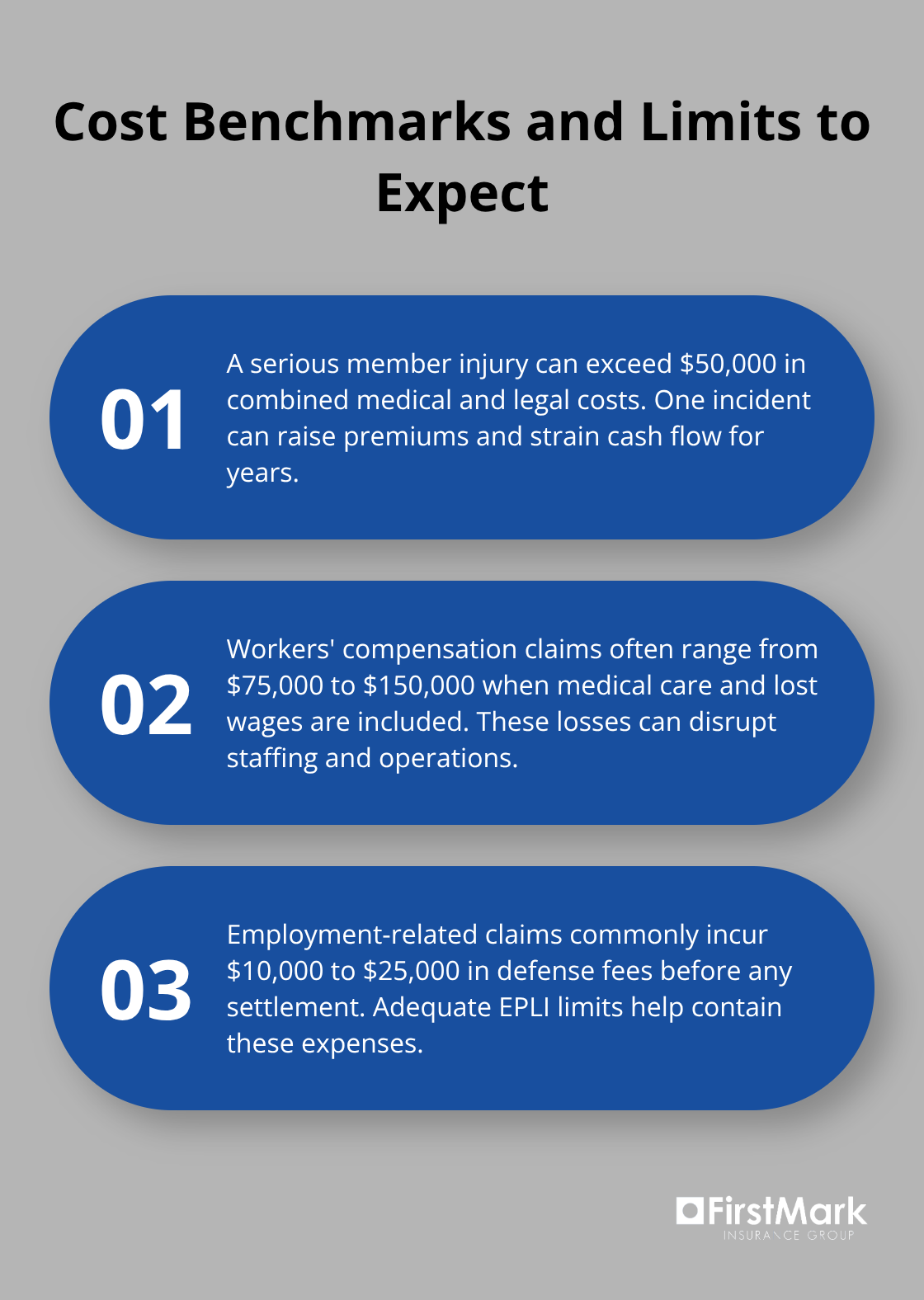
Member injuries represent the largest financial exposure for fitness centers operating in Washington. The CDC reports that gym-related injuries occur annually across the United States, with sprains, strains, and fractures accounting for the majority of claims. Washington state sees its share of these incidents, and a single serious injury claim can easily exceed $50,000 in medical costs and legal fees.
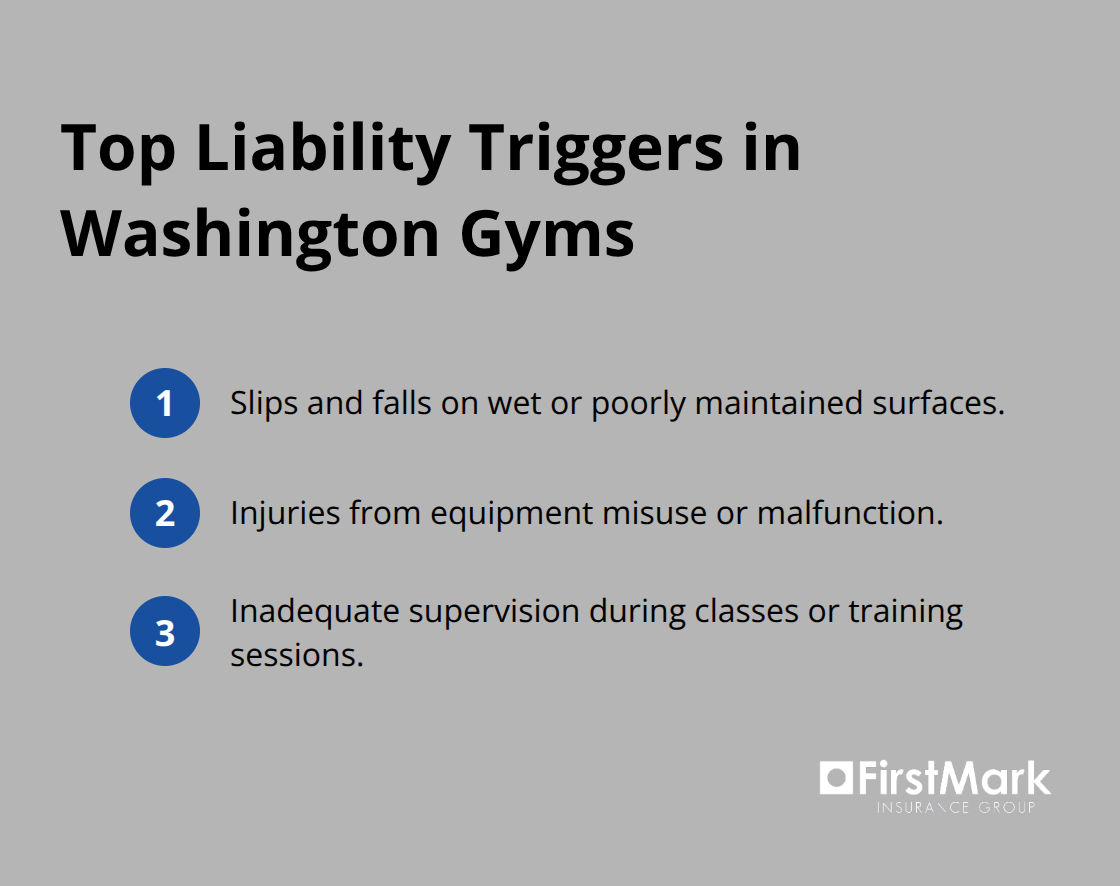
Equipment misuse, inadequate supervision, and facility maintenance gaps trigger most of these claims. A member slips on a wet floor, gets pinched by a weight machine, or suffers a back injury during a poorly supervised class-each scenario creates immediate liability exposure. Courts in Washington have awarded substantial judgments when gyms failed to maintain equipment properly or provide adequate warnings about usage risks.
Beyond medical expenses, these claims damage your reputation and increase your insurance premiums for years. The financial impact extends far beyond the initial settlement or judgment.
Property Damage Threatens Your Physical Assets
Property damage compounds this risk significantly. Flooding affects Washington facilities regularly, particularly in King County and Pierce County where gyms operate in areas prone to water intrusion. A burst pipe or heavy storm destroys thousands of dollars in cardio equipment, free weights, and flooring in a matter of hours.
Equipment failure itself creates cascading problems-a malfunctioning treadmill that injures someone opens you to both property loss and liability claims simultaneously. Fires, theft, and vandalism round out the property exposure most gym owners underestimate until something happens. Your facility’s physical assets face constant threats that require comprehensive protection.
Employee Incidents and Legal Exposure
Employee-related incidents create a third category of risk that many fitness center owners overlook. Washington’s workers compensation system mandates coverage for all employees, and gym staff face genuine occupational hazards. Personal trainers sustain back injuries while spotting members, front desk staff develop repetitive strain injuries, and maintenance workers face exposure to chemical cleaning products.
The Washington Department of Labor reports that accommodation and food service workers experience higher injury rates, and fitness center staff injury patterns follow similar trajectories. A serious workers compensation claim can cost $75,000 to $150,000 when accounting for medical treatment, lost wages, and potential permanent disability benefits.
Employment practices liability matters too-wrongful termination claims, discrimination allegations, and harassment complaints against gym management drain resources quickly. These situations require legal defense even when your gym operates fairly, and defense costs alone can reach $10,000 to $25,000 before any settlement occurs. Understanding what coverage actually protects you against these three risk categories separates gyms that survive setbacks from those that struggle.
Coverage Options for Washington Fitness Centers
General Liability Insurance Protects Against Member Claims
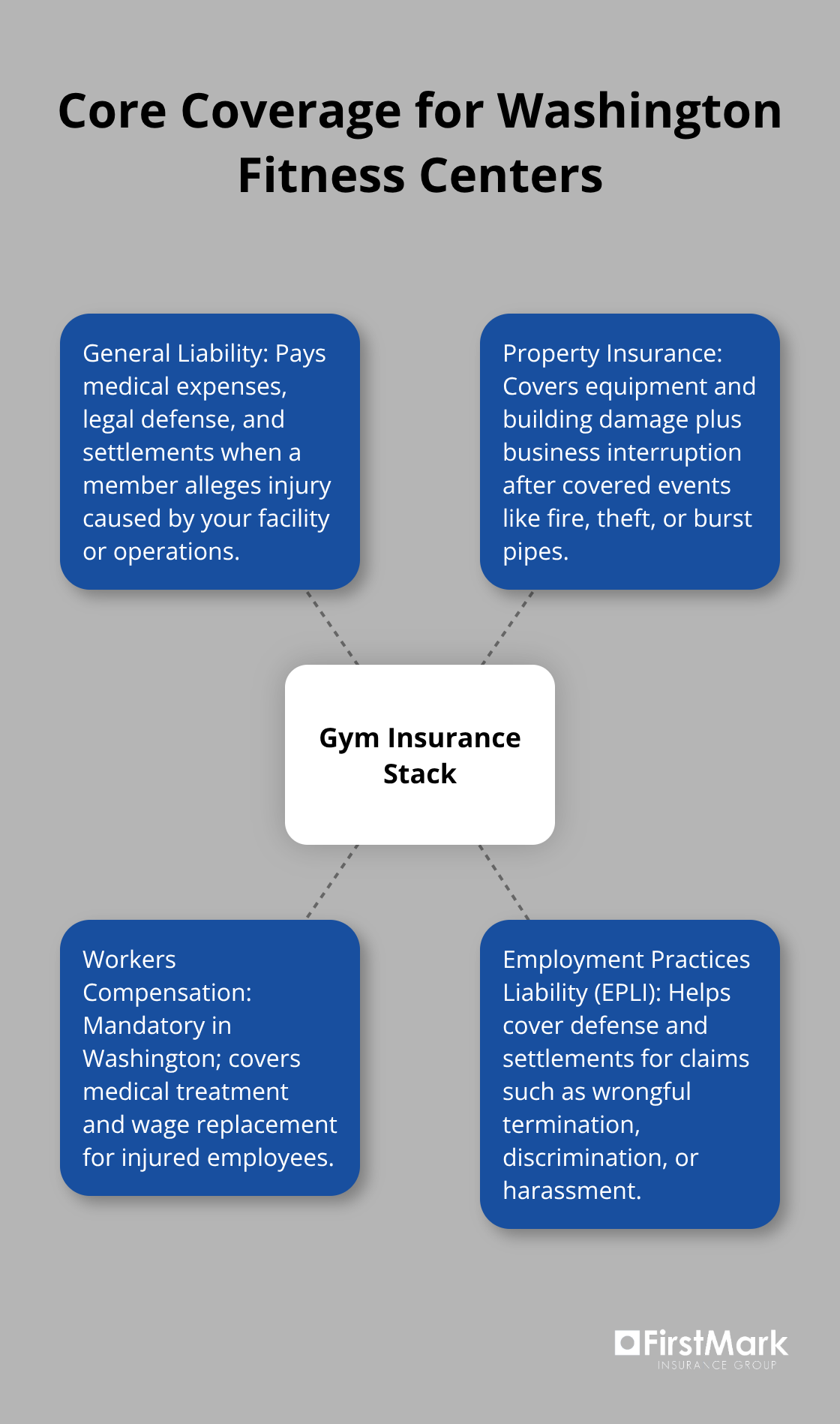
General liability insurance forms the foundation of protection for any Washington gym, and the specifics matter far more than most owners realize. This coverage pays for medical expenses, legal defense, and settlements when a member claims your facility caused their injury. Washington courts have addressed negligence and premises liability claims in gym-related cases, making this coverage non-negotiable.
Your policy should include at least $1 million in per-occurrence limits and $2 million in aggregate coverage-anything less leaves your business vulnerable to a single serious claim. Coverage exclusions matter critically here: verify your policy covers injuries from equipment use, slip-and-fall incidents, and accidents during supervised classes. Many standard policies exclude coverage for injuries during personal training sessions or specialized fitness programs, so you need explicit endorsements that add those activities back into your protection. Ask your insurance provider specifically whether your policy covers members injured during group fitness classes, as this represents a significant exposure point for most gyms.
Property Insurance Protects Your Assets and Operations
Property insurance protects your physical assets and operational continuity when disaster strikes. This coverage reimburses you for equipment damage, building repairs, and business interruption losses following a covered event. Washington fitness centers need coverage for standard perils like fire and theft, plus water damage from burst pipes and flooding-a critical addition given Washington’s climate patterns.
Equipment replacement costs run high: a complete cardio section with ten machines costs $40,000 to $60,000 new, and a single claim could devastate cash flow without proper protection. Your facility’s physical assets face constant threats that require comprehensive protection tailored to your specific equipment inventory and location.
Workers Compensation Covers Employee Injuries
Workers compensation insurance in Washington is mandatory for any gym with employees, and rates for fitness center staff average around $15 to $20 per $100 of payroll according to Washington’s Department of Labor benchmarks. This coverage pays medical bills and wage replacement for injured staff members, protecting both your employees and your business from the financial impact of workplace injuries. Personal trainers sustain back injuries while spotting members, front desk staff develop repetitive strain injuries, and maintenance workers face exposure to chemical cleaning products-all scenarios that workers compensation addresses.
Employment Practices Liability Addresses Legal Threats
Employment practices liability insurance addresses the legal threats most gym owners underestimate-wrongful termination claims, discrimination allegations, and harassment complaints. These claims cost $10,000 to $25,000 in defense fees alone before any settlement, and a single case can damage your reputation among members and staff. Coverage limits of $500,000 to $1 million provide realistic protection for most independent gyms, while larger multi-location operations need higher limits.
The combination of workers compensation and employment practices liability creates a comprehensive safety net against the employee-related risks that destroy unprepared gym businesses. Understanding which coverage options address your specific operational vulnerabilities determines whether your gym survives a serious incident or faces financial crisis. The next step involves assessing your facility’s unique risk profile and identifying which coverage gaps pose the greatest threat to your business.
Why Fitness Centers Need Specialized Insurance
Standard Policies Leave Critical Coverage Gaps
Generic commercial insurance policies treat fitness centers like any other small business, which creates dangerous protection gaps. Your gym operates under completely different risk conditions than a retail store or office building, and standard policies exclude the exposures that actually threaten your operation. Fitness centers face equipment-specific liability that standard policies don’t address, member injury patterns that generic coverage ignores, and operational exposures that require explicit endorsements to cover properly.
Insurance companies designed their base policies around traditional retail and office environments, not facilities where people intentionally stress their bodies under supervision. This fundamental mismatch between standard coverage and your actual operations means you could carry what you think is adequate protection while remaining dangerously exposed to the specific risks your gym faces daily.
Washington State Regulations Impose Specific Requirements
Washington state regulations compound this problem by imposing requirements that many gym owners don’t fully understand. The state mandates workers compensation coverage for all employees, with fitness center staff classified under rates that reflect their genuine occupational hazards. Washington also holds gym owners to premises liability standards that require documented safety protocols, regular equipment maintenance records, and staff training documentation.
Courts in Washington have ruled against gyms that failed to maintain these standards, even when injuries resulted from member negligence rather than facility failures. Employment practices liability takes on heightened importance in Washington, where the state has strengthened protections against discrimination and harassment claims over the past decade. A specialized fitness center policy addresses these state-specific requirements directly, while generic coverage forces you to navigate complex exclusions and coverage gaps that create disputes when claims actually occur.
Specialized Policies Address Your Actual Exposures
The financial protection that matters most comes from policies built specifically for gyms, where underwriters understand that a slip-and-fall in a cardio area carries different liability implications than a slip-and-fall in a retail clothing store. Specialized policies include equipment breakdown coverage, class-related injury protection, and member waiver liability provisions that standard policies either exclude entirely or charge substantial additional premiums to add.
When a member suffers a serious injury or your facility experiences property damage, the difference between generic coverage and specialized gym insurance determines whether you recover financially or face business-threatening losses. Proper planning with coverage designed for fitness operations protects your assets and your future in ways that off-the-shelf commercial policies simply cannot match.
Final Thoughts
Your gym’s financial stability rests on having the right protection in place before a crisis strikes. Member injuries, property damage, and employee incidents arrive without warning, and the cost of being unprepared far exceeds what you’ll spend on proper fitness center insurance Washington coverage. Policies built specifically for gym operations address the exposures that generic commercial insurance ignores, protecting both your assets and your ability to continue serving your community.
We at FirstMark Insurance Group understand the specific risks fitness centers face across Washington. Our team works with top insurance providers to present you with coverage options that fit your facility’s requirements at competitive pricing, focusing on clarity and practical solutions rather than unnecessary add-ons. Reach out to FirstMark Insurance Group today to discuss your fitness center’s insurance needs and build a protection strategy tailored to your operation.
Disclaimer: The information provided in this blog is for general informational purposes only and does not constitute legal, financial, or insurance advice. Coverage options, terms, and availability may vary. Please consult with a licensed professional for advice specific to your situation