

Restaurant operators in Seattle face a growing wave of digital attacks that traditional insurance doesn’t address. Point-of-sale breaches, ransomware, and customer data theft now rank among the top threats to dining establishments.
At FirstMark Insurance Group, we’ve seen firsthand how restaurant cyber liability coverage protects businesses when these incidents strike. This guide walks you through the specific risks your restaurant faces and the concrete steps to defend against them.
What Makes Restaurants Prime Targets for Cyber Attacks
Point-of-Sale Systems Under Constant Threat
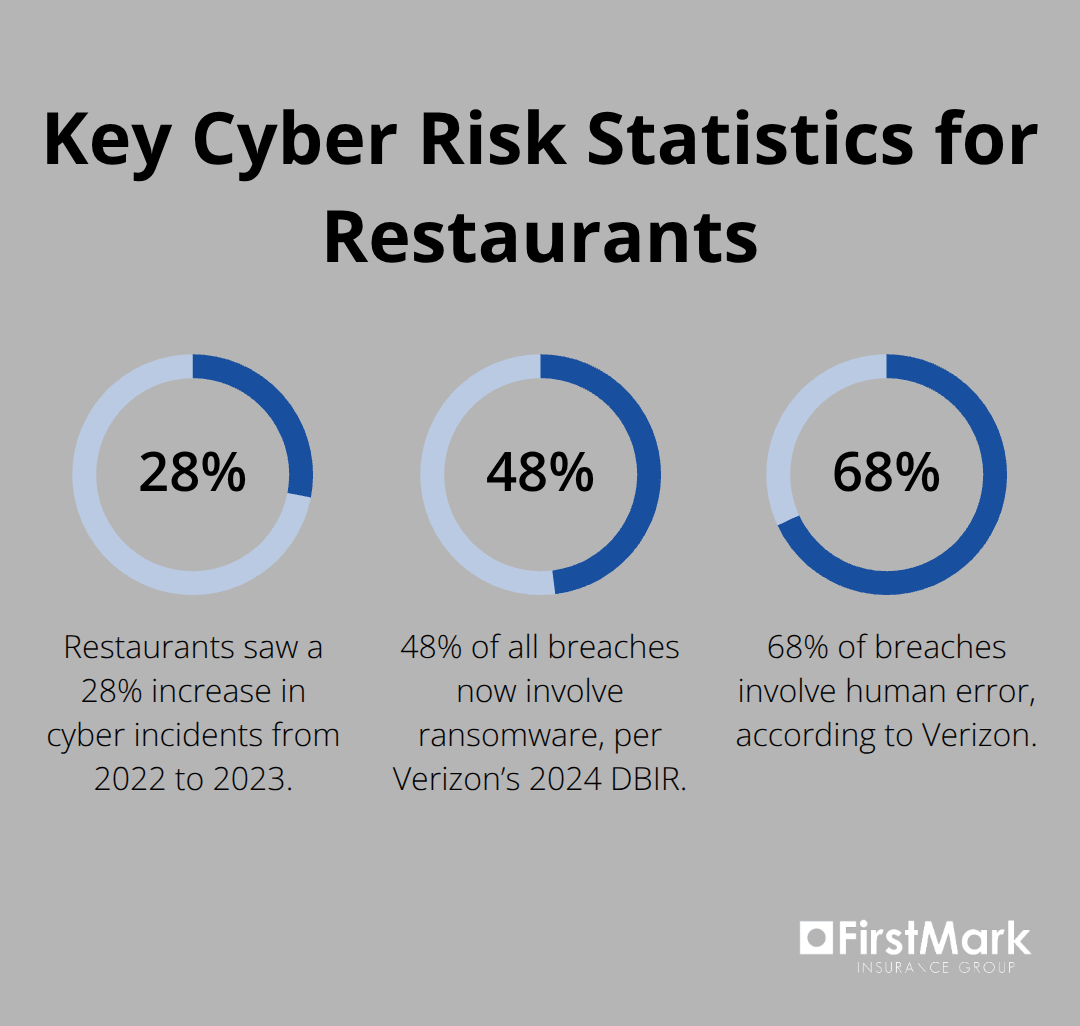
Restaurant operations depend on interconnected digital systems that criminals actively exploit. Your point-of-sale terminal processes hundreds of card transactions daily, each one a potential entry point for attackers. The National Retail Federation reported that restaurants experienced a 28% increase in cyber incidents from 2022 to 2023, with payment processing systems accounting for the majority of breaches. Your staff uses shared passwords, connects to public WiFi networks, and accesses customer data through multiple devices-each practice creating vulnerabilities that sophisticated attackers have learned to weaponize.
Third-Party Delivery Platforms Expose Customer Information
Third-party delivery platforms like DoorDash and Uber Eats add another layer of risk because your restaurant shares customer information with services you don’t directly control. When these platforms experience breaches, your customers’ names, addresses, phone numbers, and payment details become exposed. A 2024 Cybersecurity and Infrastructure Security Agency report found that small to mid-sized restaurants lack the IT resources to detect compromises quickly, meaning attackers can remain undetected for weeks or months while extracting data.
Ransomware Attacks Exploit Operational Pressure
Ransomware attacks specifically target restaurants because operators face intense pressure to restore service immediately. Attackers know you’ll pay to get your ordering system, kitchen displays, and reservation platforms back online within hours rather than days. The cost of downtime for a restaurant averages $7,000 per hour according to industry data, making ransom demands feel reasonable to desperate operators. Your delivery integrations, loyalty program databases, and employee payroll systems all represent potential attack vectors that connect to your core operations.
Seattle restaurants operating in a competitive market can’t afford multi-day closures, which is exactly why cyber criminals view your business as a high-probability target for extortion. The combination of high transaction volume, customer data sensitivity, and operational urgency makes your restaurant significantly more vulnerable than businesses in other industries. Understanding these specific vulnerabilities positions you to select the right cyber liability coverage and security measures that address your actual exposure.
What Cyber Liability Coverage Actually Protects
Data Breach Response and Ransomware Recovery
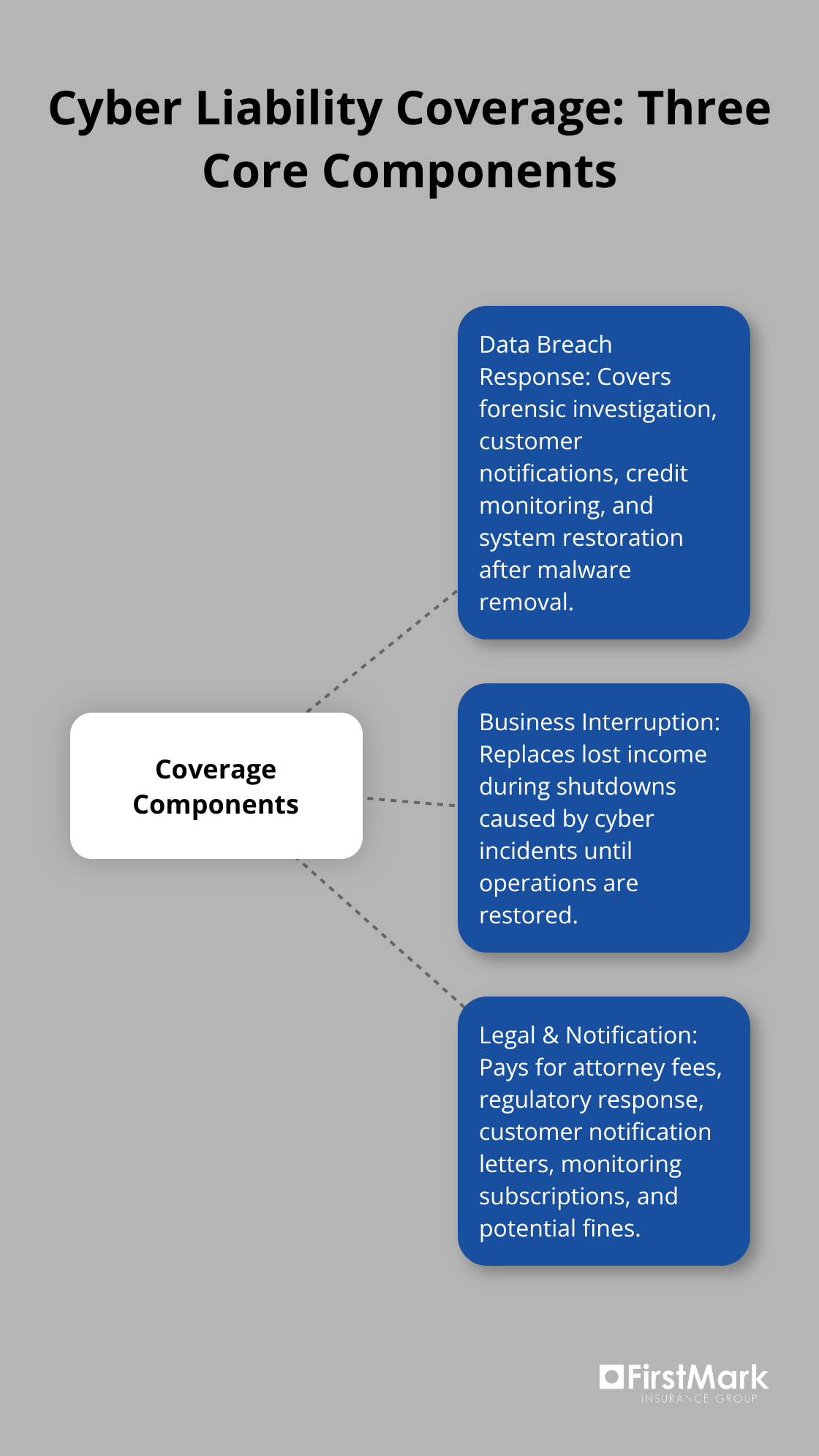
Cyber liability insurance for Seattle restaurants covers three distinct areas that standard business policies completely ignore, and this separation matters because each addresses different financial exposures from digital attacks. Data breach coverage reimburses costs directly tied to compromised customer information, including forensic investigation, notification expenses, and credit monitoring services for affected customers. When ransomware locks your systems, this coverage also addresses system restoration costs and the technical expertise required to remove malware and rebuild your infrastructure. 48% of all breaches now involve ransomware, according to Verizon’s 2024 Data Breach Investigations Report, a figure that underscores why this protection matters for restaurant operators managing customer data and payment systems.
Revenue Protection During Operational Shutdowns
Business interruption coverage specifically protects your revenue during the hours or days your restaurant cannot operate due to cyber incidents. If ransomware shuts down your point-of-sale system, kitchen display screens, and reservation platform simultaneously, this coverage replaces lost income while you restore operations. A four-hour closure costs approximately $28,000 in lost revenue for an average Seattle restaurant (based on $7,000 hourly downtime costs), and business interruption coverage eliminates the financial devastation of unexpected closure.
Legal Compliance and Regulatory Obligations
Legal and notification costs represent the third critical component, covering attorney fees for regulatory response, notification letters to affected customers, credit monitoring subscriptions, and potential settlements or fines from Washington state data privacy regulations. Seattle restaurants operating under Washington’s data privacy laws face mandatory notification requirements within 30 days of discovering a breach, and failure to comply triggers penalties that often exceed the breach costs themselves.
How These Coverage Areas Work Together
The three coverage components function as an integrated financial safety net rather than leaving gaps that create unexpected out-of-pocket expenses when incidents occur. Your point-of-sale vulnerability, third-party platform exposures, and ransomware risks all demand protection that addresses both immediate response costs and ongoing operational losses. The next section outlines the specific security practices that work alongside this coverage to reduce your attack surface and minimize the likelihood you’ll need to file a claim in the first place.
How to Stop Attacks Before They Reach Your Systems
Your restaurant’s strongest defense against cyber attacks starts with the people handling your systems daily. Staff members represent your first line of defense, yet most Seattle restaurants invest almost nothing in cybersecurity training. A 2023 Verizon report found that 68% of breaches involve human error. Your servers, kitchen display systems, and point-of-sale terminals are only as secure as the weakest password your team uses or the phishing email someone accidentally clicks.
Train Staff on Cybersecurity Fundamentals
Mandatory quarterly training sessions cost roughly $500 to $2,000 annually per restaurant location, yet prevent breaches that would cost tens of thousands in recovery expenses. These sessions teach your team to recognize phishing attempts, report suspicious emails, and understand why password security matters to your operation. Your staff needs to know that clicking a malicious link or opening an infected attachment can compromise your entire network within minutes.
Require your staff to use unique, complex passwords for every system rather than sharing credentials across your team. Most restaurants operate with shared logins across multiple staff members, which means you cannot identify who accessed customer data during a breach investigation. Switching to individual login credentials takes three to four hours to implement but transforms your security posture immediately. Your delivery platform integrations, loyalty program databases, and reservation systems should all require separate authentication rather than allowing anyone with kitchen access to view customer information. Enforce password changes every 90 days through your point-of-sale provider to limit exposure if someone writes down credentials or shares them accidentally.
Install Updates During Low-Traffic Periods
Your point-of-sale system, kitchen display screens, and reservation software all receive security patches from their developers, yet most restaurants delay installations for weeks or months because updates require brief downtime. Ransomware attacks overwhelmingly target known vulnerabilities in outdated software versions, which means attackers don’t need sophisticated hacking skills to compromise your systems. Schedule monthly update windows during your slowest business periods, typically Monday or Tuesday mornings, and allocate 30 to 60 minutes for the process.
Communicate update schedules to your staff in advance so they understand why systems go offline briefly rather than experiencing unexpected disruptions. Your IT provider or point-of-sale company should handle updates automatically, and if they won’t commit to monthly patching schedules, that vendor relationship needs to change. Beyond software updates, conduct annual security audits through your IT provider or a third-party cybersecurity firm, which typically costs $1,500 to $3,000 but identifies vulnerabilities before criminals find them. These audits test your network for weak connections, unprotected data storage, and access control failures that staff might not notice during normal operations. Document your audit findings and implement recommended changes within 30 days, treating security improvements with the same urgency you’d apply to a failing health inspection.
Create a Written Incident Response Plan
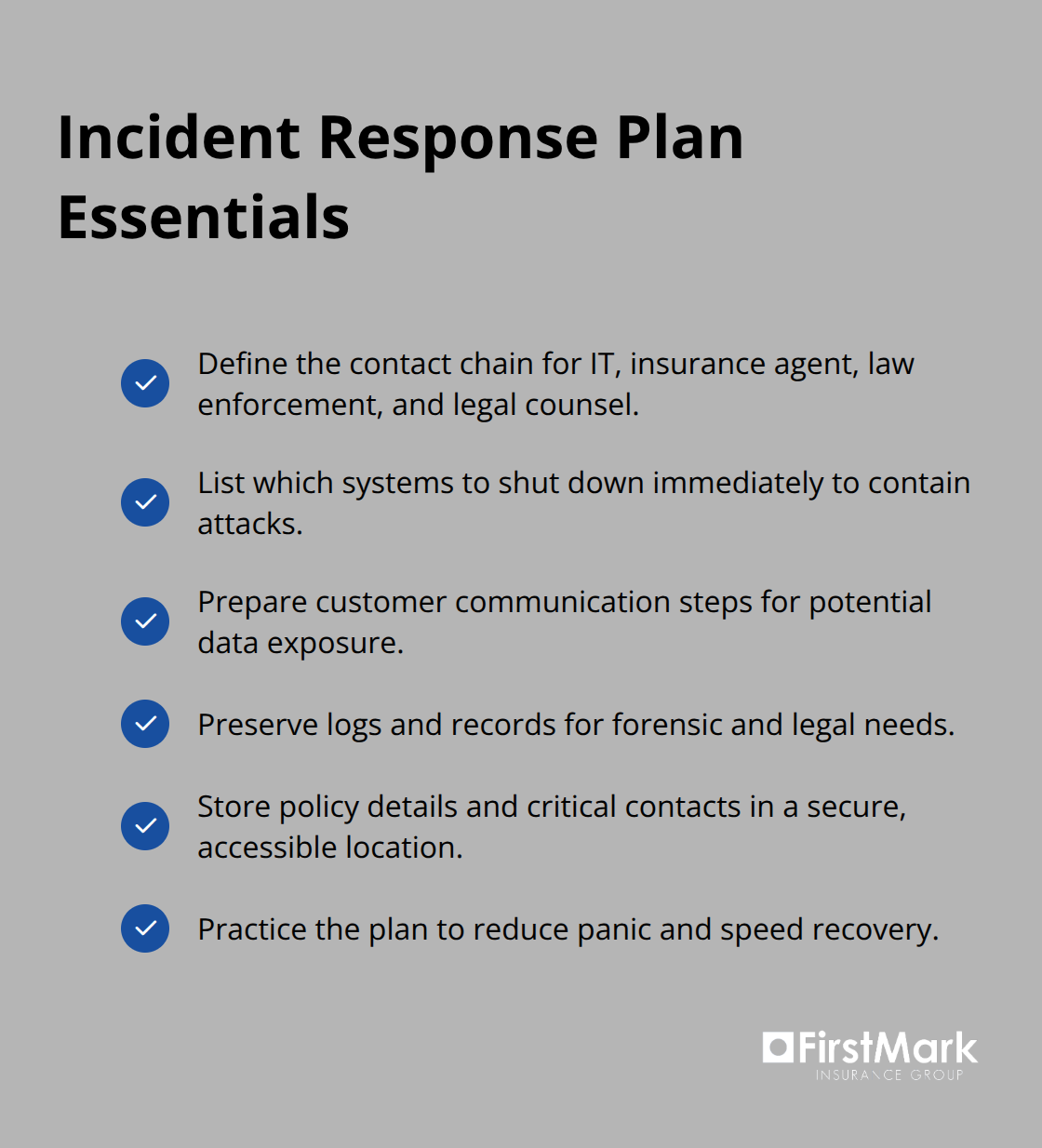
When ransomware locks your systems or a breach notification arrives from your delivery platform, your restaurant needs a documented response plan rather than improvising decisions under pressure. Document exactly who calls whom when a cyber incident occurs, including your IT provider, your insurance agent, law enforcement, and your legal counsel. Establish this chain of command before an incident happens so your team doesn’t waste critical hours figuring out contact information while attackers demand payment or customers call asking about exposed data.
Your incident response plan should specify which systems to shut down immediately to prevent further compromise, how to communicate with customers if their data was exposed, and which records to preserve for forensic investigation and potential legal proceedings. Keep your cyber liability insurance policy details, your IT provider contact information, and your incident response plan in a secure location accessible during a crisis (such as a cloud-based document your general manager can access from any device). Most restaurants that experience ransomware attacks and pay extortion fees do so because they lacked a documented plan and panicked into decisions they later regretted. Having clear procedures written in advance transforms a chaotic crisis into a manageable response sequence, dramatically reducing both recovery time and financial exposure.
Final Thoughts
Restaurant cyber liability in Seattle demands immediate action because waiting for an incident to occur costs significantly more than preventing one. The vulnerabilities your point-of-sale systems, delivery platforms, and staff workflows create aren’t theoretical risks-they’re active threats that criminals exploit daily against restaurants operating in your market. Your protection strategy requires two parallel tracks: implement the security fundamentals outlined above, and secure cyber liability coverage that addresses the financial exposure your security measures cannot prevent.
The combination of proactive security and comprehensive coverage transforms cyber risk from an existential threat into a manageable business expense. Your staff will understand their role in protecting customer data, your systems will receive timely security patches, and your response procedures will be documented and tested. Even restaurants with excellent security practices face breaches, ransomware demands, and regulatory notification costs that standard business insurance ignores (which is why specialized coverage matters for your operation).
At FirstMark Insurance Group, we’ve guided Seattle restaurants through this exact process, helping them navigate the complexities of cyber protection and find coverage that matches their specific operational risks. Contact our team to discuss your restaurant’s cyber liability needs and build a protection strategy that lets you focus on operations rather than worrying about digital attacks.
Disclaimer: The information provided in this blog is for general informational purposes only and does not constitute legal, financial, or insurance advice. Coverage options, terms, and availability may vary. Please consult with a licensed professional for advice specific to your situation