

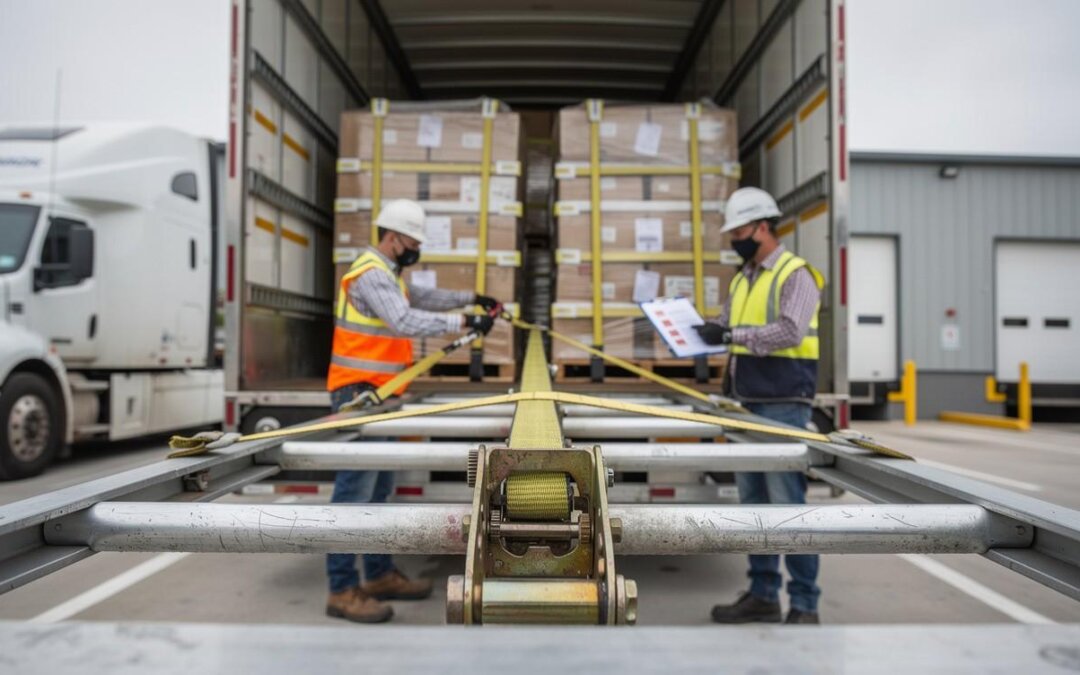
Freight damage and cargo loss cost Washington trucking operations thousands of dollars annually. A single accident, theft, or weather event can wipe out profit margins and damage client relationships.
Truck cargo insurance in WA isn’t optional-it’s the foundation of responsible freight operations. At FirstMark Insurance Group, we help trucking businesses understand their coverage options and build protection strategies that match their actual risk exposure.
What Truck Cargo Insurance Actually Covers
Truck cargo insurance protects the freight and goods you transport from loss or damage during shipment. This coverage differs fundamentally from vehicle liability insurance-it targets the value of what’s inside your truck, not the truck itself. When a load sustains damage in an accident, thieves steal it during a stop, or weather ruins it, cargo insurance pays the claim. Without it, you absorb the full financial hit and face potential legal action from your clients if their goods don’t arrive intact.
The Real Risks Washington Trucking Operations Face
Washington’s geography and weather patterns create specific cargo threats that generic coverage won’t address. Winter weather across the Cascade passes causes skids and rollovers that damage temperature-sensitive shipments regularly. Theft from trucks parked in Seattle, Tacoma, and Spokane areas remains a persistent problem-strategic theft has risen 1,500% since the first quarter of 2021, with the average value per theft exceeding $200,000.
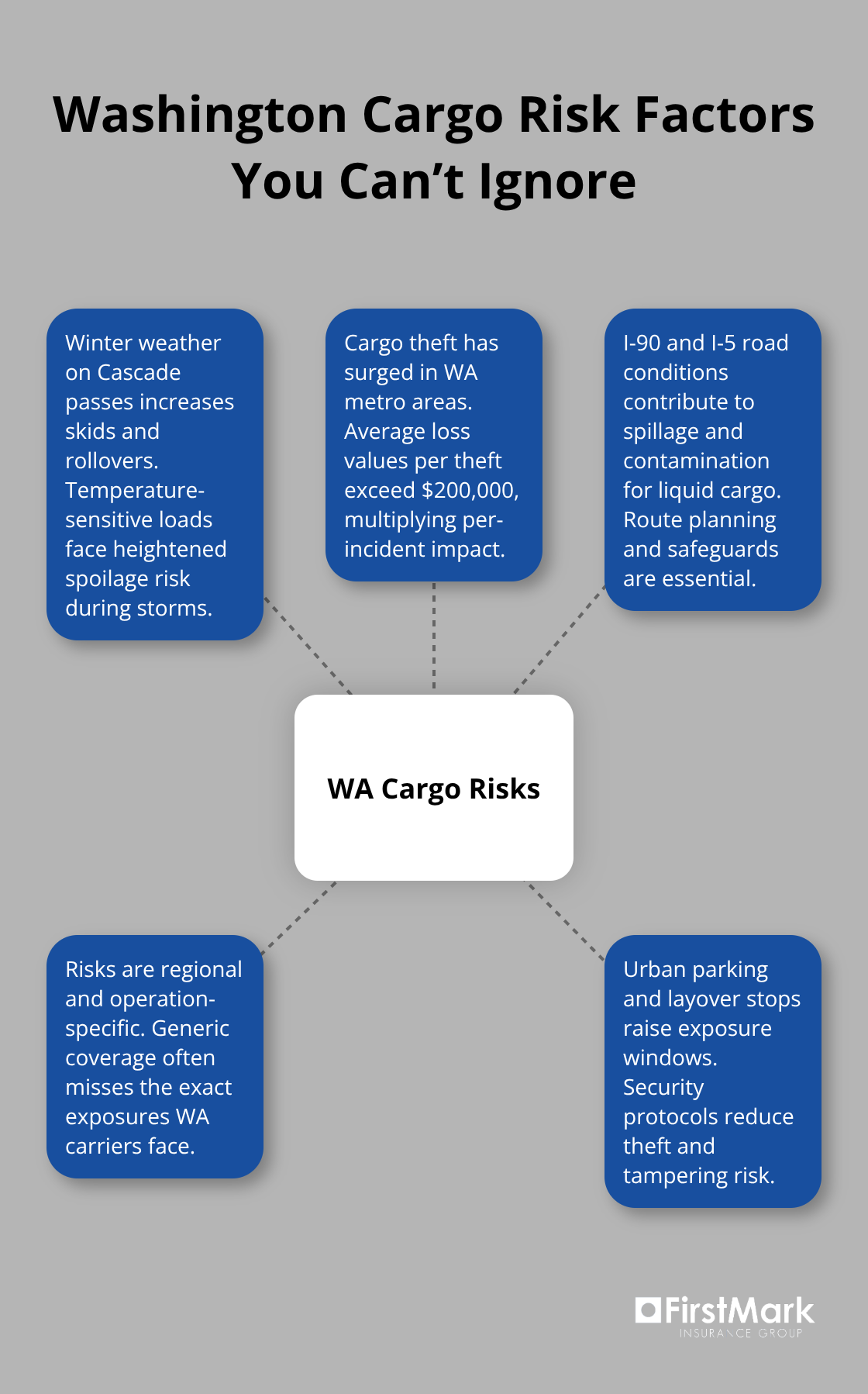
Road conditions on I-90 and I-5 contribute to spillage and contamination of liquid cargo. Cargo insurance in Washington must account for these regional realities rather than treating all trucking operations identically.
Why One-Size-Fits-All Policies Fail
The policy you need depends entirely on what you haul, where you haul it, and the actual value at risk on each shipment. A carrier moving perishable goods faces different threats than one transporting machinery or consumer electronics. Regional carriers operating primarily within Washington state confront different exposure than those crossing multiple states. Your coverage must reflect your specific operation, not industry averages or competitor policies.
Financial Reality of Cargo Loss
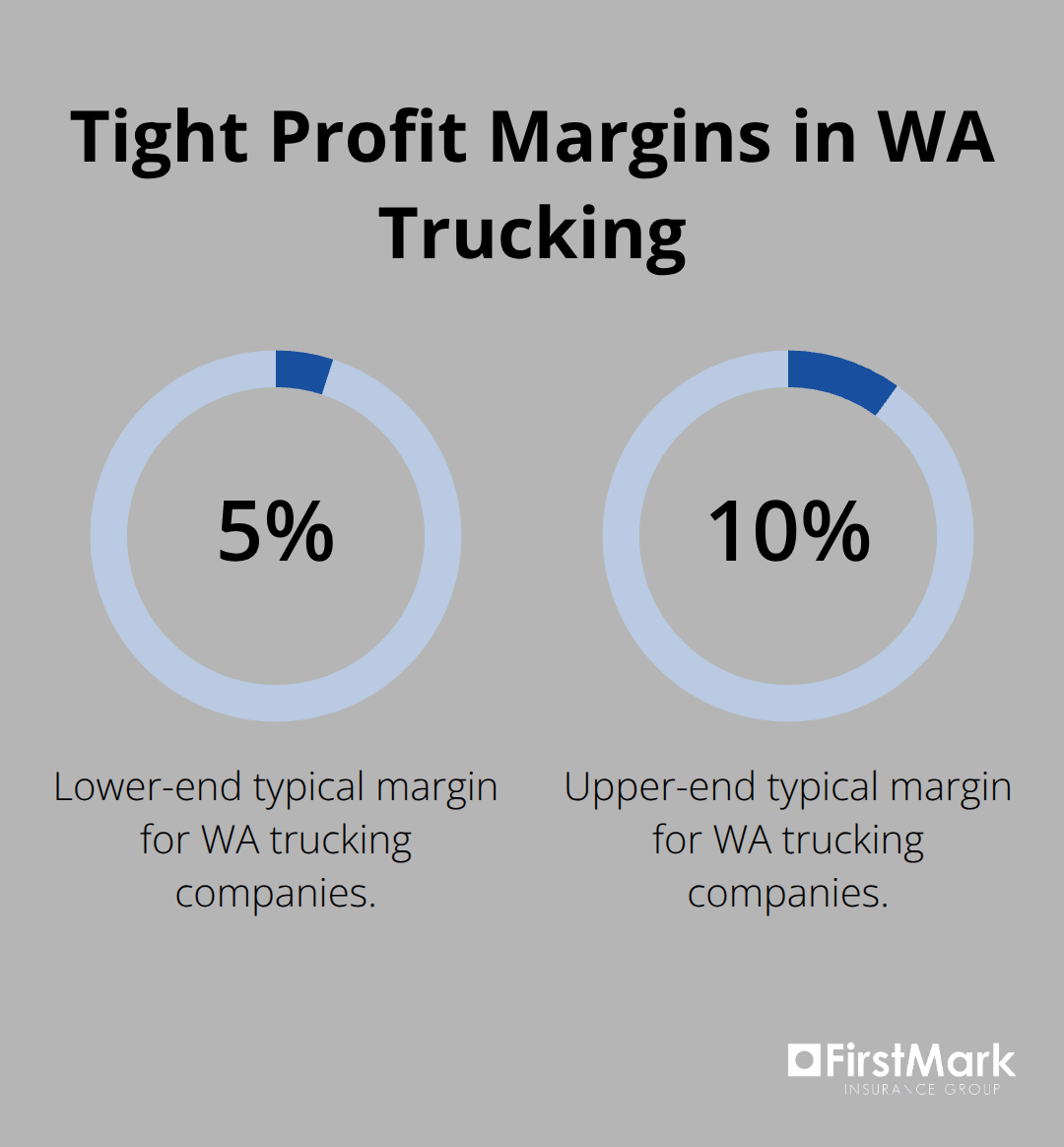
A single claim can exceed $50,000 for high-value freight shipments common in Washington’s industrial and technology sectors. Losing a load of semiconductor equipment or medical devices without proper coverage directly reduces your profit margin for the entire quarter. Many Washington trucking companies operate on margins between 5-10 percent, meaning one uninsured cargo loss eliminates months of profitability.
Beyond the direct financial impact, losing a client’s shipment damages your reputation and can result in contract termination.
The Cost of Going Unprotected
Cargo insurance costs significantly less than the financial devastation of absorbing a major loss yourself. Carriers serious about long-term business stability treat cargo protection as non-negotiable infrastructure rather than optional expense. The question isn’t whether you can afford cargo insurance-it’s whether you can afford the alternative. Understanding your coverage options and selecting the right limits requires honest assessment of your operation’s actual risk profile.
Coverage Options and Protection Strategies
Cargo liability coverage limits determine how much your insurance will pay when freight sustains damage or goes missing during transport. Washington trucking operations commonly carry limits between $10,000 and $100,000, though high-value shipments often require substantially higher protection. The limit you select must reflect the actual value sitting in your truck on a typical load, not an arbitrary industry standard. If you regularly transport semiconductor equipment worth $150,000 per shipment but carry only $50,000 in coverage, you absorb the gap and lose money yourself.
Calculate Your Actual Load Value
Calculate your average load value over the past three months, then set your limit at or above that number. This approach eliminates guessing and prevents the common mistake of underinsuring because coverage seemed too expensive. Most Washington carriers find that this straightforward calculation reveals they need higher limits than they initially thought, protecting their actual risk exposure rather than hoping nothing goes wrong.
Full Coverage Versus Basic Protection Plans
Full coverage policies and basic protection plans differ fundamentally in what they exclude. A basic plan typically covers cargo loss from collision, theft, or weather but excludes losses from improper loading, spoilage, or driver negligence. Full coverage eliminates most exclusions and protects against virtually any loss except intentional damage or illegal activity. For perishable goods carriers in Washington, basic coverage creates real exposure since temperature failures during transport constitute spoilage rather than weather damage, leaving you unprotected.
Electronics and machinery carriers often accept basic plans because their freight faces fewer spoilage risks. The decision hinges on which risks actually threaten your specific cargo type, not on selecting whichever sounds more comprehensive. Many Washington carriers discover mid-claim that their basic plan excluded exactly the loss they experienced, forcing them to cover thousands from cash flow.
Additional Endorsements for High-Value Freight
High-value shipments demand additional endorsements beyond standard cargo coverage. Agreed value endorsements guarantee that your insurer will pay the full declared value without requiring proof of actual loss amount, eliminating disputes when damage occurs. Released value waivers protect you when clients assume liability for their own cargo during transport, shifting financial responsibility appropriately.
Specific commodity endorsements address unique risks for electronics, pharmaceuticals, or hazardous materials that standard policies don’t adequately cover. These endorsements add modest cost but prevent catastrophic gaps when you haul anything exceeding $75,000 per load. Washington’s technology and medical device industries regularly move shipments requiring these protections, and carriers without them frequently face coverage denials that destroy their business relationships and profitability.
The right endorsements transform your policy from a basic safety net into a comprehensive protection strategy. Once you understand which endorsements your operation actually needs, the next step involves selecting a policy that matches your specific cargo types and shipment values.
Choosing the Right Truck Cargo Insurance Policy
Assess Your Freight Type and Shipment Value
Your freight type and shipment value determine everything about the policy you need, which makes this assessment the critical first step before comparing any quotes. Washington carriers transporting electronics, pharmaceuticals, or machinery each face distinct damage patterns and replacement costs that demand different coverage structures. Start by documenting your actual cargo types over the past quarter-not what you occasionally haul, but what consistently moves through your trucks. Next, calculate the average value per load and identify your highest-value shipments, since your coverage limits must accommodate your peak exposure rather than your average load.
A carrier moving semiconductor equipment worth $120,000 per shipment but insured for $50,000 absorbs $70,000 in losses when damage occurs, regardless of how affordable the cheaper policy seemed. Document whether your cargo faces temperature sensitivity, requires climate-controlled transport, or demands specialized handling, since these factors directly influence which coverage exclusions matter and which endorsements become essential. This information becomes the foundation for every quote comparison and prevents the common mistake of selecting policies based solely on price without understanding what they actually protect.
Compare Quotes from Multiple Providers
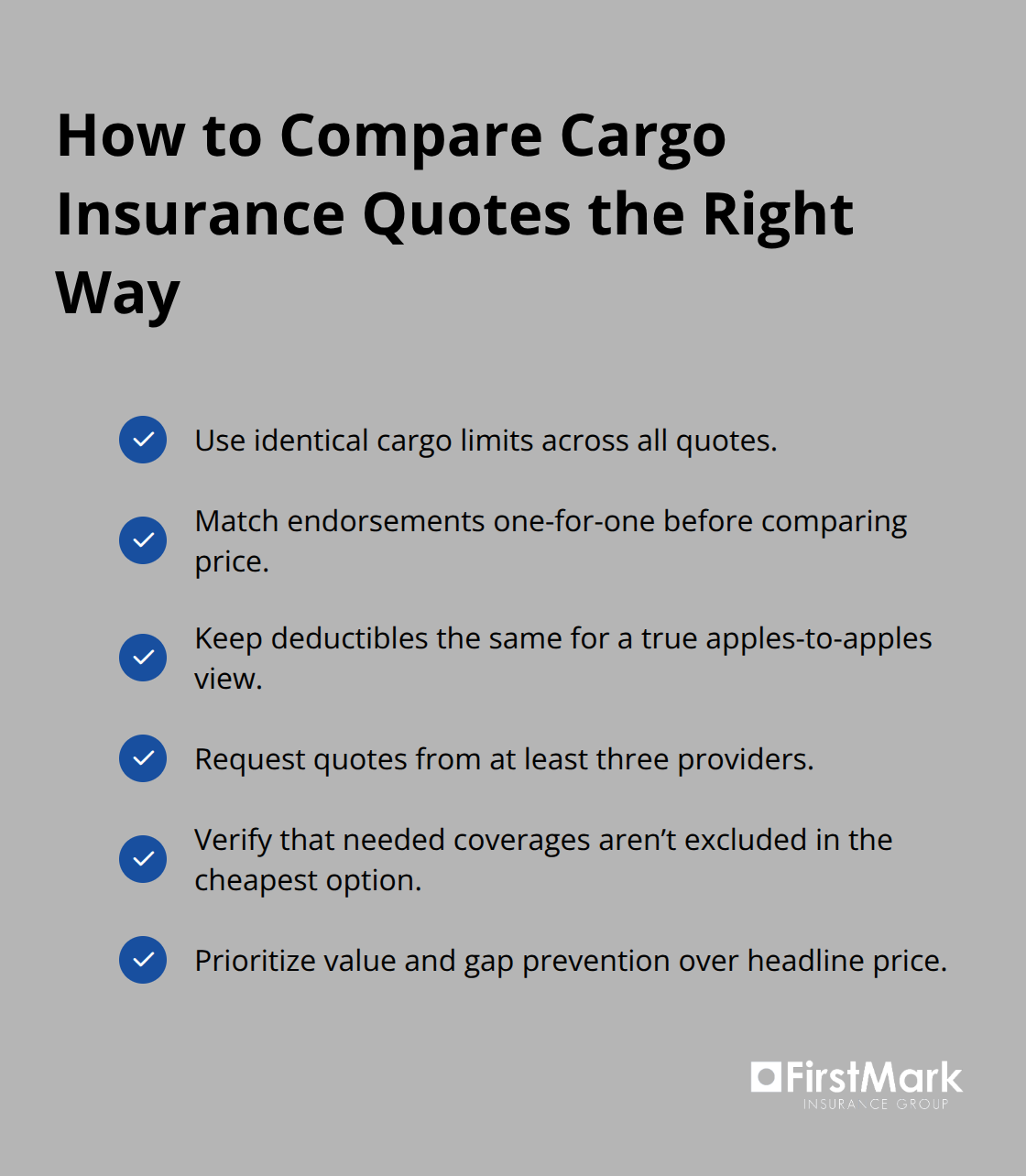
Comparing quotes from multiple insurance providers reveals significant differences in how they price risk and structure coverage, but the comparison only works if you evaluate identical protection across all quotes. Request quotes with the same cargo limits, the same endorsements, and the same deductibles from at least three providers so you see genuine pricing differences rather than comparing fundamentally different policies. Most Washington carriers discover that the cheapest quote excludes coverage they actually need, while mid-range quotes often provide better value (including protections that prevent catastrophic gaps).
Work with an Insurance Agent Who Understands Trucking
An insurance agent who specializes in trucking operations will recognize regional risks and recommend appropriate coverage structures that generalists miss. Agents familiar with Washington’s freight industry understand the specific threats your operation faces and structure policies accordingly rather than treating your cargo insurance as a generic commercial product. An agent who asks detailed questions about your cargo types, shipment frequencies, and past loss history will recommend coverage that actually protects your business rather than offering boilerplate policies that sound adequate until a claim reveals critical gaps.
FirstMark Insurance Group brings 30 years of experience guiding businesses through insurance complexities, helping you navigate the choices that fit your operation’s specific needs. We explore offerings from top insurance providers and present you with solutions at the best available pricing. An experienced agent transforms the quote comparison process from a confusing exercise into a strategic decision that protects your actual risk exposure.
Final Thoughts
Truck cargo insurance WA protects your operation from financial devastation when freight sustains damage, theft, or loss during transport. The coverage you select must reflect your actual cargo types, shipment values, and regional risk exposure rather than generic industry standards. Carriers who underestimate their load values or skip necessary endorsements discover too late that their policies exclude exactly the losses they experience, forcing them to absorb thousands from cash flow.
Securing adequate coverage starts with honest assessment of what sits in your truck on a typical day. Calculate your average load value, identify your highest-value shipments, and document the specific cargo types you transport regularly (this foundation prevents the common mistake of selecting policies based solely on price). Request quotes from multiple providers using identical coverage limits and endorsements so you compare genuine pricing differences rather than fundamentally different policies.
We at FirstMark Insurance Group bring 30 years of experience helping businesses navigate insurance complexities and find coverage that actually fits their needs. Contact FirstMark Insurance Group to discuss your cargo protection strategy with an agent who understands trucking operations and the regional risks your business faces.
Disclaimer: The information provided in this blog is for general informational purposes only and does not constitute legal, financial, or insurance advice. Coverage options, terms, and availability may vary. Please consult with a licensed professional for advice specific to your situation