


Standard insurance policies weren’t designed for the complexity of substantial wealth. When your assets span real estate, investments, art collections, and business interests, generic coverage leaves dangerous gaps.
At FirstMark Insurance Group, we’ve spent years building wealthy private client coverage strategies that actually match what high-net-worth individuals own and risk. This post walks through the specialized protections your portfolio genuinely needs.
Why Standard Policies Miss the Mark for Wealthy Portfolios
Coverage Limits Built for Average Risk
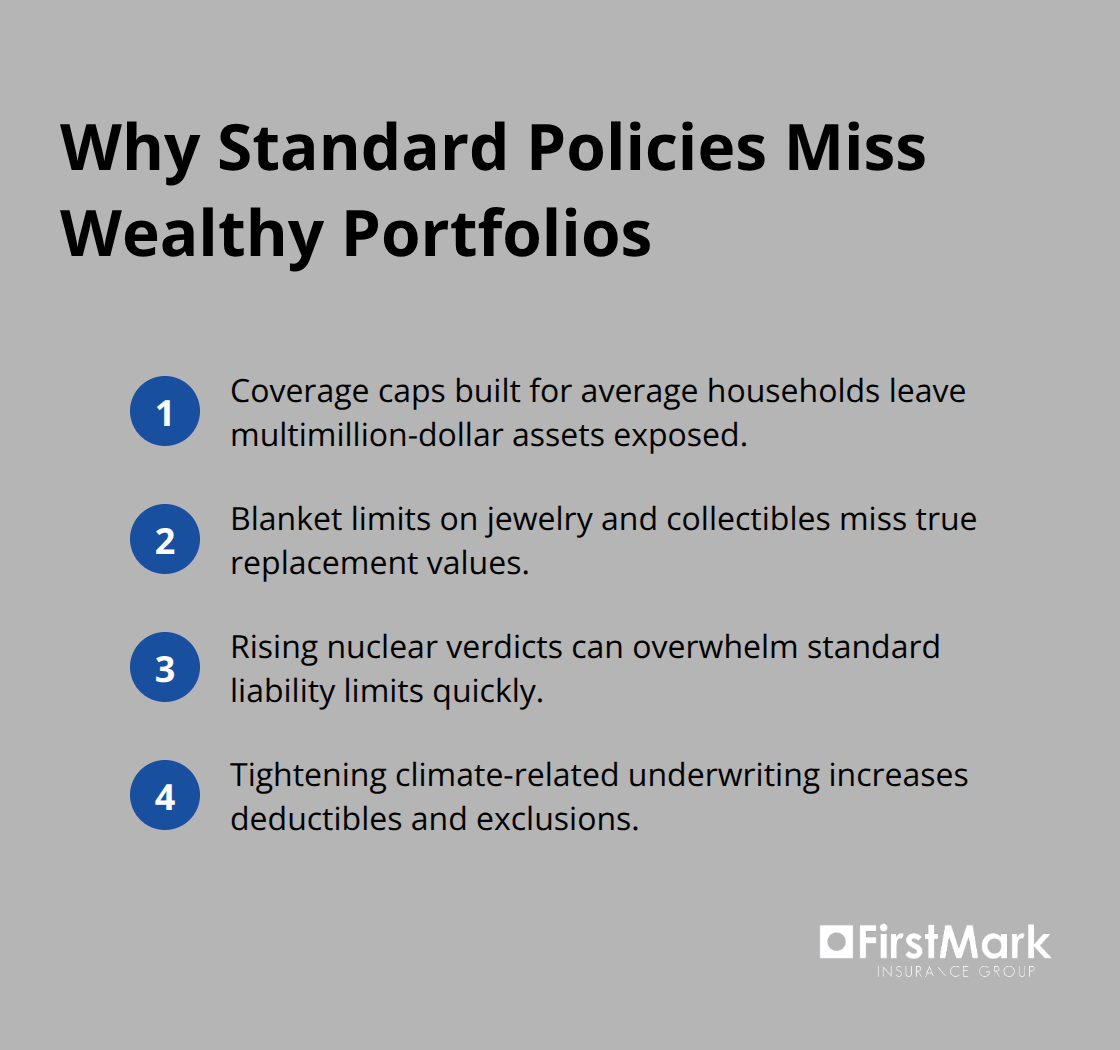
High-net-worth individuals face a stark reality: standard homeowners and liability policies cap coverage at limits designed for middle-class households. A typical homeowners policy covers up to $300,000 in personal property, while a standard liability limit sits at $300,000 to $500,000. When your home alone is worth $5 million, or your art collection exceeds $2 million, these limits leave catastrophic exposure. Property insurance costs rose 10.4% nationwide in 2024 according to the NAIC Natural Catastrophe Risk Dashboard, and in six states, homeowners faced rate increases exceeding 20%. More troubling: catastrophe losses totaled $176 billion in 2024, but insured losses covered only $99 billion, creating a $77 billion protection gap. That gap falls directly on property owners who lacked adequate coverage.
The Hidden Cost of Underinsured Collections
Fine art, jewelry, and collectibles rarely receive full replacement value under standard policies. Most homeowners coverage includes a blanket limit of $1,500 to $2,500 for jewelry alone, regardless of actual value. If you own a collection worth $500,000, that gap is catastrophic. Similarly, roof-age restrictions now tighten to roughly 15 years according to underwriting trends tracked by the NAIC, meaning inherited older homes or secondary properties face sudden non-renewal or exclusions.
Liability Exposure in a Litigious Environment
Nuclear verdicts in liability cases reached a median of $23.8 million in 2023, with mega verdicts above $100 million growing roughly 400% since 2013 according to the U.S. Chamber of Commerce Institute for Legal Reform. A single dog-bite case in Georgia resulted in a $4.2 million verdict in 2025. Your standard $300,000 liability limit evaporates in minutes when courts award damages at these levels.
Climate Risk and Tightening Underwriting Standards
Climate risk compounds these gaps significantly. In 2025, 27 weather disasters exceeded $1 billion in losses, and coastal flooding frequency has increased 3 to 9 times due to sea level rise according to NOAA data. Underwriting is tightening accordingly, with carriers imposing higher wind and hail deductibles, roof-age restrictions, and selective placement for multi-property portfolios across catastrophe-prone regions. These restrictions mean standard policies no longer protect your assets adequately-they simply exclude the risks that matter most. Your wealth sits unprotected not because insurance doesn’t exist, but because you need coverage specifically designed for the complexity of substantial assets. The next section outlines the custom strategies that actually address these gaps.
Building Layers of Liability Protection That Match Your Wealth
Umbrella Coverage as Your Foundation
Umbrella liability coverage sits at the foundation of any serious wealth protection strategy, yet most high-net-worth individuals carry far too little. A $1 million umbrella policy costs roughly $300 to $500 annually for a clean risk profile, but covers claims that exhaust your underlying homeowners and auto policies. The median nuclear verdict peaked at $36 million in 2022, meaning your $300,000 standard liability limit disappears before trial even concludes. Try a minimum of $5 million in umbrella coverage for portfolios exceeding $10 million in assets, with $10 million or higher for those with significant real estate holdings, guest properties, or high-profile visibility. The cost difference between $2 million and $10 million in coverage is negligible-often just $1,000 to $2,000 annually-yet the protection gap is enormous.
Executive and Professional Liability Protection
Executive and professional liability coverage operates in parallel, protecting you specifically for decisions made in business roles. If you serve on corporate boards, manage family investments, or hold officer positions, a single shareholder lawsuit or employment claim can reach millions. These policies typically include defense costs outside the policy limit, meaning your insurer pays legal fees separately from the damage award itself. This distinction matters enormously in protracted litigation where legal expenses alone can exceed $500,000.
Scheduled Coverage for High-Value Collections
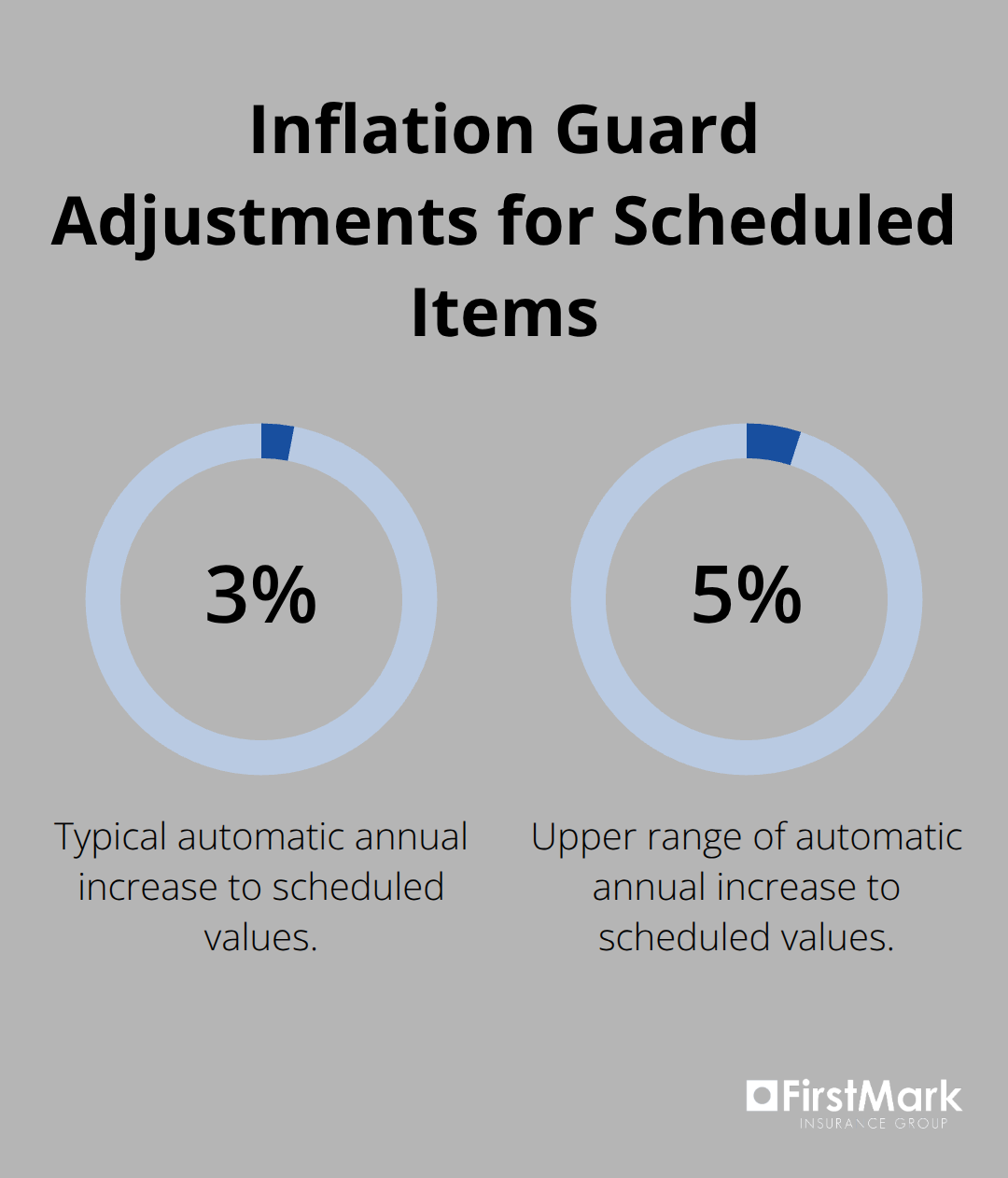
Fine art, jewelry, and collectibles require dedicated policies because standard homeowners coverage caps jewelry at roughly $1,500 to $2,500 regardless of actual value. A single painting, watch collection, or jewelry piece worth $500,000 receives minimal protection under a blanket policy. Scheduled personal property coverage itemizes each piece with agreed-upon values, which eliminates depreciation arguments during claims. Professional appraisals from certified gemologists or art appraisers establish value at the time of loss, not years later when market prices shift. Update appraisals every three to five years for actively traded items like fine art, and annually for jewelry that appreciates significantly. Coverage should include inflation guards that automatically increase values by 3 to 5 percent yearly, protecting against market appreciation without requiring annual policy rewrites. Collectibles stored off-site or in climate-controlled facilities sometimes qualify for lower premiums because risk profiles improve with proper storage.
Coordinating Your Coverage Strategy
Coordinate all three layers-umbrella, executive liability, and scheduled property coverage-with a single advisor who understands your complete portfolio. Fragmented policies across multiple carriers create blind spots where gaps emerge between coverage triggers, deductibles, and exclusion language. One advisor reviewing your total exposure identifies overlaps that waste premium dollars and holes that leave you exposed. This integrated approach reveals which gaps your current coverage leaves unprotected, setting the stage for the final piece of your wealth protection plan: aligning your insurance strategy with your broader asset management and succession planning.
How to Align Your Insurance as Wealth Evolves
Coordinate Coverage Across Multiple Policies
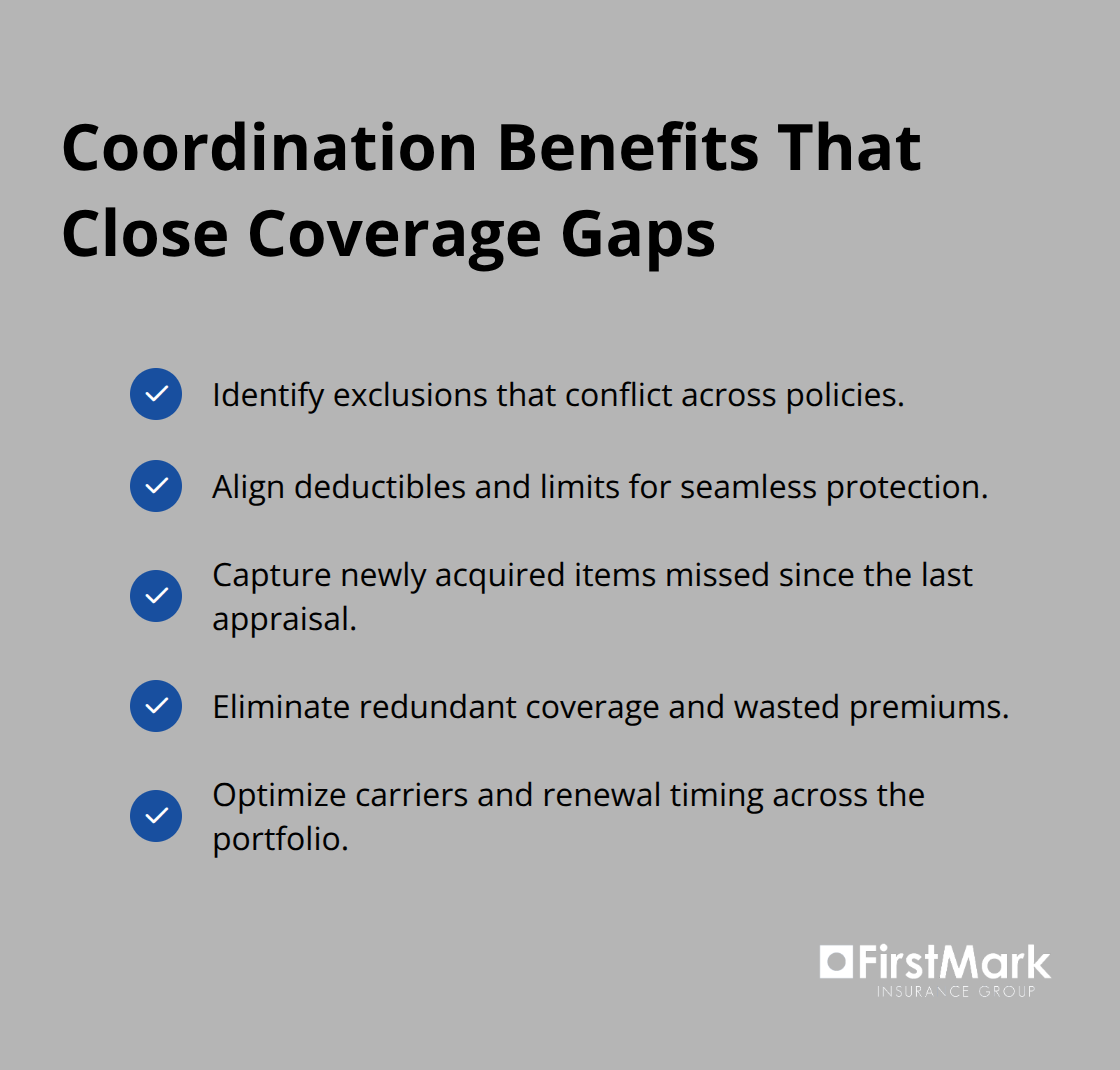
Fragmented coverage creates invisible vulnerabilities. Your umbrella policy, scheduled art coverage, and executive liability protection only work as a unified system when they operate with consistent deductibles, coordinated limits, and aligned exclusion language. Most high-net-worth clients carry policies purchased years apart from different carriers, each with separate renewal dates and underwriting standards. This patchwork approach means gaps emerge precisely when you need protection most.
A single advisor managing your complete portfolio identifies these disconnects immediately. They spot when your umbrella policy excludes certain liability types that your underlying homeowners policy exposes you to, or when scheduled jewelry coverage fails to account for pieces acquired after the last appraisal. Coordination also reveals redundancies where you overpay for duplicate coverage across carriers. The cost of this coordination work pays for itself within months through premium optimization and gap closure.
Update Coverage as Asset Values Shift
Asset values shift constantly, and static insurance policies deteriorate in protection year over year. Real estate appreciates, art collections grow through acquisition and market appreciation, investment portfolios expand, and liabilities increase with business growth or property additions. Your $5 million home from five years ago may now appraise at $6.2 million, but your coverage cap remains unchanged. Similarly, inherited properties or newly acquired vacation homes often carry outdated valuations or miss specialized coverages entirely.
Establish an annual review process that ties directly to your financial planning cycle, not your insurance renewal date. This timing ensures your advisor sees updated net worth statements, recent property appraisals, and business valuations before recommending coverage adjustments. For fine art and collectibles, professional reappraisals every three to five years capture market appreciation and justify inflation-guard increases that protect against rising replacement costs.
Properties in catastrophe-prone regions require more frequent reviews because underwriting standards tighten rapidly. Roof-age restrictions now sit at 15–20 years, with replacement often required for full eligibility on roofs 20 years or older. Schedule these reviews in writing with your advisor, treating them as formal meetings with documented recommendations rather than casual conversations. This documentation becomes invaluable when you later need to defend your insurance decisions to estate planners, tax advisors, or family members involved in wealth transfer planning.
Integrate Insurance with Your Broader Wealth Plan
Insurance exists within a larger wealth management ecosystem that includes tax planning, estate structuring, and succession strategy. A liability claim that exhausts your coverage affects not only your immediate finances but also your estate plan’s assumptions about available assets. Similarly, inherited properties trigger both insurance challenges and wealth transfer planning needs.
A parent’s home passed to adult children often requires sudden coverage upgrades because inherited properties face stricter underwriting standards, higher deductibles, and potential non-renewal if roof age or condition fails inspection. Coordinate your insurance advisor with your estate planning attorney and tax professional so all three understand your complete risk profile. Your estate plan may use life insurance to fund estate taxes, but that same life insurance becomes problematic if it conflicts with liability coverage or creates unintended gaps in asset protection.
Succession planning for family businesses demands executive liability coverage that protects both current and future leadership, yet many policies exclude the next generation until formal transition occurs. These conflicts resolve only when your insurance strategy integrates with your broader wealth plan from the start, not as an afterthought once legal documents are drafted.
Final Thoughts
Wealthy private client coverage demands more than standard policies can deliver. Your assets span multiple categories-real estate, collections, investments, and business interests-each requiring specialized protection tailored to actual values and genuine risks. The gaps between what you own and what standard policies cover widen every year as asset values appreciate, climate risks intensify, and liability verdicts climb.
A $1 million umbrella policy, scheduled coverage for fine art and jewelry, and executive liability protection form the foundation of serious wealth protection, but only when you coordinate them as a unified strategy rather than fragmented policies purchased independently. We at FirstMark Insurance Group understand that wealthy individuals need more than product recommendations-you need a partner who sees your complete portfolio, identifies gaps before they become catastrophic, and adjusts your coverage as your wealth evolves. Our approach centers on simplifying the insurance journey by exploring offerings from top providers and presenting choices that genuinely fit your requirements at the best available pricing.
The next step is straightforward: contact FirstMark Insurance Group to schedule a comprehensive review of your current coverage. Bring recent property appraisals, your net worth statement, and details about any collections or business interests. This conversation reveals whether your umbrella limits match your actual exposure, whether your scheduled coverage captures all valuable items, and whether gaps exist between your policies.
Disclaimer: The information provided in this blog is for general informational purposes only and does not constitute legal, financial, or insurance advice. Coverage options, terms, and availability may vary. Please consult with a licensed professional for advice specific to your situation