


Modern vehicles come equipped with safety features that can significantly reduce your insurance premiums. Auto insurance discounts for safety features range from 5% to 30% depending on the technology installed.
We at FirstMark Insurance Group see drivers save hundreds of dollars annually by leveraging these discounts. Understanding which safety features qualify and how to maximize these savings puts money back in your pocket.
Which Safety Features Reduce Your Insurance Costs Most
Anti-Lock Braking System Benefits
Anti-lock brakes deliver consistent savings across insurance providers. GEICO offers up to 5% discounts on specific coverages for vehicles with ABS technology. These systems prevent wheel lockup during emergency stops and reduce accident severity plus claim frequency.
Progressive customers receive similar benefits, though discount amounts vary by state and coverage type. ABS became standard on most vehicles in the early 2000s, which makes this discount accessible to drivers with newer cars.
Airbag and Safety Restraint Savings
Airbag systems provide the largest potential discounts available today. GEICO offers up to 23% savings through their Restraint Device Discount program. This covers front airbags, side-impact airbags, and advanced seatbelt systems (all standard safety equipment in modern vehicles).
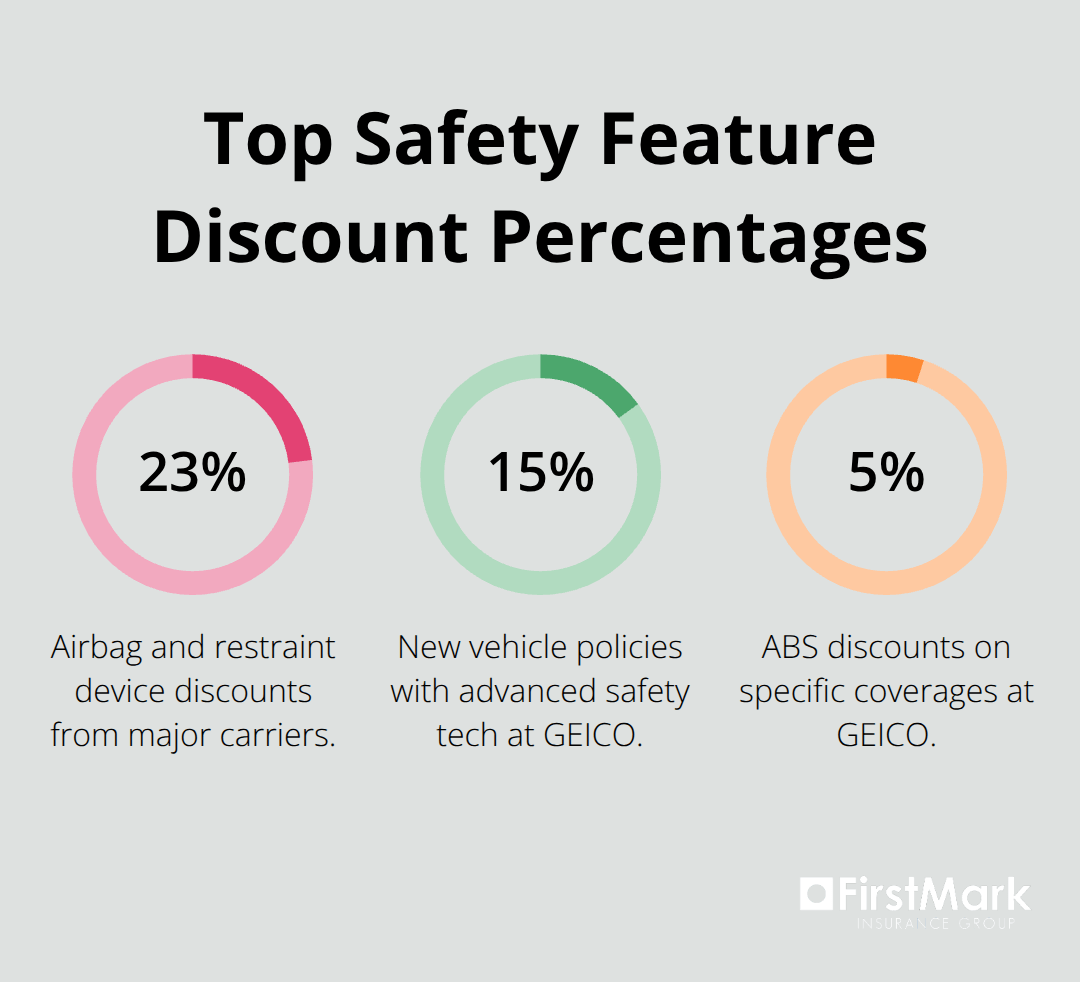
The substantial discount reflects how airbags reduce injury severity and medical claim costs. Insurance companies recognize that vehicles with comprehensive restraint systems pose lower financial risk.
Anti-Theft Device Discounts
Anti-theft devices generate substantial savings on comprehensive coverage portions of your policy. Passive devices (like engine immobilizers) earn up to $9.60 annually according to industry data. Active alarm systems and steering wheel locks qualify for discounts in 34 states.
These devices reduce theft risk, which directly impacts comprehensive claims. The savings may seem modest, but they compound over years of coverage.
Electronic Stability Control Limitations
Electronic Stability Control systems offer minimal benefits despite their proven safety record. The average annual discount reaches just $7 across all providers. This low return reflects insufficient data linking ESC technology to reduced claim frequency.
The NHTSA estimates that ESC will reduce single vehicle crashes of passenger cars by 34 percent, yet insurance companies haven’t translated this into meaningful premium reductions.
Smart shoppers prioritize airbag discounts first, then focus on anti-theft systems. Advanced driver assistance technologies offer even greater potential savings than these traditional safety features.
How Much Can Advanced Safety Tech Save You
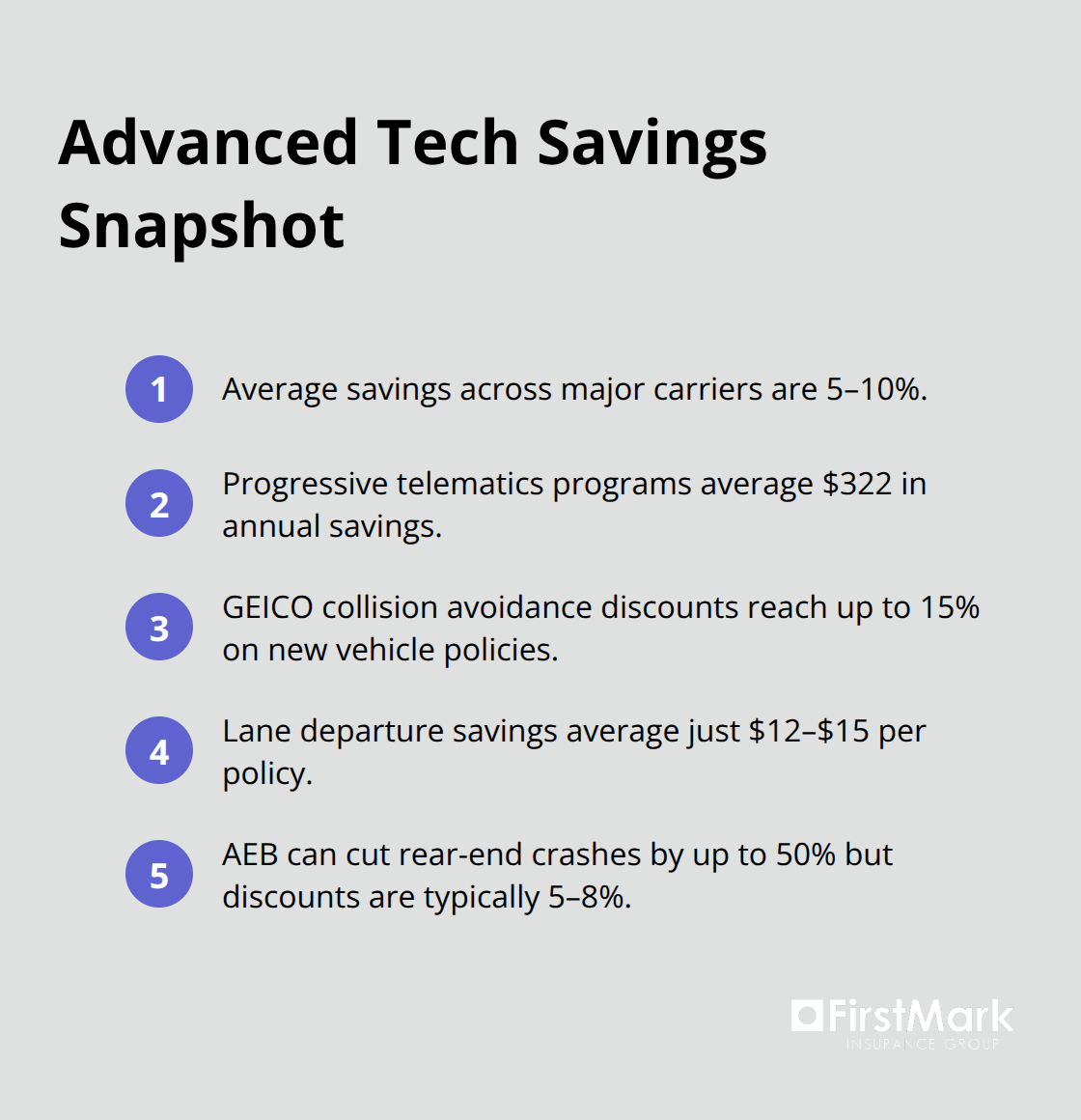
Advanced driver assistance systems produce mixed results for insurance savings despite their proven safety benefits. Collision avoidance systems, lane departure warnings, and automatic emergency braking reduce crash risks significantly according to NHTSA studies, yet insurance discounts remain surprisingly limited. The average savings from these technologies hover around 5-10% across most major carriers.
Collision Avoidance Systems Show Promise
Forward collision warning and automatic emergency braking systems offer the strongest discount potential among advanced technologies. Progressive provides savings that average $322 annually for drivers who demonstrate safe behavior through telematics programs that monitor these systems. GEICO customers with vehicles equipped with collision avoidance technology can receive up to 15% discounts on new vehicle policies (model year restrictions apply). The key lies in choosing insurers that actively track and reward the use of these safety features rather than simply acknowledging their presence.
Lane Departure Technology Delivers Minimal Returns
Lane departure warning systems produce disappointing insurance savings despite their effectiveness in accident prevention. Most insurers offer negligible discounts for this technology, with average annual savings that reach just $12-15 per policy. The Insurance Institute for Highway Safety confirms that lane departure warnings reduce single-vehicle, sideswipe, and head-on crashes by 11%, yet insurance companies haven’t translated this data into meaningful premium reductions.
Automatic Emergency Braking Benefits
Automatic emergency braking systems show stronger discount potential than lane departure warnings but fall short of collision avoidance savings. These systems can reduce rear-end crashes by up to 50% according to IIHS data. However, most insurers cap discounts at 5-8% for vehicles with this technology (newer model requirements typically apply). The disconnect between proven safety benefits and actual premium reductions reflects the insurance industry’s cautious approach to new technology pricing.
Smart buyers should prioritize collision avoidance systems first when seeking maximum insurance savings from advanced safety features. The next step involves understanding how to document and leverage all your vehicle’s safety equipment for maximum discount potential.
How Do You Claim Every Available Safety Discount
Most drivers miss thousands of dollars in potential savings because they fail to document their vehicle’s safety features properly when they shop for insurance. Create a comprehensive inventory of every safety system in your vehicle before you request quotes. This includes photos of your vehicle identification number, safety feature labels, and equipment serial numbers when available.
Create a Complete Safety Feature Inventory
Check your owner’s manual for the complete list of safety equipment that the factory installed. Modern vehicles contain dozens of safety features that drivers overlook, such as daytime running lights that qualify for 3% discounts at GEICO and electronic stability control systems. Take photos of your dashboard warning lights during startup to document active safety systems.
Record the model year of your vehicle since newer cars qualify for up to 15% new vehicle discounts at major carriers. Contact your dealership to obtain a detailed equipment list if your manual lacks specifics about installed safety technology. Document anti-theft devices like engine immobilizers and alarm systems that can reduce your car insurance premium.
Target Insurance Companies That Reward Safety Technology
Progressive offers high potential savings through their Snapshot program, with average discounts that reach $322 annually for drivers who demonstrate safe behavior. GEICO provides comprehensive safety feature discounts, with up to 23% for airbag systems and restraint devices. State Farm focuses heavily on anti-theft device discounts but offers limited savings for advanced driver assistance systems.
Request quotes from at least five carriers since discount structures vary dramatically between companies. Avoid insurers that offer generic safety discounts without specific equipment requirements, as these typically provide minimal actual savings.
Understand Discount Eligibility Requirements
Most safety feature discounts apply only to specific coverage types rather than your entire premium. Anti-theft discounts typically reduce comprehensive coverage costs, while airbag discounts affect multiple coverage areas. New vehicle discounts (usually for cars three model years old or newer) provide the most substantial savings but expire as your car ages.
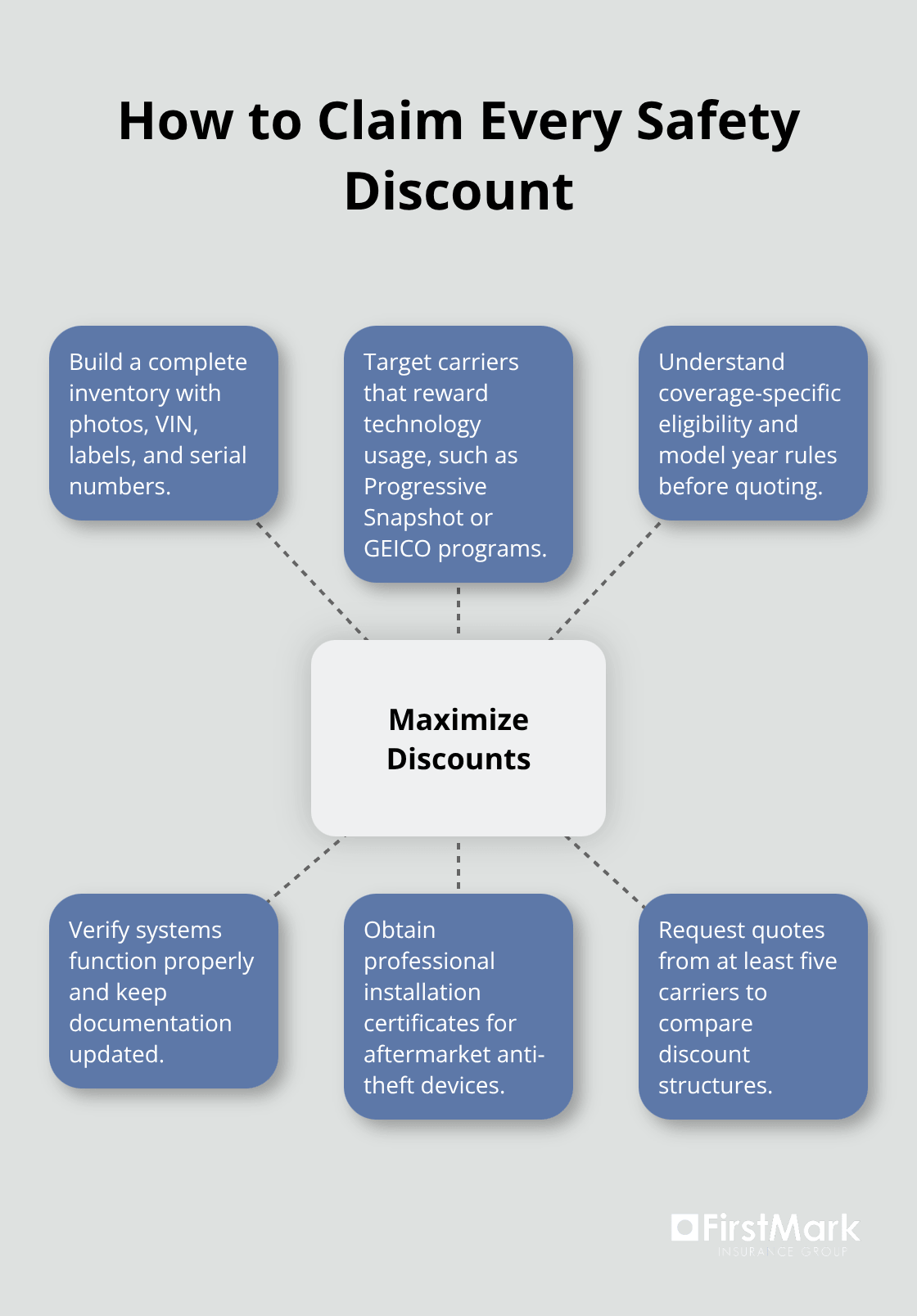
Verify that your safety features function properly before you claim discounts. Insurance companies may adjust premiums if features stop working or require repairs. Some carriers require professional installation certificates for aftermarket anti-theft devices to qualify for discounts.
Final Thoughts
Auto insurance discounts for safety features deliver real savings that compound over years of coverage. Airbag systems provide the highest returns at up to 23% through major carriers, while anti-theft devices offer solid comprehensive coverage reductions. Advanced driver assistance technologies show promise but currently provide limited discount potential despite their proven safety benefits.
The financial benefits extend beyond premium savings. Vehicles equipped with comprehensive safety features experience fewer claims and reduced repair costs. Progressive customers save an average of $322 annually through behavior-based programs that monitor safety technology usage (with GEICO offering up to 15% discounts for newer vehicles with advanced safety equipment).
Success requires proactive documentation of all safety features and comparison shopping across multiple carriers. Each insurer structures discounts differently, which makes thorough research essential for maximum savings. We at FirstMark Insurance Group help drivers navigate these complexities to find ideal coverage that fits specific needs and budgets.