


Teen drivers face crash rates nearly three times higher than drivers aged 20 and older, according to the Insurance Institute for Highway Safety. These alarming statistics highlight why proper education matters.
We at FirstMark Insurance Group know that implementing safe driving tips for teens can dramatically reduce accident risks and protect young lives on the road.
Essential Safe Driving Habits for Teen Drivers
Maintain Proper Following Distance and Speed Control
The 3-second rule is an important safety guideline, but most new drivers ignore it completely. Count three full seconds between when the car ahead passes a fixed object and when you reach that same point. In wet conditions, extend this to six seconds. Proper following distance helps prevent rear-end collisions involving teen drivers.
Speed kills more teens than any other factor behind the wheel. Drive five miles per hour under the posted limit during your first year of solo driving (this extra caution pays off in reduced accident rates).
Eliminate Distractions and Focus on the Road
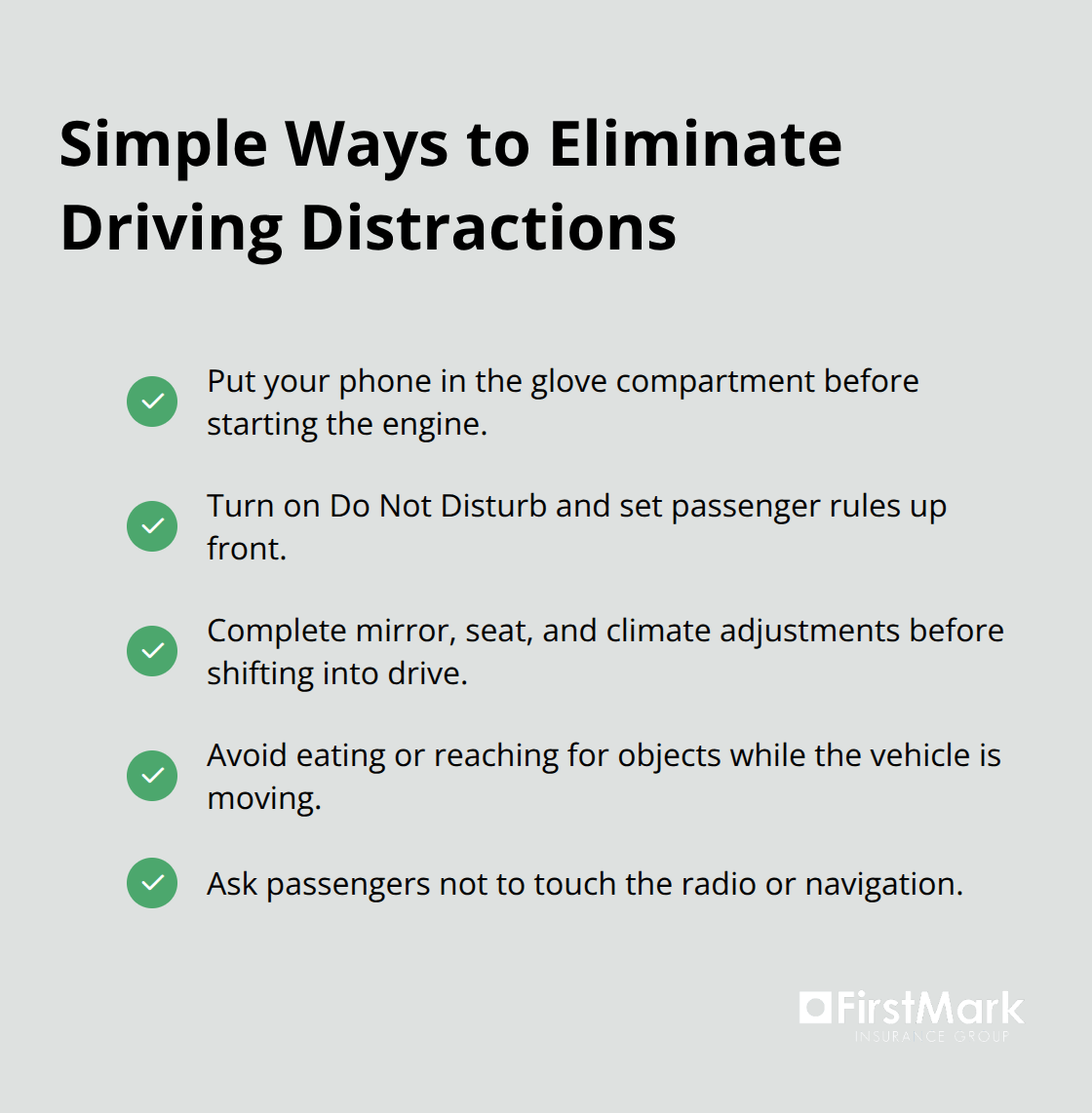
Put your phone in the glove compartment before you start the engine. Research shows that texting while driving significantly increases crash risk for teen drivers, while dialing a phone number also raises it substantially. Many high school students admit to texting while driving.
Set your phone to Do Not Disturb mode and tell passengers they cannot touch the radio or navigation system. Activities like eating, adjusting mirrors, or reaching for objects increase your crash risk. Complete all vehicle adjustments before you put the car in drive.
Practice Defensive Driving Techniques
Scan 20 to 30 seconds ahead constantly and check mirrors every five to eight seconds. Assume every other driver will make the worst possible decision and position your vehicle accordingly. Defensive driving significantly reduces teen crash rates when practiced consistently.
Always yield the right of way, even when you legally have it. Keep both hands on the steering wheel at the 9 and 3 o’clock positions for maximum control. Drive with your headlights on during daylight hours to increase visibility to other drivers.
These fundamental habits form the foundation of safe driving, but even experienced teen drivers fall into dangerous patterns that lead to preventable accidents.
Common Driving Mistakes Teens Make and How to Avoid Them
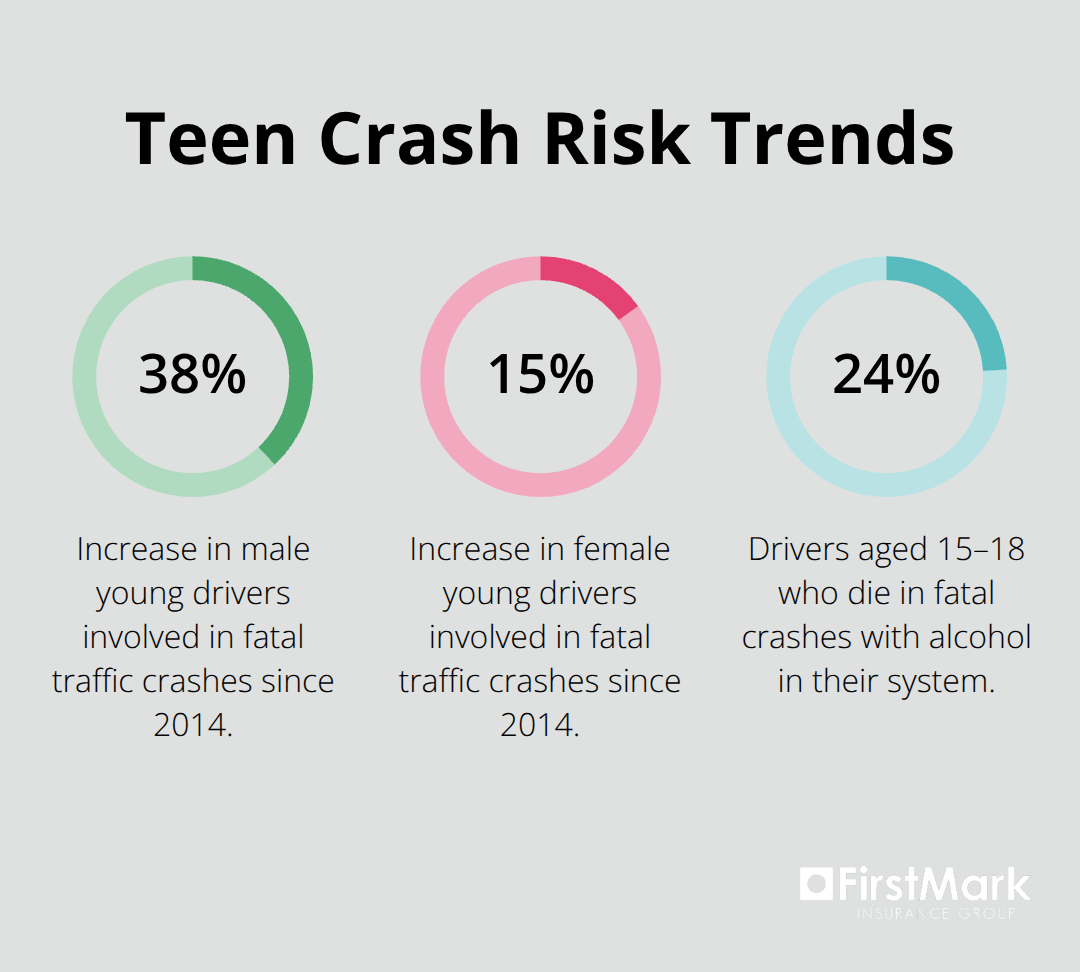
New drivers develop dangerous overconfidence after just three months behind the wheel, which leads to the deadliest mistakes on American roads. Young drivers involved in fatal traffic crashes increased by 38 percent for males and increased by 15 percent for females from 2014. Teens drive aggressively because they believe their quick reflexes compensate for reckless behavior, but reaction time cannot overcome physics when you travel at excessive speeds.
Overconfidence and Risk-Taking Behaviors
Teen drivers consistently underestimate road hazards and overestimate their abilities after passing their driving test. This false confidence causes 24% of drivers aged 15-18 who die in fatal crashes to have alcohol in their systems. Young drivers take unnecessary risks like racing other vehicles, making illegal turns, and following too closely because they think accidents happen to other people.
Peer pressure amplifies these dangerous decisions when friends ride as passengers. Teen drivers become two and a half times more likely to engage in risky behaviors with one peer passenger and three times more likely with multiple passengers in the vehicle.
Night Driving Claims Teen Lives
Fatal crash rates for teen drivers spike to three times higher than adult drivers between 9 PM and 6 AM. Around 44% of teen deaths occur during these overnight hours according to crash data analysis. Most teens fail to reduce speed in low visibility conditions and underestimate stopping distances on dark roads.
Turn your headlights on 30 minutes before sunset and avoid driving after 10 PM during your first six months of solo driving. Many states restrict nighttime driving for provisional license holders specifically because darkness amplifies every error teens make behind the wheel.
Poor Weather Decision Making
Teen drivers cause more weather-related accidents than any other age group because they refuse to adjust their habits for road conditions. Rain, snow, and fog require completely different approaches to speed control and following distance, yet most young drivers maintain the same aggressive patterns regardless of weather.
Reduce your speed by at least 10 mph below the limit during rain and increase your following distance to six seconds (double the normal safe distance). Pull over and wait out severe weather rather than risk a crash that could end your life.
Vehicle Maintenance Awareness Problems
Tire blowouts cause more teen accidents than most parents realize, yet 70% of young drivers never check tire pressure or tread depth. Check your tires monthly and maintain proper inflation levels listed on your door jamb sticker. Brake failure kills teen drivers who ignore warning signs like squealing sounds or spongy pedal feel.
Schedule brake inspections every 12,000 miles and replace worn brake pads immediately. Dead batteries strand teens in dangerous locations, so test your battery voltage every three months and replace batteries older than four years.
Parents play the most important role in preventing these deadly mistakes through proper guidance and consistent rule enforcement.
How Parents Shape Teen Driving Safety
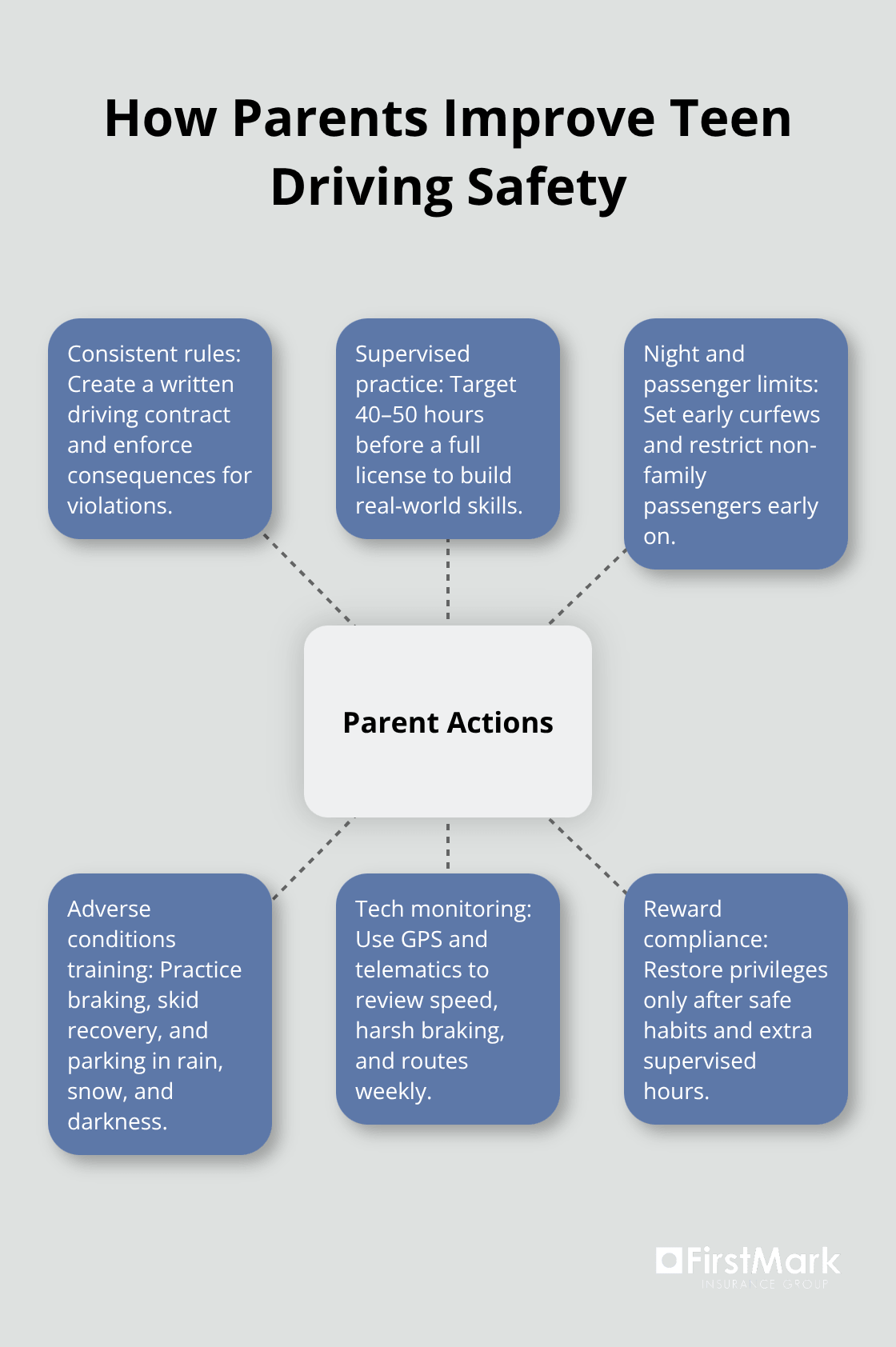
Parents control their teen’s driving destiny through consistent rule enforcement and active involvement in their learning process. The National Highway Traffic Safety Administration recommends that teens complete 40-50 hours of supervised driving before obtaining a full license, yet most parents provide only half this amount. Create a written driving contract that specifies exact consequences for violations like speeding tickets, phone use while driving, or driving with unauthorized passengers. Remove driving privileges immediately for any rule violation and require additional supervised practice hours before restoring independence.
Establish Non-Negotiable Driving Rules
Set a strict passenger limit of zero non-family members for the first six months of solo driving. Teen drivers have a higher rate of fatal crashes, mainly because of their immaturity, lack of skills, and lack of experience. Implement an 8 PM curfew for the first year, extending to 10 PM only after your teen demonstrates consistent safe driving habits. Install phone-blocking apps that activate automatically when the vehicle starts moving and verify daily that these systems function properly. Parents who enforce these rules consistently see fewer accidents among their teen drivers compared to families with flexible guidelines.
Practice Advanced Driving Scenarios
Schedule monthly practice sessions in parking lots during rain, snow, and darkness to build real-world skills. Most driving instructors spend less than two hours teaching adverse weather techniques, leaving dangerous knowledge gaps that parents must fill. Practice emergency braking, skid recovery, and parallel parking until these maneuvers become automatic responses. Teens need at least 10 hours of night driving practice with a parent before they drive alone after sunset.
Monitor Performance Through Technology
Use GPS tracking apps and driving monitoring systems that provide detailed reports on speed, harsh braking, and route deviations. Review these reports weekly with your teen and address any concerning patterns immediately. Insurance companies offer discounts up to 25% for families who use approved monitoring devices, making these systems cost-effective safety investments that protect both your teen and your budget.
Final Thoughts
Safe driving habits that teens develop during their first years behind the wheel become the foundation for decades of responsible behavior. Teen drivers who master proper following distance, eliminate distractions, and practice defensive techniques carry these skills throughout their adult lives. The statistics prove that comprehensive training works: families who invest time in supervised practice and consistent rule enforcement see dramatically lower accident rates.
Insurance companies recognize the value of proper teen driver education through significant premium discounts. Well-trained young drivers qualify for reduced rates that can save families hundreds of dollars annually (some insurers offer up to 25% discounts for monitored teen drivers). Parents gain peace of mind when their teenager possesses the skills needed to navigate dangerous situations safely.
We at FirstMark Insurance Group understand how proper training impacts both safety and insurance costs. Safe driving tips for teens create benefits that extend far beyond the first year of solo driving. The National Highway Traffic Safety Administration and Insurance Institute for Highway Safety provide ongoing resources for families committed to teen driver safety through updated research, training materials, and safety recommendations.